dailynewsnblog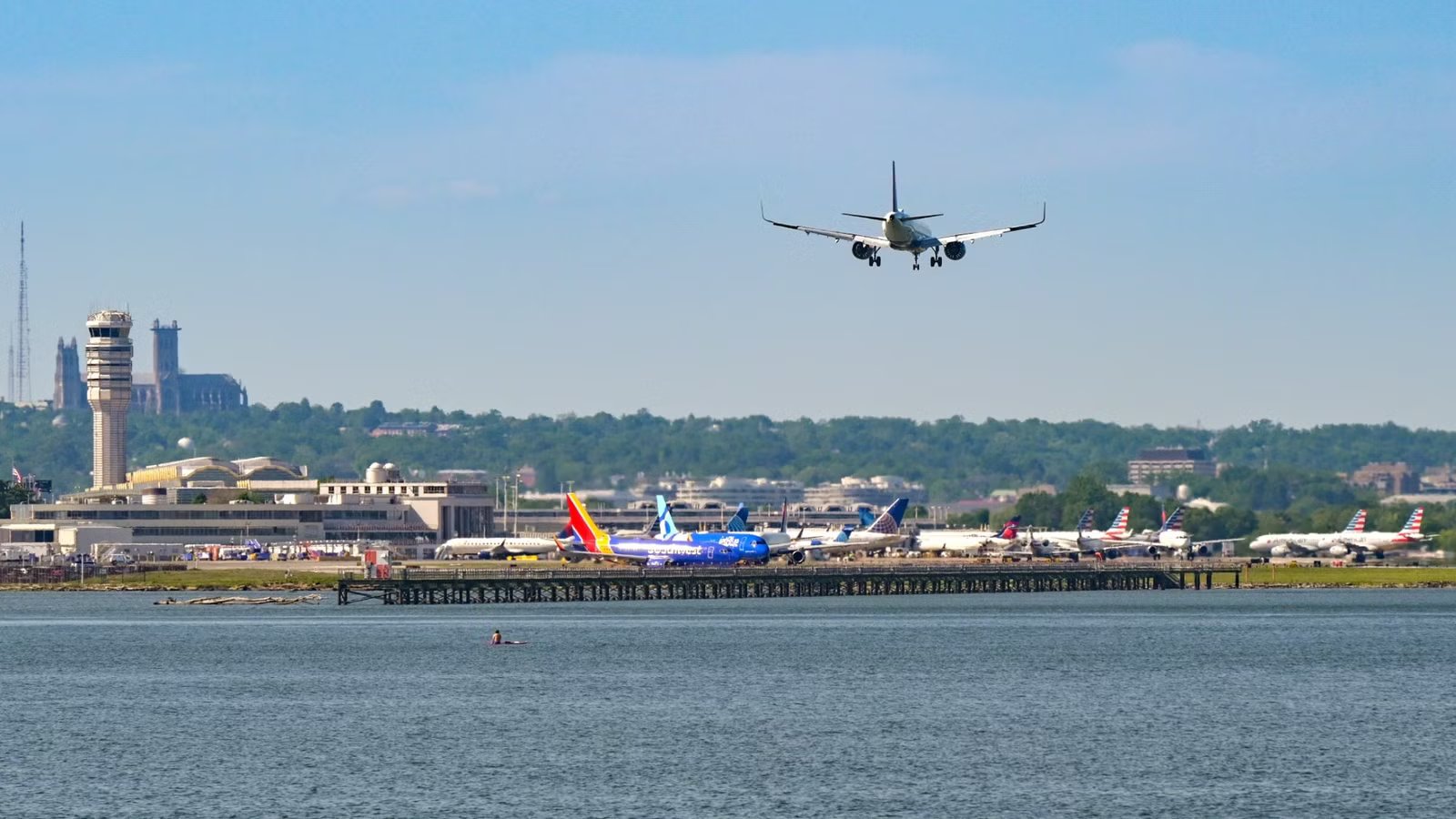
The NTSB has released its latest updates on the January 2025 midair collision between an American Eagle regional jet and a US Army helicopter near Washington-National. One of the investigation’s key findings, as published by the NTSB on X, was that the placement of a helicopter route under the final approach path to Washington-National’s Runway 33 was already identified as being a serious safety risk 13 years ago, and that the FAA ignored recommendations.
On January 29, 2025, a PSA Airlines Bombardier CRJ-700 operating as American Eagle 5342 was making an approach to Washington-National’s Runway 33. The plane had turned to final and was passing above the airport’s helicopter Route 4. A US Army Sikorsky Black Hawk operating as PAT25 was traveling on this route, but was flying at 278 ft, whereas the maximum altitude for Route 4 is 200 ft. The two ended up colliding, and there were no survivors.
The NTSB’s Newest Findings From The Accident

The NTSB has released its latest findings related to the 2025 mid-air collision over the Potomac River near  Ronald Reagan Washington National Airport. As is, it’s known that helicopter Route 4, which was being flown by PAT25, had a maximum published altitude of 200 ft, roughly 75 ft below when airliners would typically fly on approach to Washington-National’s Runway 33.
This is an unacceptable level of separation, but the NTSB has disclosed that it has known about the issue for 13 years as a result of a near miss between an airliner and a helicopter in 2013. The NTSB, which is not a policy or regulatory agency, had raised the issue with the FAA and proposed recommendations to relocate or remove Route 4. A group of Washington-National air traffic controllers and local helicopter operators had also issued recommendations for changes to Route 4. In both cases, the FAA decided to ignore them.
The NTSB has listed the following as the probable cause for the collision:
“We determined that the probable cause of this accident was the FAA’s placement of a helicopter route in close proximity to a runway approach path; their failure to regularly review and evaluate helicopter routes and available data, and their failure to act on recommendations to mitigate the risk of a midair collision near Ronald Reagan Washington National Airport; as well as the air traffic system’s overreliance on visual separation in order to promote efficient traffic flow without consideration for the limitations of the see-and-avoid concept. “
Issues With Helicopter Route 4

The FAA has closed helicopter Route 4 when Washington-National’s Runways 15 and 33 are in use. Before, it was recommended that the FAA examine the route to make changes, including potentially relocating the route or eliminating it altogether. In addition, it was also suggested to add Route 4 “hot spots” on navigation charts. The FAA did not enact any of these recommendations.
Current navigational charts did not highlight the extreme lack of separation between landing airliners and passing helicopters at this spot, meaning that pilots were unaware of the danger. In addition, TCAS resolution advisories are disabled at low altitudes, and controllers had become desensitized to TCAS traffic advisories that occasionally occur, while becoming too reliant on pilots maintaining visual separation.
As a whole, the existence of Route 4 was an accident waiting to happen, enabled by systematic failures across multiple organizational levels. Risks and concerns had been known for years regarding these operations, yet no changes were made until after disaster struck.

Report Finds Helicopter Pilot Did Not Follow Flight Instructions Before American Airlines 5342 Tragedy
A new NYT report looks at several factors that contributed to the tragedy.
Other Contributing Factors To The Collision

The NTSB has listed several contributing factors to the collision. These include the failure of the US Army helicopter crew to maintain visual separation, high workload on the air traffic controllers due to understaffing, TCAS limitations, unsustainably high airport arrival rate, as well as the US Army’s failure to ensure that its pilots were aware of the effects of error tolerances on barometric altimeters.
The NTSB has issued several safety recommendations to ensure that this accident does not repeat itself. The airspace around Washington-National is some of the most complex in the world, but it’s the responsibility of aviation regulators like the FAA to reduce risk as much as possible. Given how this accident has highlighted key failures at the FAA, it’s likely that the agency will need to make significant changes and enforce them to prevent a repeat.