dailynewsnblog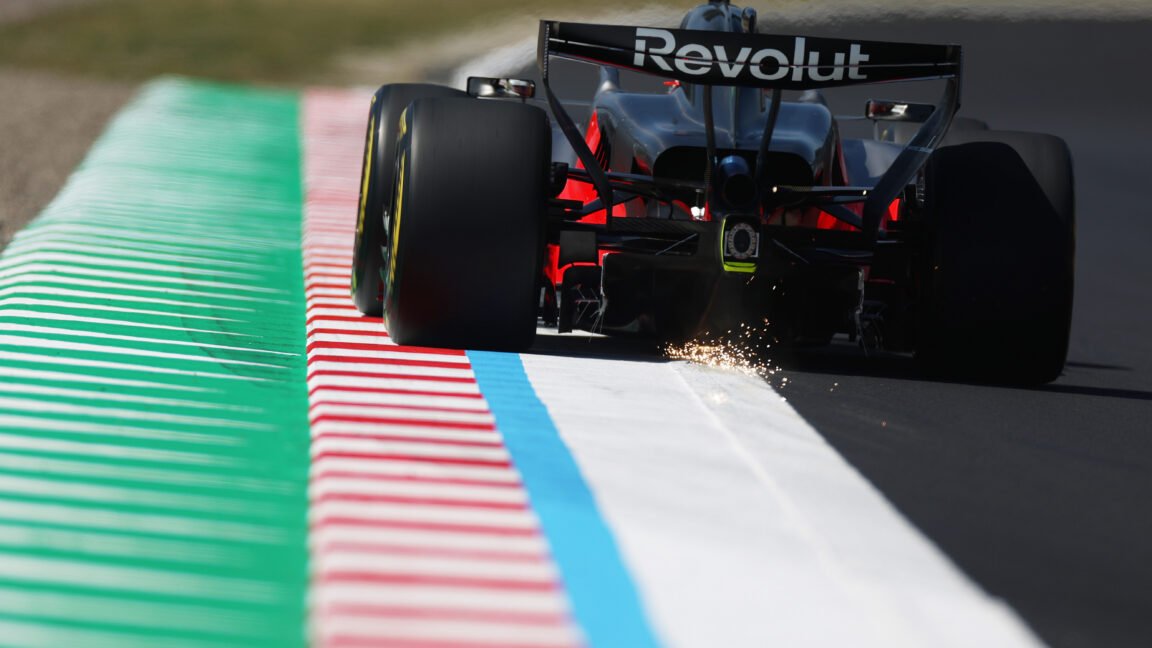
While lifting and coasting, the car’s brain tells the V6 to keep revving, and it siphons off 350 kW to the battery. But there’s another way the engine can recharge the battery that happens when the driver’s foot is still flat on the throttle. F1 calls this “super clipping,” and while it’s happening, the car’s power output at the rear wheels is significantly curtailed—any power going to the battery can’t go to the rear wheels, and the V6 only has 400 kW to offer. So super clipping has been capped at 200 kW, leaving the other 200 kW (268 hp) to push the car.
So sometimes an F1 car has 750 kW (1,005 hp), sometimes it has 400 kW, and sometimes it might just have 200 kW.
As will the other 21 cars on track, but not in any coordinated way. The software that governs the hybrid systems is capricious, and it decides when to initiate super clipping, and when to ramp up or ramp down power from the MGU based on how much it has already expended on the lap and how much it thinks it will need.
What’s the problem?
The new engine regs were created to get automakers more enthused about the sport, back before so many of them started pulling back on electric vehicles. It worked: Audi and Cadillac and Honda signed on to join Ferrari and Mercedes. But as I’ve described above, the new formula means that the cars are energy-starved during a lap, particularly during qualifying when the aim is to drive the car right at its very limit.
As we saw in Japan, this has effectively neutered all of F1’s fast corners, because you can reach a shorter overall lap time by using that energy elsewhere. There’s no real problem with lift and coast during a race—as said before, it’s already common practice in IndyCar and endurance racing. But in qualifying, that’s another matter, and watching the cars lifting and coasting through the 130R corner at Suzuka in Japan was something that demoralized virtually every race fan this author knows. Driving it seems to be worse: McLaren’s Lando Norris described it as “soul destroying.”