dailynewsnblog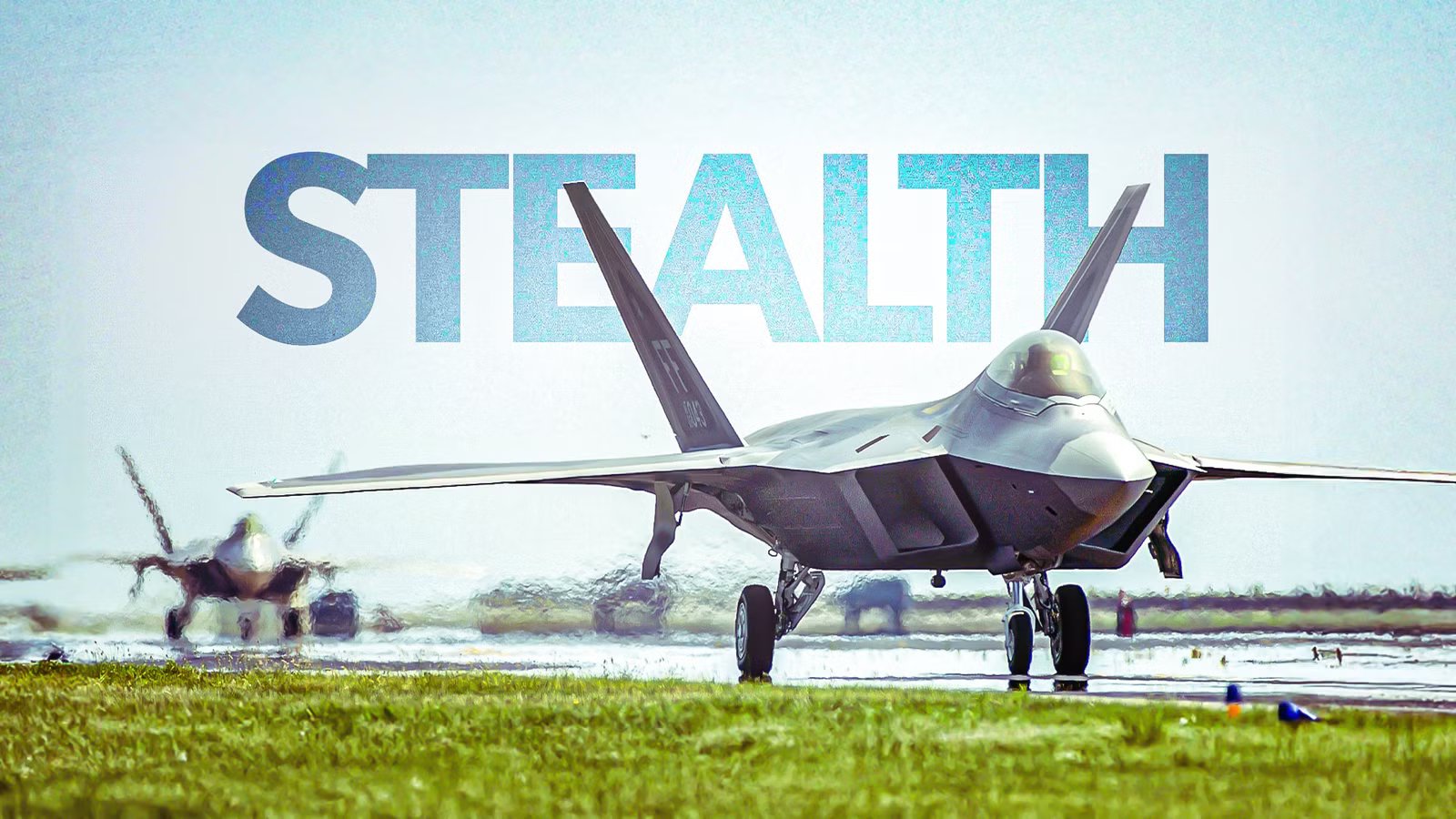
Despite being over two decades old, the Lockheed Martin F-22 Raptor remains the most powerful fighter jet in the world. However, with the introduction of the LM F-35 Lightning II, the question is: Is it still the stealthiest? Perhaps surprisingly, the answer remains yes. The reason why is clear on the surface, yet more nuanced when explored in depth, but to put it simply, the Raptor does not compromise as its newer cousin does.
The F-22 was conceived in the last days of the greatest arms race in recorded history. The mission it was made to perform demanded absolutely no chance of failure because the stakes could not be higher. Staring down the barrel of the Soviet nuclear ‘menace,’ the US Air Force worked with top defense contractors to construct the ultimate air superiority fighter, but also the world’s first stealth fighter, with cost as no object, and the result was the deadliest warbird to ever take flight.
Two Eras Of Stealth And Strategy

Now, this is not meant to be a love letter to the Raptor, but there are clear and well-documented differences between the original stealth fighter and its newest counterpart. The F-35 was made to be a more cost-effective and flexible aircraft to take on more missions and fulfill a wider range of roles more economically for not only the US but also its allies around the world. That means that its design is a compromise between stealth and operational simplicity.
The F-35 also comes in three variants, which, despite having significant differences in performance and characteristics, share over 75% parts commonality. The F-35A is a conventional land-based fighter jet with the best overall performance, while the F-35B is a ‘jump jet’ capable of vertical takeoff and landing, and finally, the F-35C has enlarged wings and strength and landing gear for carrier operations.
In order to make the airframe of the F-35 accommodate a much more expansive list of options and features than the F-22, its shape is fundamentally less stealthy. The baseline design element that defines how little radar reflects off an airplane is the shape of its exterior surfaces. The F-22 has an all-aspect stealth profile, which means that from any angle, it deflects the majority of radar waves directed at it. In contrast, the F-35 is optimized for frontal and side profiles.
How The F-35 Stacks Up

The visualization commonly used to understand the radar profile of the F-22 is that it is comparable to a marble, whereas the F-35 would be akin to a golf ball. Both are still very small targets for any air defense system, yet the F-22 is still exponentially more stealthy. Radar isn’t the only factor; however, this is another area in which the Raptor is superior.
In terms of thermal signature concealment, the F-22 wins again as its twin engine exhaust nozzles are insulated and encoded on top of the fact that the shape is stealth optimized with a ‘chevron’ edge. The F-35 has a single large exhaust nozzle that is round and has minimal stealth design characteristics by comparison to the Raptor. Similarly, because of the relatively conventional exhaust, its thermal signature is also greater.
The F-22’s engines were the first specifically designed with RCS-reducing features. Its horizontal thrust-vectoring nozzles significantly reduce its heat signature. Conversely, the F-35’s single engine has a higher bypass ratio, which can result in cooler exhaust when not using afterburners, potentially giving it an advantage in some low-power IR scenarios.
EMCON: Emission Control

Moving over to the electronic warfare (EW) aspect of the stealth comparison, the F-22 has a much lower profile, which is due to two factors. The first being that its older design means it has less data link connectivity and is built-in. And the second is that its mission is more of a focused ‘hunter-killer’ than the ‘jack of all trades’ that the F-35 is. The F-35 does have features that minimize the emissions of its networking systems, but the fact that it is almost always broadcasting makes it inherently more vulnerable.
A critical part of stealth is remaining electronically silent. The F-22 is optimized for strict EMCON protocols, using frequency agility in its radar to avoid detection. The F-35 is a networked fighter that relies on continuous data sharing through the Multifunction Advanced Datalink (MADL), which is more active and thus more detectable from an EMCON perspective.
One area in which the Lightning II is undoubtedly superior is the durability of its radar-absorbent material (RAM) coating. The Raptor has a notoriously fragile and difficult coating over its airframe, which has directly contributed to the high maintenance cost and reduced readiness levels of the fleet. Lessons learned from the F-22 have been incorporated in the F-35 program to make it a lower-maintenance platform over its lifetime.
The F-35 stealth treatment is exponentially easier to maintain and repair, to the point where there is even an effort to potentially use the newer stealth coating on the legacy F-22 fleet. The Raptor is still such a capable platform that it is not expected to be retired in the near future and rather modernized to continue serving as the ‘tip of the spear’ for decades to come.

Seven Fighter Jets That Might Rival The F-22 Raptor’s Air Superiority
The F-35 is the closest rival to the F-22 while sixth-generation fighters are underdevelopment that could supersede it.
Multi-Spectral Camouflage

The goal of ‘multi-spectral’ stealth is to conceal an aircraft across different parts of the electromagnetic spectrum simultaneously, including radar signature, thermal emissions, radio signals, and even visual appearance as well. The shiny, sometimes patchwork, ‘mirror-like’ coating seen on a few F-22s operating out of Nellis Air Force Base is an experimental test material, not a fleet-wide upgrade yet.
Unlike traditional matte-grey RAM, these ‘chrome’ skins appear as a mosaic of highly reflective tiles or sheets. It is not the first time that something like that has been seen, with even the LM F-117 Nighthawk participating in a test with a similar coating decades ago, according to The War Zone. The Navy’s VX-9 squadron also experimented with a similar coating on an F-35C, as the Aviationist covered, but the finish was applied differently. It has been noted that the intricacy and quality of what was photographed on the F-22 appear to be better than anything previously seen on other planes.
Modern adversaries increasingly use Infrared Search and Track (IRST) systems, which detect aircraft by their heat signature rather than radar. The mirror coating may reflect the cold sky or the surrounding environment to significantly reduce the aircraft’s thermal contrast. The reflective surface could act as a passive defense against low-power laser systems or directed-energy weapons, potentially dispersing laser energy before it can damage the airframe.
These trials likely support the development of Next Generation Air Dominance (NGAD) technology, exploring more durable skins that are easier to maintain than current RAM. Only time will tell if the mirror coating is merely for testing or not. In terms of concrete facts, the new Infrared Defensive System (IRDS) system functions as a passive sensor, detecting threats based on their heat signature, but the update package also contains technologies that minimize the F-22’s own IR signature.

The Striking Differences Between The F-22 Raptor & F-35 Lightning II
F-22 vs F-35: 2 fifth-generation fighters with unique strengths: speed and air dominance vs multirole flexibility. Discover what truly sets them apart
The Race For Stealth Supremacy

A renewed drive for the increased deployment of stealth platforms in the Asia-Pacific theaters is being sparked by China’s ongoing manufacturing of the J-20 Mighty Dragon, which is based on stolen F-22 technology. Additionally, China created the J-35, which may have been designed to develop into a stealth carrier-based fighter for the expanding fleet of aircraft carriers.
On top of rising activity in the Asia area, China has been more involved in the Middle East and Africa. Prototypes of stealth drones and bombers have also been spotted on Chinese social media. It is thought that technology in the flying wing bomber nicknamed the H-20 may have been gained through espionage targeting the Northrop Grumman B-2 Spirit bomber program.
Russia’s hostility against Ukraine has persisted in Europe for over three years now. Although restrictions by Western aerospace corporations have greatly affected the sector in Russia, it nevertheless boasts one of the few 5th-Gen fighters in the world. The Sukhoi Su-57 Felon may not be equivalent to the F-22, but Sukhoi is upgrading it and even building a new jet: the Su-75 Checkmate, which is akin to the LM F-35.

Which Country Has The Most Powerful 5th-Generation Fighter Jets In The World?
The United States has the world’s most advanced fighter jets, with China also rapidly developing its own advanced fifth-generation fighters.
Super Raptor: F-22 Evolved

Skunk Works constructed F-22s between 2002 and 2012, hence the fleet of 187 aircraft ranges in age from 13 to 20 years old. The first aircraft achieved Initial Operating Capability (IOC) in December 2005. As the revolutionary warbirds are beginning to show their age, no successor is ready take up its mantle, thus the ‘Super Raptor’ is in the works. Refreshing the world’s first stealth fighter is a major undertaking, and it will only keep them in service until the 6th-Gen Boeing F-47 NGAD (Next Generation Air Dominance) arrives in the 2030s.
The present upgrading efforts are intended to keep the F-22 operational as a ‘bridge’ until the F-47 becomes available in sufficient numbers. The exorbitant expense and complexity of the Boeing F-47 development have fueled concerns that the F-22 aircraft may have to service longer than originally anticipated, maybe into the 2040s.
The contract award to Lockheed Martin for the Advanced Raptor Enhancement & Sustainment (ARES) is worth almost 11 billion dollars, according to The National Security Journal. At the completion of all the upgrades, sometime in 2031, the Super Raptor will represent a new chapter of engineering excellence in the historic airplane’s legacy.