dailynewsnblog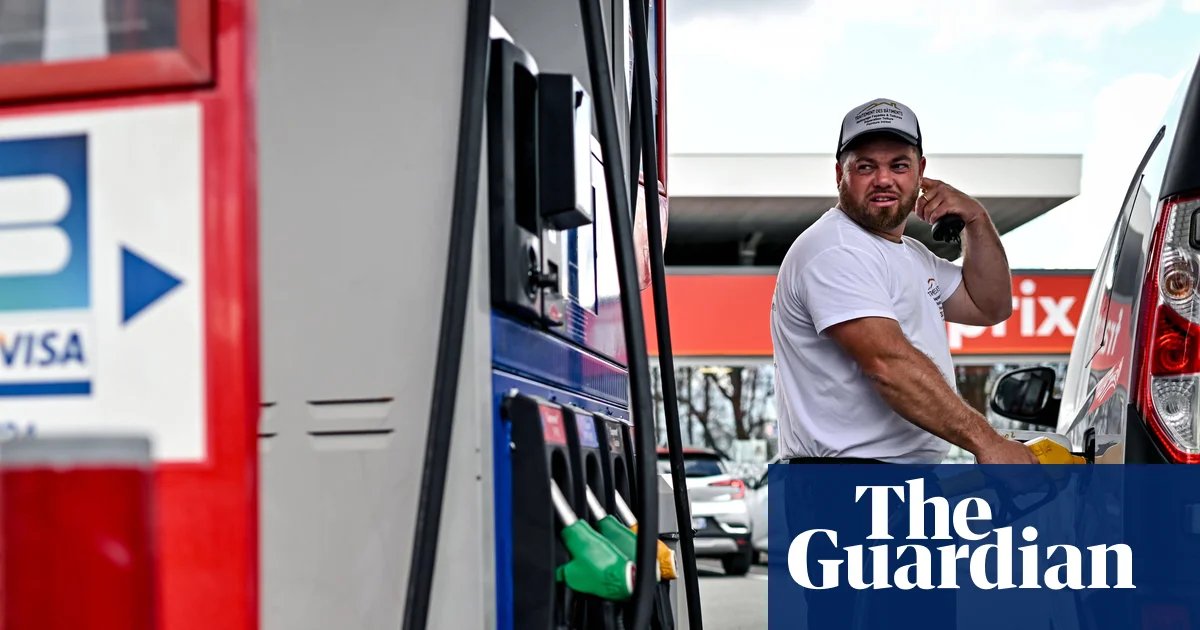
European drivers face paying an extra €220 (£190) a year at the pumps because of the surge in oil prices caused by the war in Iran, analysts have warned. In the UK, a separate estimate puts the cost at an extra £140.
A sustained oil price of $100 a barrel, the level seen on Monday, would mean motorists in the EU paying €55bn more over a year, researchers at the Transport & Environment (T&E) thinktank estimated. That is the equivalent of an average of €220 for each driver, with higher-mileage drivers facing even bigger hikes. The assessment was made by comparing data from 2022, when Russia’s invasion of Ukraine pushed the oil price to the $100 mark, with data from 2017-2019.
In the UK, analysts at the Energy and Climate Intelligence Unit (ECIU) estimate that $100 a barrel oil means British drivers who do 8,000 miles a year face a jump in annual fuel costs of £140. This calculation is based on comparison with fuel prices in early March, before the US and Israel attacked Iran.
Electric vehicles are already significantly cheaper to fuel than petrol or diesel vehicles but the surge in oil prices is widening the gap further. In the UK, the annual saving was already £870 a year but would jump to more than £1,000 a year with a $100 oil price, the ECIU said.
The 7.7m electric cars on the roads in the EU today were already cutting oil consumption, but with a $100 oil price, European electric drivers would save about €40m a day, according to T&E. Brent crude was at $91 on Wednesday morning, with its future price dependent on the duration of the disruption to supplies.
“Europe’s oil dependency creates a geopolitical premium whenever there is global volatility,” said Antony Froggatt at T&E. “This will continue to put pressure on households and cripple Europe’s economy, unless we structurally end our reliance on imported fossil fuels. Donald Trump and his friends in Russia and Saudi Arabia have a lot of power, but one thing they don’t control is the wind and sun. Europe must now prioritise electric vehicles, heat pumps and renewable energy to ensure this never happens again.”
Colin Walker, at the ECIU, said: “It’s all too reminiscent of the oil price surge after Russia’s invasion of Ukraine and a stark reminder that the UK has no real control over the price of oil. There’s been a lot of talk of energy security and North Sea drilling, but the clear lived reality is that won’t make these regular price shocks any more affordable for British drivers.”
Oil price shocks are extremely lucrative for oil companies and petrostates. In 2022, with a $100 a barrel oil price, the five biggest shareholder-owned companies – BP, Shell, TotalEnergies, Chevron and ExxonMobil – made almost $200bn in profit. The oil and gas industry as a whole has made about $1tn a year in pure profit every year for the last half century, and substantially more in years with higher prices.
Energy windfall profits regulation in the EU clawed back some of the profits in 2022 and 2023, but this has now lapsed. The EU should be prepared to rapidly reintroduce it in the event of longer-term higher energy prices, said T&E. A windfall tax remains in place in the UK, and the chancellor, Rachel Reeves, has been warned by experts that responding to industry calls to ease it would do nothing for hard-pressed consumers.
The additional €55bn paid by EU motorists in 2022 would have been even higher if EU governments had not forgone €30bn in fuel duty cuts, a fossil fuel subsidy essentially paid for by taxpayers, said T&E.
Numerous green policies across Europe have been weakened in recent years, with rightwing politicians claiming this saves costs. The Transition Security Project estimates that the 2022 energy shock cost the EU and UK $1.8tn between 2022 and 2025.
The UK government’s official advisers on climate said on Wednesday that achieving the UK’s net zero target by 2050 would cost less than a single oil shock, such as that from the Ukraine war, and insulate the country against future oil price spikes.
“Rolling back on policies and measures to achieve climate targets, such as the 2035 phaseout of fossil fuel cars, or delaying the implementation of the EU’s carbon price on heating and fuels, will only make us less secure,” said Froggatt.