dailynewsnblog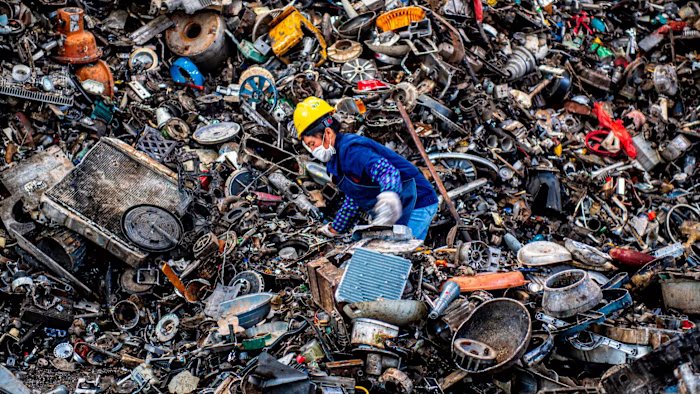
Unlock the Editor’s Digest for free
Roula Khalaf, Editor of the FT, selects her favourite stories in this weekly newsletter.
The EU’s recycling system is being weaponised against the bloc by Chinese buyers snapping up aluminium scrap, smelting it and exporting it back to Europe as newly produced metal, according to the industry’s largest recycler.
Emilio Braghi, executive vice-president of Novelis, told the Financial Times the sector risked what he described as terminal decline unless Brussels acted on its pledge to curb the export of scrap to Asia and the US.
“We have lost primary production. Now we are at risk of losing aluminium scrap,” he said, noting that Europe would be unable to meet its own environmental goals if this was the case.
EU producers pay energy prices up to four times those of their competitors, so have shifted to remelting scrap which is more energy efficient.
The recycling drive is part of EU efforts to reduce its carbon emissions to net zero by 2050, and to retain more critical materials in the bloc to avoid dependence on Chinese imports.
Unlike other parts of the world, Europe is unique in consumer behaviour and its willingness to pay more for recycled products out of a concern for the environment and climate change, Braghi said.
“We see that pull from consumers, whether they are buying a new car or they are buying an aluminium can, based on high recycled content. We don’t see that elsewhere.”

Braghi noted that about 70 per cent of beverage cans in Europe were collected, compared with about 40 per cent in the US. But that also means that traders buy them up and ship them elsewhere for higher prices.
US President Donald Trump has placed 50 per cent tariffs on aluminium imports so companies are increasingly importing scrap, which is subject to lower levies, to convert into fresh metal.
Meanwhile the Chinese government has encouraged companies to build recycling capacity to reduce raw material use and cut emissions.
India-based Novelis has invested heavily in European recycling.
“We are very efficient in Europe in the collection of scrap. We have the best technology, we have made investment, and now we need to make sure that we are retaining as much as possible the scrap which is collected, and not allowing it to flow outside of Europe,” Braghi said.
In China, “subsidised overcapacity is creating unfair competition, as they can afford to pay much higher prices for the scrap”, he added.
European Aluminium, which represents the industry, said an estimated 15 per cent of EU recycling furnace capacity was offline because of a lack of scrap. The shortfall is about 2mn tonnes a year.
The sector has an annual turnover of €40bn, directly employs 250,000 people and supports a further 1mn jobs in Europe.
EU trade commissioner Maroš Šefčovič promised in November to limit scrap exports to allow industries using aluminium “to access adequate quantities of this strategically important material at competitive prices”.
Options, to be presented in the next few months, include a levy on exports or targets for recycled content, according to people familiar with the matter.
Braghi warned that if the European Commission’s proposals failed, there would be wider repercussions for the entire metals sector as well as the bloc’s climate goals.
“I don’t know how many industrial sectors in Europe can offer a combination of an ecosystem which is so well developed, the best technology, the best knowhow from the industry,” Braghi said.