dailynewsnblog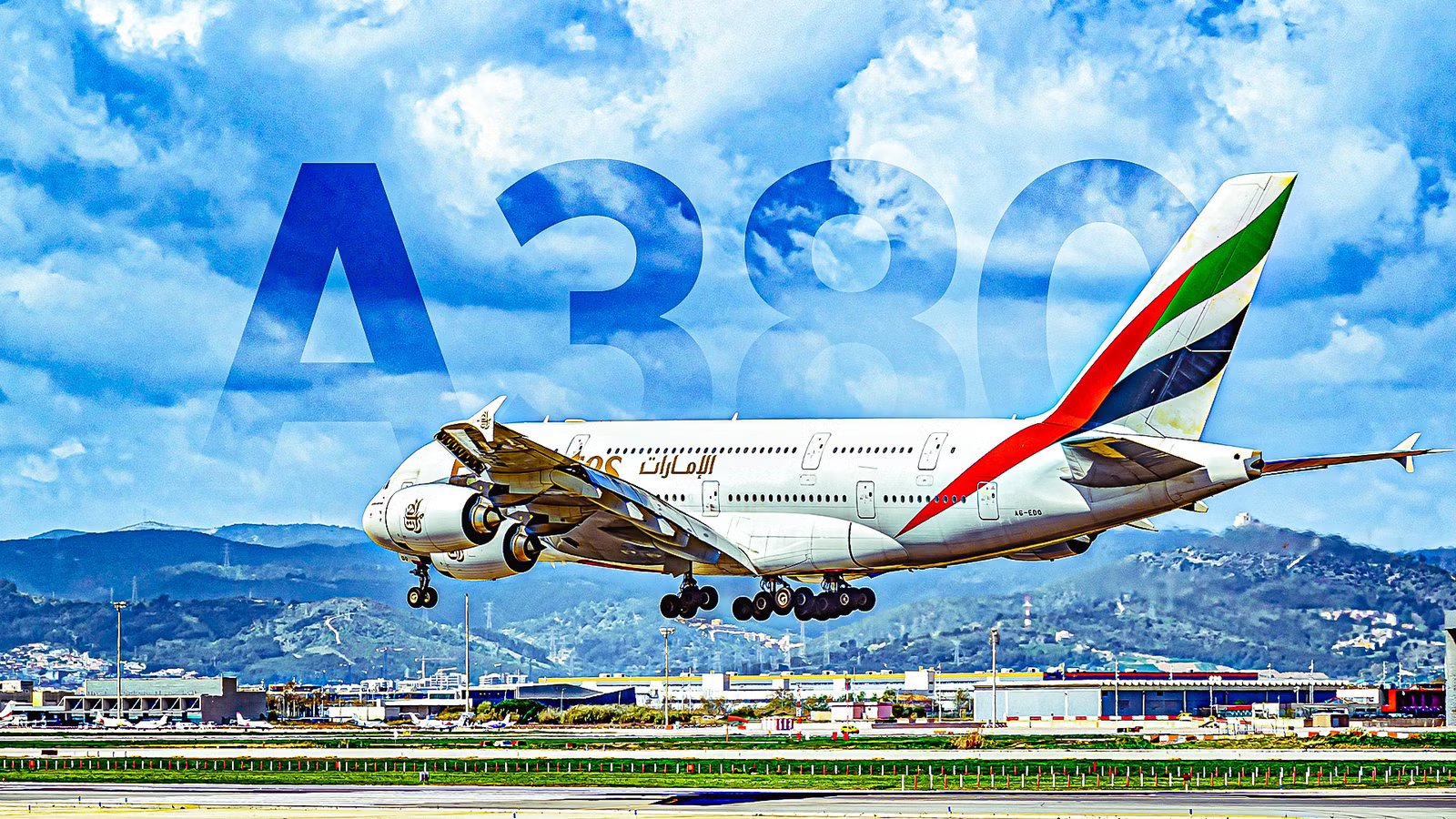
You might know that  Emirates is getting rid of its 15 non-first-class, two-class, 615-seat Airbus A380s. They are the world’s highest-capacity superjumbos. They are being retrofitted, and will become the airline’s new three-class, 569-seat configuration, with premium economy added.
According to Emirates’ schedule submission to Cirium Diio, the first passenger-carrying service on the new 569-seater will take place next month, subject, of course, to ongoing developments in the Middle East. The plan is for the 615-seat layout to be fully retired later this year, after which the new configuration will become the world’s highest-capacity double-decker.
A Look At Emirates’ New A380 Configuration

Analysis of where all of Emirates’ 615-seat A380s currently are suggests that the first two frames with the new 569-seat layout could be A6-EOP and A6-EUX. According to Flightradar24, the 10.8-year-old A6-EOP arrived in Guangzhou on February 12, where it has remained ever since. Meanwhile, the nine-year-old A6-EUX has been on the ground in  Dubai since February 22. In both cases, it is unclear if this is for maintenance or retrofitting.
The 569-seat configuration will have 76 seats in business (+18 compared to what it replaces; +31%), 56 in premium economy (new), and 437 in economy (a loss of 120 seats; -22%). Business class as a proportion of the total seats will rise by four points to 13%. The proportion of non-economy seats will jump substantially, from 9% to 23%.
Of course, the new 569-seater will still provide substantial capacity per flight. It will become the world’s new highest-capacity superjumbo layout. But unlike the configuration it will supersede, it’ll be chasing higher fares and yields with its new mid-market offering and more business-class seats. Time will tell if any of the markets which currently see the 615-seater will switch to non-A380 equipment instead.
Introducing The World’s 1st 569-Seat A380 Service

The current plan is for the first two aircraft with the new layout to be operational in mid-April. All 15 frames are due to have the new 569-seat configuration in November.
While subject to change, Emirates’ schedule shows that the first route will be Dubai to Amman. The first departure on the 569-seater will be on April 14, although that route is only due to see the new layout through May 31.
It will be Emirates’ third-shortest A380 flight from the airline’s UAE hub next month. Currently, the Jordanian capital does not have any services on the 615-seat double-decker—only those with four classes. The switch will mean EK903/EK904 loses first class, whether temporarily or not.
|
Frequency |
Dubai To Amman; Local Times |
Amman To Dubai; Local Times |
|---|---|---|
|
Daily |
EK903: 2:15 pm-4:30 pm |
EK904: 6:15 pm-10:25 pm |

Qantas Doubles Airbus A380 Flights To London—But There’s A Twist
Qantas’ extra daily A380 service to London Heathrow is a one-off, with no return flight available, raising questions about the airline’s true motives.
Prague Is Due To Be The Second Route

Other than Amman, only Prague has confirmed flights aboard A380s with the new layout. It’ll take over from the 615-seater on June 1, with all services through the rest of the year on the new three-class configuration. The switch means the ever-popular Czech capital will see Emirates’ premium economy for the first time. Just like Gatwick did recently, thanks to the introduction of the A350-900.
For now, at least, only Amman and Prague are confirmed as being destinations for the 569-seater. But as Aeroroutes pointed out recently, the launch dates of nine other routes—all of which currently see the world’s highest-capacity superjumbo—might already be known. The destinations are Bali, Bangkok, Birmingham, Düsseldorf, Jeddah, Kuala Lumpur, London Gatwick, Manchester, and Mauritius.
As Aeroroutes pointed out, this is based on Emirates using the code 388K for its latest configuration, and searching through the carrier’s SkyCargo flight schedules page for that entry. But as none of them are currently listed in the carrier’s normal passenger flight schedules, I’d recommend not reading too much into the expected launch dates.