dailynewsnblog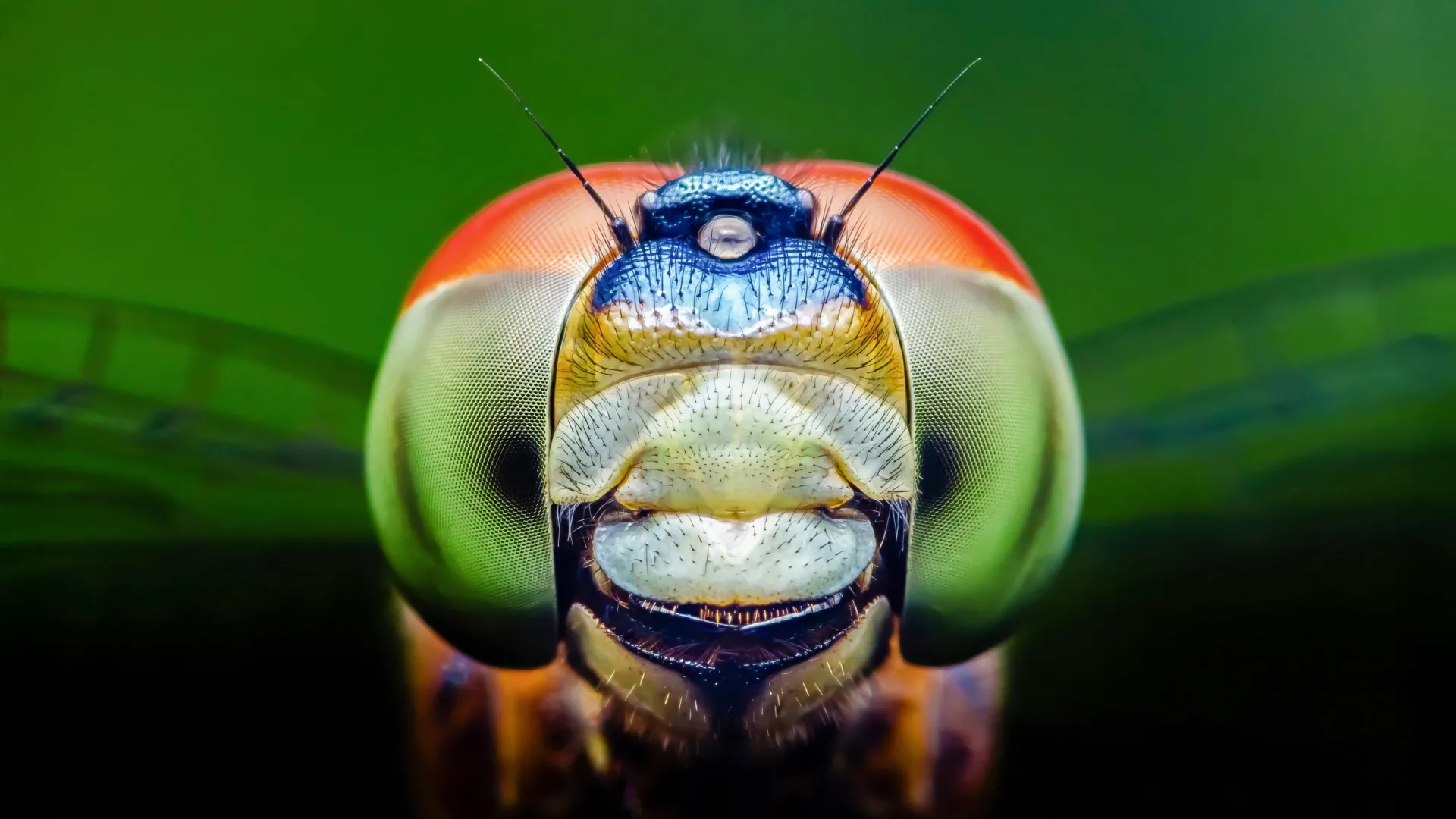
Different species sometimes arrive at the same biological solution on their own, a phenomenon known as parallel evolution. Researchers at Osaka Metropolitan University (OMU) have now found that dragonflies detect red light in a way that closely mirrors how mammals, including humans, do. Because many medical technologies depend on red light, this discovery could have implications far beyond insect biology.
Human vision relies on proteins in the eye called opsins. These proteins allow us to perceive different colors. We have three main types, each tuned to blue, green, or red wavelengths, which together enable full color vision.
Dragonflies stand out among insects for their ability to detect red light. A research team led by Professors Mitsumasa Koyanagi and Akihisa Terakita at OMU’s Graduate School of Science identified a specific opsin in dragonflies that responds to light at around 720 nm. This wavelength lies beyond the deepest red that humans can normally see.
“This is one of the most red-sensitive visual pigments ever found,” Professor Terakita said. “Dragonflies can likely see deeper into red light than most insects.”
Why Deep Red Vision Matters for Dragonflies
The scientists proposed that this heightened sensitivity helps dragonflies find mates. To explore this idea, they examined reflectance, which refers to how much light a surface reflects. In dragonflies, reflected light plays a key role in how individuals appear to one another.
Their measurements revealed clear differences between males and females in how they reflect red to near-infrared light. This suggests that males may rely on these subtle visual cues to quickly identify females while flying.
A Surprising Case of Parallel Evolution
“Surprisingly, the mechanism by which dragonfly red opsin detects red light is identical to that of red opsin in mammals, including humans. This is an unexpected result, suggesting that the same evolutionary process occurred independently in distantly related lineages,” first author Ryu Sato, a graduate student, said.
Even though insects and mammals are very distant relatives, both appear to have arrived at the same molecular strategy for sensing red light.
Engineering Dragonfly Vision for Medical Use
The team also uncovered a key detail that could make this discovery useful in technology and medicine. They identified a single position in the opsin protein that determines how it responds to light. By modifying this position, they were able to shift the protein’s sensitivity further toward longer wavelengths, bringing it closer to the infrared range.
They then engineered a version of the protein that reacts to even longer wavelengths and demonstrated that cells containing this modified opsin can be activated by near-infrared light.
Potential Applications in Optogenetics
This work could be especially valuable in optogenetics, a field that uses light-sensitive proteins to control and study cells in living tissue. Since longer wavelengths of light can penetrate deeper into the body, a protein that responds to near-infrared light could allow researchers to reach cells that are otherwise difficult to access.
“In this study, we succeeded in shifting the sensitivity of a modified near-infrared opsin from Gomphidae dragonflies even further toward longer wavelengths and confirmed that the modified near-infrared opsin can induce cellular responses in response to near-infrared light,” Professor Koyanagi said. “These findings demonstrate this opsin as a promising optogenetic tool capable of detecting light even deep within living organisms.”
The study was published in Cellular and Molecular Life Sciences.