dailynewsnblog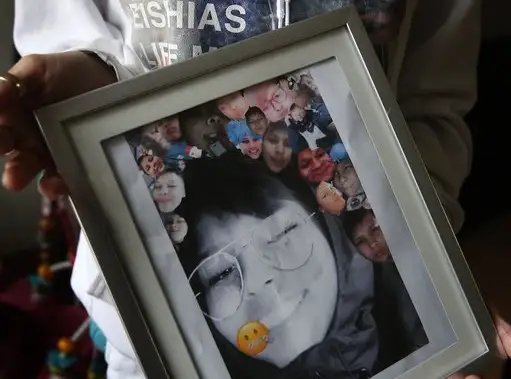
A Winnipeg officer recalled fearing he would be run over as he described a chaotic scene of police trying to stop a stolen Jeep used as a getaway vehicle in a liquor store robbery.

Const. Serge Sylvestre told an inquest into the death of 16-year-old Eishia Hudson that the Jeep she was driving came to a stop after it crashed into a truck during a police chase.
He said he ran to the driver’s side to try to arrest the girl.
“While I’m pulling on the door handle, the vehicle starts moving backwards. …If I were to stay there, I felt like I was going to be either dragged or hit,” the officer testified Thursday.
“I jumped back to create some space, and almost simultaneously, I heard a gunshot and saw the driver’s side window shatter.”
Eishia was shot on April 8, 2020, after police responded to reports of a liquor store robbery and chased the stolen Jeep. The fatality inquest heard that the vehicle “rammed” a police cruiser, as well as hit other cars during the pursuit before two shots were fired by Sylvestre’s partner.
The girl was driving the Jeep when three out of the four teens who were with her went into the store, stealing bottles and cases of liquor. An agreed statement of facts presented during this week’s hearings stated that one of the teens threatened to stab a security guard before the group took off.
Sylvestre and his partner, Const. Kyle Pradinuk, were part of a group of officers who tried to stop the vehicle at a Winnipeg intersection by deploying a device that uses hollow spikes to deflate tires, known as a Stop Stick. The vehicle jumped a median twice and then hit a parked truck before coming to a stop.

Get daily National news
Get the day’s top news, political, economic, and current affairs headlines, delivered to your inbox once a day.
With the Jeep now stopped, Sylvestre testified that he pointed his gun downward and yelled commands as he approached the vehicle. He said he couldn’t tell if Eishia heard what he said.
The Jeep then began moving backward when his hand was still on it, Sylvestre testified.
Cellphone video evidence taken from a witness was repeatedly played during the hearing. It appeared to show the Jeep was backing away from the officers during the encounter.
The sequence of events depicted in the video was the focus of questioning during Sylvestre’s testimony.
“We could see that the Jeep is moving in reverse from you as it moves. So given that it is moving backwards away from you, can you just explain why you perceived there to be a risk to your safety?” asked inquest counsel Dayna Steinfeld.
“I agree that…from where I am (the vehicle) is moving backwards. I didn’t feel like it was away from me, and that’s why this scenario is now very dangerous for me,” Sylvestre responded.
Pradinuk testified Wednesday that he fired the first shot, believing the moving Jeep was about to hit Sylvestre. A second shot was fired seconds later after Pradinuk said he saw the vehicle move in a forward motion near another officer who was on the scene.


Sylvestre agreed with Pradinuk’s account, saying he saw the Jeep move in a forward motion before the second gunshot.
Danielle Morrison, counsel for Eishia’s family, questioned Sylvestre’s memory of what happened, saying the video appears to show the Jeep continually moving backward with its reverse lights on.
“It was very quick. It was actually quite scary, too,” Sylvestre said.
“After coming to a safer spot, what I see is (the Jeep) kind of moving forward. That’s how I remember it.”
The officer said he didn’t know what the driver’s intent was when asked by Morrison.
The inquest also heard from Const. Ian Carnegie, who arrived at the scene after the shots were fired.
He said he pulled Eishia out of the driver’s seat after she didn’t comply with orders, placed her face down on the ground and handcuffed her.
At the time, he wasn’t aware she had been shot, but noticed a nosebleed and called for an ambulance.
Shortly after, Pradinuk came over and told him shots had been fired and began performing CPR.
Eishia was one of three First Nations people killed in a 10-day period in Winnipeg. The teen’s death sparked protests and calls for a public inquiry into police-related deaths of Indigenous People after Manitoba’s police watchdog did not recommend charges against Pradinuk.
The inquest is examining whether the use of force was appropriate and whether systemic racism played a role in the death, because the suspects were identified as Indigenous.
Inquests don’t assign blame, but presiding Judge Margaret Wiebe can issue recommendations to help prevent similar deaths.
It is scheduled to run until the end of the month.