dailynewsnblog
Unlock the White House Watch newsletter for free
Your guide to what Trump’s second term means for Washington, business and the world
Donald Trump’s tariffs are sharply escalating costs for midsize US companies, sparking fresh concern about the president’s flagship policies as he embarks on a campaign to revive Americans’ dim view of his economy.
A new report from the JPMorgan Chase Institute showed tariff payments by mid-market US businesses tripled over the past year, the latest sign of domestic fallout from Trump’s bid to reshape the global trading order.
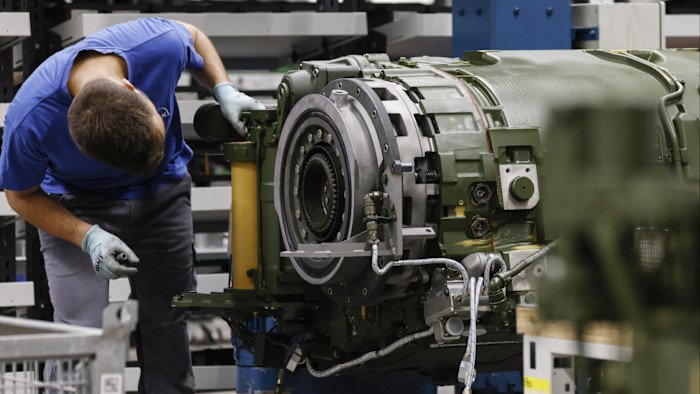
The study showed midsized companies — which lack the heft of their larger counterparts to dictate terms and shift supply chains — continued to buy foreign goods in 2025 even as duty payments surged to as much as 316 per cent of their pre-election level.
“That’s a big change in the cost of doing business internationally,” said Chi Mac, executive director at the JPMorgan Chase Institute and one of the authors of the report, which was released on Thursday.
The study is the latest to underline the domestic repercussions of the president’s sweeping tariff regime just as the White House looks to win over Americans who have cooled on his economic agenda.
Trump has wielded tariffs liberally since his return to office last year in a bid to reshore manufacturing and rebalance a trade deficit he has long criticised as unfair to the US.

The measures have swelled the federal government’s coffers, bringing in $30bn in January and $124bn in the fiscal year to date — over 300 per cent more than the same period in 2025.
Yet voters have been critical of the president’s trade agenda, with 60 per cent saying they disapproved of the increase in tariffs in a recent Pew poll.
A separate survey published this week by the Council on Foreign Relations and Morning Consult found about two-thirds of respondents felt the levies had made everyday items less affordable, compounding a cost of living crunch that has become the president’s greatest electoral liability.
Trump’s overall approval rating has slid from 50.5 per cent when he took office to a low of 42.1 per cent this week, according to a polling average from Real Clear Politics.

The White House has insisted that foreign companies will “eat” the cost of the levies. But a growing body of evidence — including papers from Germany’s Kiel Institute and the National Bureau of Economic Research — suggests they are taking a significant toll on Americans.
A study last week from the New York Federal Reserve found that 90 per cent of the cost of tariffs last year landed on US businesses and consumers, prompting a sharp rebuke from Kevin Hassett, the head of Trump’s National Economic Council, who called for its authors to be “disciplined”.
Still, despite the tariffs, inflation has cooled in recent months and US growth has accelerated, surprising many economists. The White House has pointed to this as evidence that concerns over domestic repercussions are overblown.
Hassett said on Wednesday that tariffs would ultimately benefit local businesses by shifting production to the US. “That will hurt China and drive up wages in the US and American consumers will be better off,” he said.
Thursday’s report suggested that midsized businesses, which have annual revenues from $100mn to $1bn, had begun to turn away from China, with payments declining as much as 27 per cent last year. The country was hit with tariffs as high as 145 per cent before they were dialled back following a détente between Washington and Beijing.

The debate over the impact of the president’s tariff regime comes as the White House enters campaign mode ahead of this year’s midterm elections.
Trump has started making regular trips to electoral battlegrounds as Republicans mount an effort to retain control of the House of Representatives and Senate. On Thursday he is due to travel to Rome, Georgia, where he will tout the benefits of his trade policies at a local steel plant.
Democrats have sought to weaponise the fallout over the levies and capitalise on unease among Republican lawmakers. The House voted last week to overturn the president’s tariffs on Canada and rejected a motion that would have blocked similar measures in future, with a number of Republicans breaking ranks.
The American business lobby has been vocally critical of the president’s tariff regime as companies ranging from mom-and-pop operations to multinationals are hit by the rising cost of imports.
“We hear from American farmers, workers and business owners about the harm inflicted by broad-based tariffs and the associated economic uncertainty,” Neil Bradley, executive vice-president at the US Chamber of Commerce, wrote in a letter to Congress last week.
Polling by the National Small Business Association suggests even smaller businesses that are not as directly exposed to imports are feeling the squeeze from tariffs.
“There’s a lack of stability, not a tonne of predictability, when it comes to economic policy,” said Molly Brogan, vice-president of public affairs at the NSBA. “These kinds of ebbs and flows and ups and downs we’re experiencing at such a rapid pace — that’s really hard for small businesses to handle.”
She added: “Whereas a huge company can adjust prices here and there and move things around, if you’re a small hardware store, you’re already working on razor-thin margins.”