dailynewsnblog
This article is an on-site version of our Trade Secrets newsletter. Premium subscribers can sign up here to get the newsletter delivered every Monday. Standard subscribers can upgrade to Premium here, or explore all FT newsletters
I can’t not write about the Iran war, obviously. But for our purposes there’s not much news in the past couple of days, except that US President Donald Trump seems to depart yet further from reality with each hour that passes, return becomes harder and potential damage to the world economy and trade that much bigger.
I’ll come back to Iran later this week, but today I’ll look at Trump’s attempts to construct a jerry-built tariff wall to replace the one the US Supreme Court inconveniently knocked down, then briefly check in on one potential accelerant of the trouble in the Middle East, the Houthi militants. Charted Waters, where we look at the data behind world trade, is on — guess what? — oil prices.
Get in touch. Email me at alan.beattie@ft.com
The Section 301 show trials begin
We all said the Trump administration’s Section 301 investigations, the precursor to imposing duties against unfair trade, would come soon after the emergency IEEPA tariffs were ruled illegal by the Supreme Court. We all said the rationales would be specious. We all said they would be pushed through at speed. We were right. Well done us.
The history of Section 301 is one of rise and fall, and then rise again. It was invented in the 1970s to fill what the US considered to be gaps in multilateral trade rules. Its use declined as the rule book expanded but has recently risen again as US discontent with the weakness of the international trading system has spread.
The administration fired out opening volleys last week. First came Section 301 notices against 16 countries that cited a series of existing gripes, from low chemical manufacturing capacity utilisation in Germany to cement oversupply in Indonesia. (There’s a very good analysis by Deborah Elms of the Hinrich Foundation here.) Then came the funky stuff: notices to 60 countries about their lax enforcement of laws against imports made with forced labour. There are more promised over pharmaceutical pricing, digital services taxes (again), you name it. And that’s before we get to the Section 232 (national security) tariffs.
These are pretexts for tariffs to rebuild the IEEPA wall. Before long, the Trump administration will be levelling charges at trading partners of “looking at me in a funny way”. The investigations might be rushed through at the speed of Stalin’s show trials, with about the same chance of an acquittal. You’ve got a month from today to get your written submissions in to the administration, followed by four days of hearings in April and May.
The real questions on the 301s are these:
-
How businesses and trading partners can lobby to soften the blow
-
If they are legally challengeable in court
-
Whether Trump sustains any political damage by imposing them
On the lobbying, this is hugely uncertain because we have no idea how the 301s are supposed to fit in with the existing informal “gunboat deals” Trump has forced on trading partners and which the IEEPA ruling has thrown into disarray. Governments in the first instance can try pointing at those agreements and argue for exemptions on that basis, but no one knows how that will go down.
On the legality, the consensus is that 301s are much less vulnerable to constitutional challenge than IEEPA, being explicitly presidential tariff authorities with an established history. However, Jennifer Hillman, law professor at Georgetown University, who accurately predicted that the IEEPA tariffs would be struck down, has said (writing here with colleague Marc Busch) previous court rulings have established that Section 301s have to be used for their intended purpose and aren’t a catch-all authority in the way that IEEPA is, which might make them susceptible. So legal challenge is worth a shot in any case.
On the politics, what would get interesting is if enough congressional Republicans in both houses decided there was political capital to be made in opposing the tariffs, which they have become increasingly bold in criticising. Congress can’t block 301s, but it can certainly make a lot of noise, demand additional hearings, ask for more disclosure and generally harry the administration throughout. For my money, this would certainly be the fun stuff and possibly somewhat consequential given the midterm elections later this year.
The uncertain Houthi threat to Suez oil
So what, as my colleagues ask, are the Houthis up to? As a reminder, the militant Shia group, which is somewhat allied to Iran, has controlled much of Yemen since 2014 despite a prolonged US-backed Saudi bombing campaign. In late 2023, they began attacking ships in the Red Sea, ostensibly just those of Israel and its allies — but endangering traffic in general.
The attacks were much less damaging to global trade than many feared. Freight rates shot up but then dropped back quite quickly. A large majority of Asia-Europe container trade started going round the southern tip of Africa instead of through the Suez Canal, discovered it wasn’t that much more expensive and hasn’t changed back since. Given that there’s a fair amount of slack in the container trade right now, shipping lines could probably cope with having to divert another bunch of container vessels south.
But the number of oil tankers (and bulk carriers) still taking the Red Sea route has fallen much less since 2023. It’s a way bigger diversion to take a tanker bound for Europe from the Gulf down round Africa than it is simply to direct container vessels from Asia in a more southerly path across the Indian Ocean. So having oil tankers first struggling to get out of the Gulf and then being blocked from the Suez route is a lot more serious.
I have less than zero idea about whether the Houthis will step up their attacks on ships attempting to pass through the Red Sea. If they do, the move in the short term will probably amplify the oil supply shock rather than create a general crisis in container shipping trade. You may try to take what comfort you can from that.
Charted waters
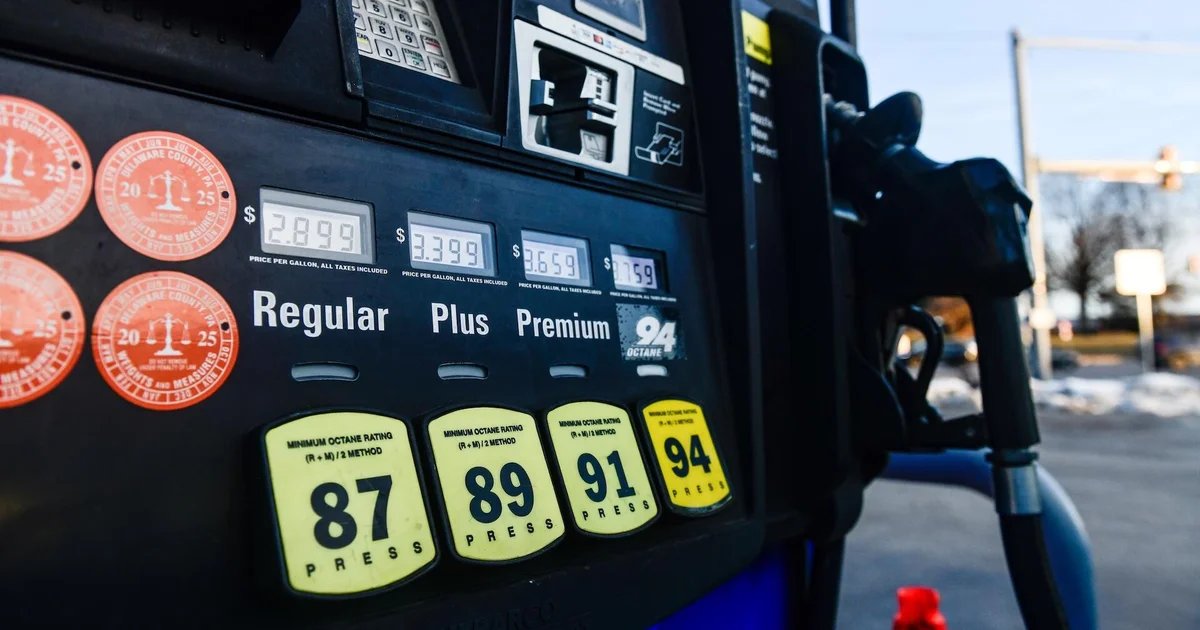
Brent is too damn high. The chart that really matters shows Brent crude ended last week above $100 per barrel for the first time since the early days of the Ukraine war in 2022.

Trade links
-
The Iran war is pushing China and Russia closer together over energy and economic security.
-
A Centre for European Reform paper looks at how the EU should be treating Chinese direct investment in Europe. (I will come back to this issue regarding FDI in Europe and elsewhere.)
-
The Wall Street Journal has a nice profile of Richard Eaton, the Court of International Trade judge presiding over the IEEPA refunds case.
-
Diana Choyleva from Enodo Economics and the Asia Society argues that even if the renminbi doesn’t fully rival the dollar, increased settlement in the Chinese currency will nonetheless erode the greenback’s power.
-
The US, Mexico and Canada are starting talks to update the USMCA agreement.
Trade Secrets is edited by Harvey Nriapia
Recommended newsletters for you
The AI Shift — John Burn-Murdoch and Sarah O’Connor dive into how AI is transforming the world of work. Sign up here
FT Swamp Notes — Expert insight on the intersection of money and power in US politics. Sign up here