dailynewsnblog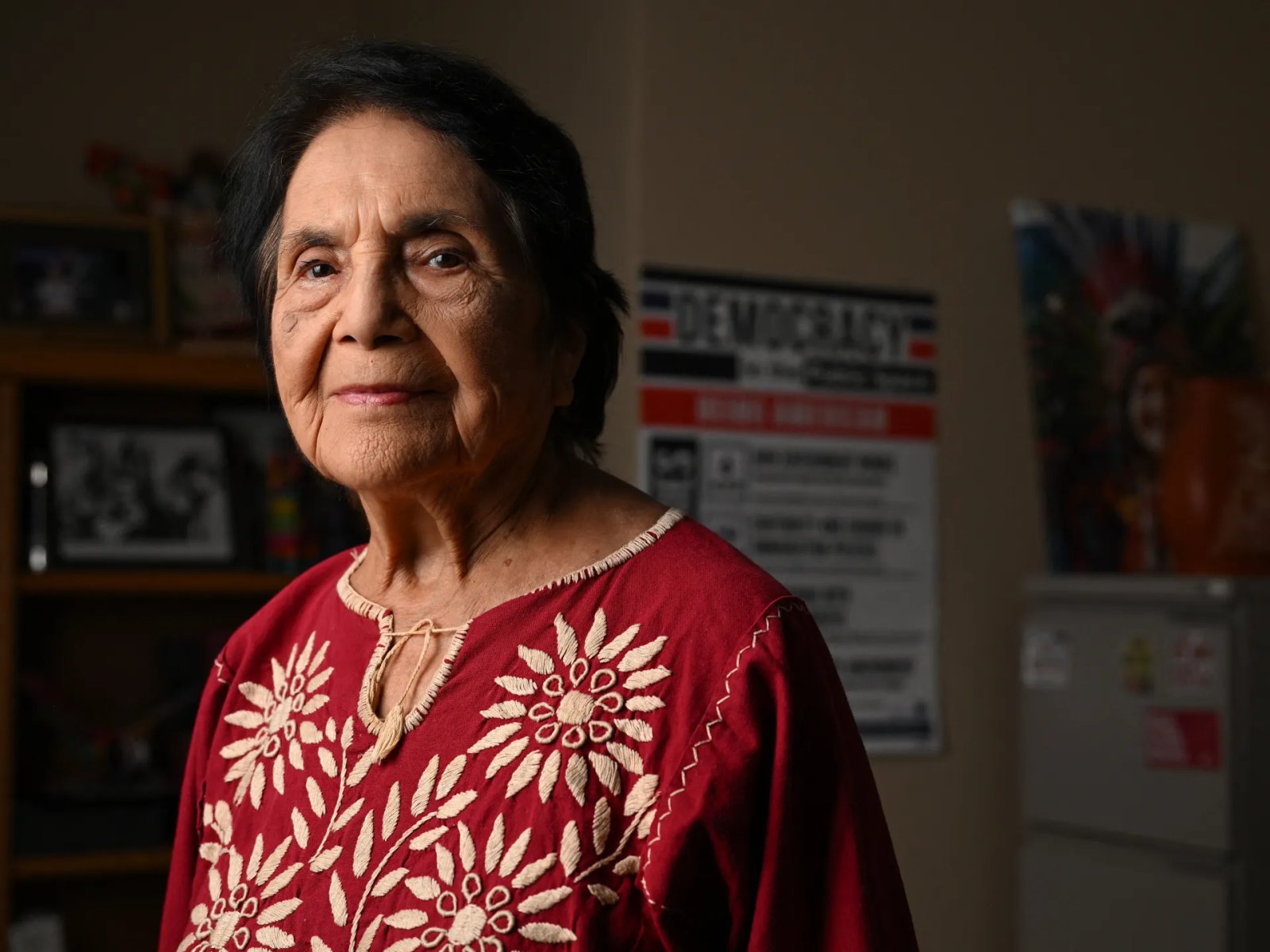
Content note: This story contains details of sexual violence.
Civil rights icon Dolores Huerta is one of several women in the United States speaking out against the sexual violence they say they endured at the hands of labour leader Cesar Chavez.
Recommended Stories
list of 3 itemsend of list
In a statement on Wednesday, Huerta said she was motivated to speak out after being contacted for an investigation by The New York Times, which revealed that children as young as age 12 were abused by Chavez.
“I am nearly 96 years old, and for the last 60 years have kept a secret because I believed that exposing the truth would hurt the farmworker movement I have spent my entire life fighting for,” Huerta wrote.
“Following the New York Times’ multi-year investigation into sexual misconduct by Cesar Chavez, I can no longer stay silent and must share my own experiences.”
Chavez, who died in 1993, co-founded the National Farm Workers Association alongside Huerta and other advocates. They rose to fame during the US civil rights movement of the 1960s, practising nonviolent protest techniques similar to those of Mahatma Gandhi and Martin Luther King Jr.
Together, Chavez, Huerta and other advocates drew attention to the abuses facing vulnerable immigrant farmworkers, particularly in the Hispanic and Filipino American communities.
Some of the slogans from the movement continue to have resonance in the US political sphere.
The Spanish phrase “si, se puede” — or, in English, “yes, we can” — was adopted as the campaign slogan for President Barack Obama, while the Tagalog phrase “isang bagsak” continues to be a rallying cry for collective organising.
The fight for equality and fair labour practices that Huerta and Chavez led would be remembered as one of the defining moments of the 1960s.
But it was out of fear of denting the burgeoning civil rights movement that Huerta and other women say they stayed silent about Chavez’s abuse.
“I carried this secret for as long as I did because building the movement and securing farmworker rights was my life’s work,” Huerta said in her statement.
“I wasn’t going to let Cesar or anyone else get in the way. I channeled everything I had into advocating on behalf of millions of farmworkers and others who were suffering and deserved equal rights.”
Huerta explained that the first time she had sex with Chavez, she was “manipulated and pressured” into submitting to his advances while on a trip to San Juan Capistrano.
“I didn’t feel I could say no because he was someone that I admired, my boss and the leader of the movement I had already devoted years of my life to,” she said.
The second time, she said she was “forced, against my will”. The New York Times investigation includes a summary of what Huerta says happened: She was in a car that Chavez was driving when he parked in an isolated grape field and raped her.
Both instances resulted in pregnancies, which Huerta says she kept secret. The children were ultimately given to other families to raise.
“I had experienced abuse and sexual violence before, and I convinced myself these were incidents that I had to endure alone and in secret,” she said.
Her story was echoed by the accounts of other women featured in The New York Times investigation.
One of the interviewees, Ana Murguia, said she was 13 when a 45-year-old Chavez kissed her, took off her clothes and tried to have sex with her in his locked office.
He had known her since she was eight years old, and the abuse at his hands prompted her to attempt suicide.
Debra Rojas, meanwhile, was 12 years old when Chavez began groping her. She described being 15 when she was raped by him at a motel near Stockton, California.
A third woman, Esmeralda Lopez, said she was 19 when Chavez tried to pressure her to have sex with him while they were alone on a tour, offering to use his influence to get something named in her honour.
Lopez said she refused his advances, and her mother, a fellow activist, corroborated her account, based on conversations they had at the time.
The women explained that they grappled with whether to come forward and whether they would be believed, given Chavez’s rise to fame as a civil rights hero.
In response to the widening scandal on Wednesday, United Farm Workers — the group that emerged from the National Farm Workers Association — announced it would not participate in any events on Cesar Chavez Day, a federal commemoration that falls on the late leader’s birthday.
The group denied receiving any direct reports of abuse, but it pledged to create a pathway for reports to be submitted.
“Over the coming weeks, in partnership with experts in these kinds of processes, we are working to establish an external, confidential, independent channel for those who may have experienced harm caused by Cesar Chavez,” United Farm Workers wrote in a statement.
“These allegations have been profoundly shocking. We need some time to get this right, including to ensure robust, trauma-informed services are available to those who may need it.”
Lawmakers across the political spectrum, from Texas Governor Greg Abbott to New Mexico Representative Ben Ray Lujan, also called for Chavez’s name to be stripped from public buildings, roads and other places of honour.
Lujan called the revelations in Wednesday’s New York Times report “horrific” and a “betrayal of the values that Latino leaders have championed for generations”.
“His name should be removed from landmarks, institutions, and honors,” Lujan said of Chavez. “We cannot celebrate someone who carried out such disturbing harm.”
Huerta, meanwhile, said that, in the wake of the investigation, community advocacy was more important than ever.
“I have kept this secret long enough,” she wrote. “My silence ends here.”