dailynewsnblog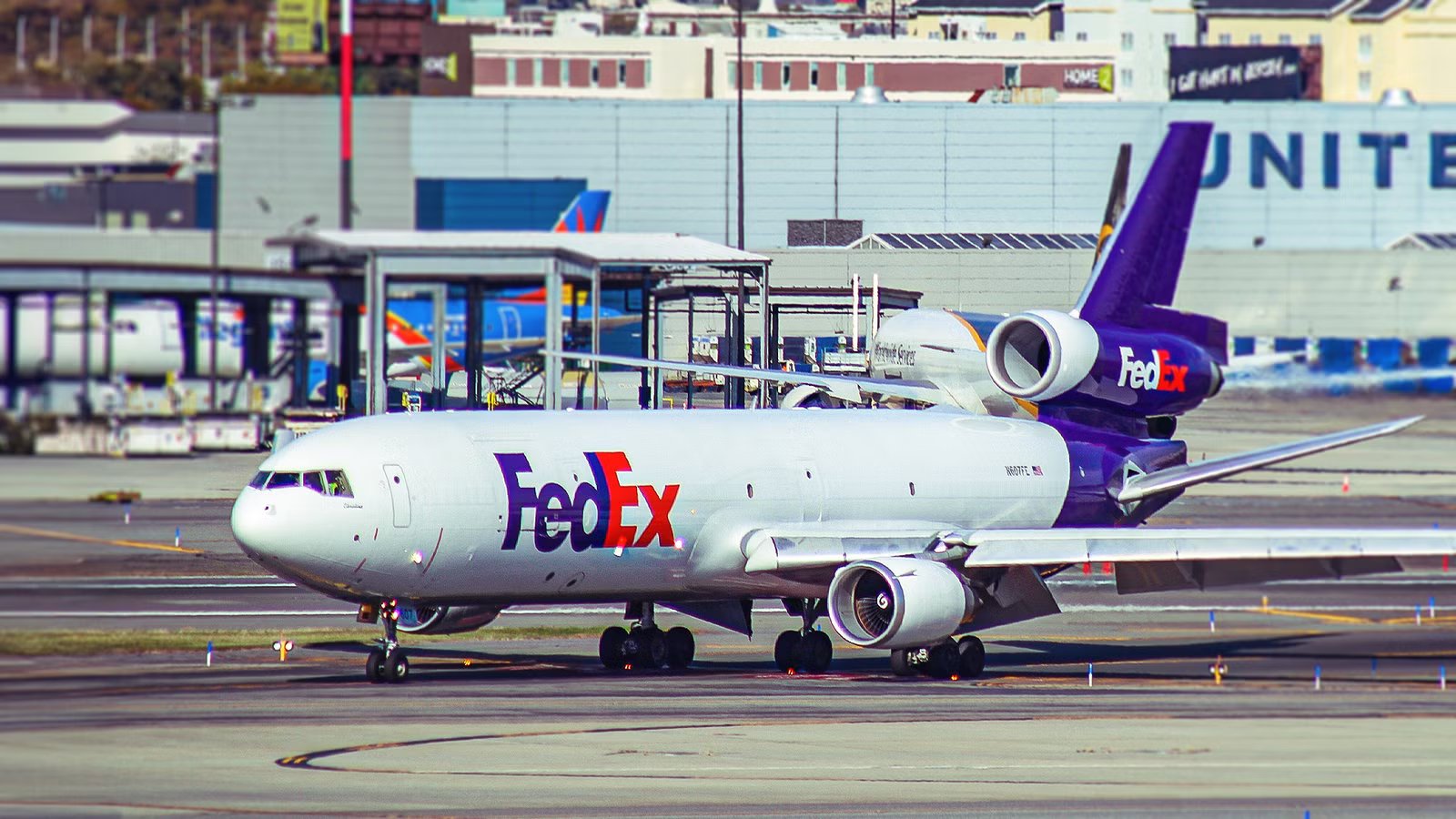
The McDonnell Douglas MD-11 is one of the most striking airliners ever made. With its widebody configuration and distinctive trijet configuration, the MD-11 stands out from other airliners. Its design is even unique among other trijets. The MD-11 and its predecessor, the DC-10, were workhorses for large airlines, especially for cargo airlines in the case of the MD-11. However, the trijet design that defined the MD-11 and the DC-10 ended up being the downfall of the model as a whole.
The McDonnell Douglas MD-11 was an evolution of the DC-10. The DC-10 was McDonnell Douglas’s first widebody program, and the first aircraft type to be released after the 1967 merger of Douglas Aircraft Company and McDonnell Aircraft. Its smaller size compared to the Boeing 747 improved its versatility, while its widebody design meant that it still had the same improved operating economics of a widebody airliner. It competed primarily against the Lockheed L-1011 TriStar, but the two aircraft featured significant differences in design, including the tail engine.
Overview Of The McDonnell Douglas MD-11

The McDonnell Douglas MD-11 is a widebody trijet manufactured by McDonnell Douglas from 1988 to 2000, with the final three years of production taking place after the merger of McDonnell Douglas and Boeing. It was an improved derivative of the McDonnell Douglas DC-10, manufactured from 1969 to 1989. The DC-10 was primarily a medium to long-range airliner meant for US domestic routes and transatlantic services, while the MD-11 was designed to match the range of the Boeing 747-200 and 747SP.
From the exterior, the MD-11 can be differentiated from the DC-10 through its stretched fuselage, increasing its capacity. The wings were refined to reduce drag and received new split-tip winglets, improving fuel efficiency. The MD-11 would feature the new General Electric CF6-80 or the Pratt & Whitney PW4000-94, which were more powerful and efficient than the engines on the DC-10. On the inside, the MD-11 featured a full glass cockpit, eliminating the need for a flight engineer, and the aircraft also features a smaller empennage and horizontal stabilizer.
The MD-11 was a fairly minor overhaul to the DC-10’s design. While it was modernized, McDonnell Douglas’s attempts to sell an improved DC-10 were a signal of the company’s rough financial state. Issues with the DC-10 had cost the company millions in lawsuits and expensive redesigns, while the aircraft also faced demand issues due to the presence of a similar L-1011. The company only had enough money to refresh the trijet MD-11 in an age when twinjets were clearly the future, and the MD-11 only sold a dismal 200 units.
The Design Of The MD-11’s Tail Engine

The most distinctive part of the MD-11 is the tail-mounted engine, also known as the number two engine. This design was carried over from the DC-10, where a trijet layout meant that the aircraft burned less fuel than a 747 without being subject to overwater flight restrictions. The narrowbody Hawker Siddeley Trident and Boeing 727 were the first commercial trijet airliners, while the introduction of more powerful high-bypass turbofan engines meant that the trijet design could be used for widebodies.
On most trijets, the center engine is installed inside the aircraft’s rear fuselage. The front of the engine, including the fan, is essentially hidden, and the engine receives air through a curved S-duct. This is the design used by virtually all trjets, including the Lockheed L-1011 TriStar, the Boeing 727, the Tupolev TU-154, and the modern-day Dassault Falcon business jet. This design was relatively easy to service and was more aerodynamic. However, designing an S-duct can be complicated and expensive, while also restricting future development since the engine is placed in a small bay within the fuselage.
The McDonnell Douglas DC-10 and MD-11 are unique in that the center engine is mounted on top of the fuselage, rather than inside. The engine is identical to the other two and features a fan, but it’s placed within a long, straight cowling, while the vertical stabilizer is mounted on top of the cowling. This configuration is easier and cheaper to design, and it was also easier to alter to accommodate newer, larger engines. However, it was also less aerodynamic and had a greater impact on aircraft handling in the event of an engine failure.

The Problem Lockheed Ran Into After Designing The L-1011 TriStar
The aircraft entered service later than its rival despite its advanced design, which left it to fight for market share from behind.
The Design Philosophy Of The DC-10

The DC-10 was McDonnell Douglas’s first commercial aircraft program after the 1967 merger. The new company took a cautious approach to the program, seeking to minimize costs by using technologies and design elements from the DC-8 and DC-9 programs. The center engine is a perfect example, as the design is less aerodynamic than an S-duct, but it was cheaper to develop.
The DC-10 competed against the Lockheed L-1011 TriStar, which was essentially the same aircraft as the DC-10. Lockheed, however, designed the L-1011 to be the world’s most technologically advanced airliner. But while this earned the L-1011 respect and admiration from passengers and crew, the comparative simplicity of the McDonnell Douglas DC-10 may have given it the edge over the TriStar.
The DC-10 entered service before the L-1011, and it was cheaper to acquire, too. In addition, McDonnell Douglas was a proven manufacturer with established business relations, whereas Lockheed had previously exited the commercial aircraft market in 1961. While the DC-10’s reputation was marred by early accidents related to its cargo door design, the type sold well over 100 additional units to airlines compared to the L-1011. The DC-10 became known as a robust workhorse for large flag carriers around the world, lauded for its simplicity, reliability, and durability.
The Failure Of The McDonnell Douglas MD-11

While the DC-10 went on to become safe and dependable, McDonnell Douglas never made money with the program. Lawsuits from the type’s early accidents totaled hundreds of millions in settlements, and sales of the program were also hampered by the fact that the market was only big enough for one trijet widebody. The twinjet Airbus A300, despite being produced by a then-unproven manufacturer, outsold both the DC-10 and L-1011, and McDonnell Douglas found itself cash-strapped in the 1980s.
The MD-11 was designed for long-haul flying to compete against the Airbus A340, Boeing 747-400, and the 777. However, while the MD-11 beat out the A340 and 777 to the market, it failed to meet its payload-range promises when introduced. Despite being a trijet, the MD-11 burned more fuel than the four-engined A340, while high ETOPS ratings, originally pioneered with the Boeing 767, enabled the twinjet Boeing 777 and Airbus A330 to operate similarly long routes.
|
Late 20th-Century Long-Range Widebodies |
Entry Into Service |
Sales |
|---|---|---|
|
Boeing 747-400 |
1989 |
697 |
|
McDonnell Douglas MD-11 |
1990 |
200 |
|
Airbus A340-200/300 |
1993 |
246 |
|
Boeing 777-200/200ER/300 |
1995 |
570 |
The MD-11 turned out to be an inefficient aircraft that didn’t live up to expectations. The tail engine, a relic of an era long passed that was carried over due to a lack of funds, ensured that the aircraft never stood a chance against twinjets. The A340 and 777 ended up being more capable than the MD-11 while simultaneously burning less fuel, and Airbus A330s had largely the same capacity while still being capable of operating transatlantic routes. The MD-11 only sold 200 examples, one of the worst commercial aircraft failures in modern history.

Why The McDonnell Douglas MD-11 Won’t Be Retired Anytime Soon
While the type was not popular as a passenger jet, the MD-11 still flies today, operating cargo flights. These jets will fly into the 2030s.
Where The MD-11 Found Marginal Success

The MD-11 was not a competitive passenger aircraft against its competitors in the 1990s. In the cargo market, however, the MD-11 was the most modern and efficient aircraft on the market. The MD-11 had been offered as a freighter since day one, while a freighter version of the Airbus A340 or first-generation Boeing 777 had never been offered. The second-generation 777 featured a freighter variant; however, the 777F only debuted in 2009, years after the MD-11 went out of production.
The MD-11 was the best new-build freighter available on the market in its time, with more capacity and range than the 767-300F, while burning less fuel than a Boeing 747. Over a quarter of all MD-11s sold were the MD-11F, and cargo airlines grew their MD-11 fleets as passenger MD-11s became available on the used market in the 2000s. The aircraft type soldiered on until the mid-to-late 2010s, as the MD-11 fleet began to age out, increasing maintenance costs.
|
Aircraft |
Entry Into Service |
|---|---|
|
McDonnell Douglas MD-11F |
1991 |
|
Boeing 747-400F |
1993 |
|
Boeing 767-300F |
1995 |
|
Boeing 777F |
2009 |
|
Airbus A330-200F |
2010 |
Fuel cost is far from all the costs of operating an airliner, and cargo airlines are especially sensitive to capital costs. For cargo carriers, a less efficient, cheaper aircraft is often better than a more efficient, more expensive freighter. This is why the MD-11 continued to be widely used even years after twinjet freighters entered service. Today, many MD-11s are over 30 years old, and the type is gradually being retired by its two largest operators, FedEx and UPS. However, this iconic, fuel-thirsty trijet has made its legacy as a dependable workhorse for cargo airlines, even if it was ill-suited for the needs of the passenger market.