dailynewsnblog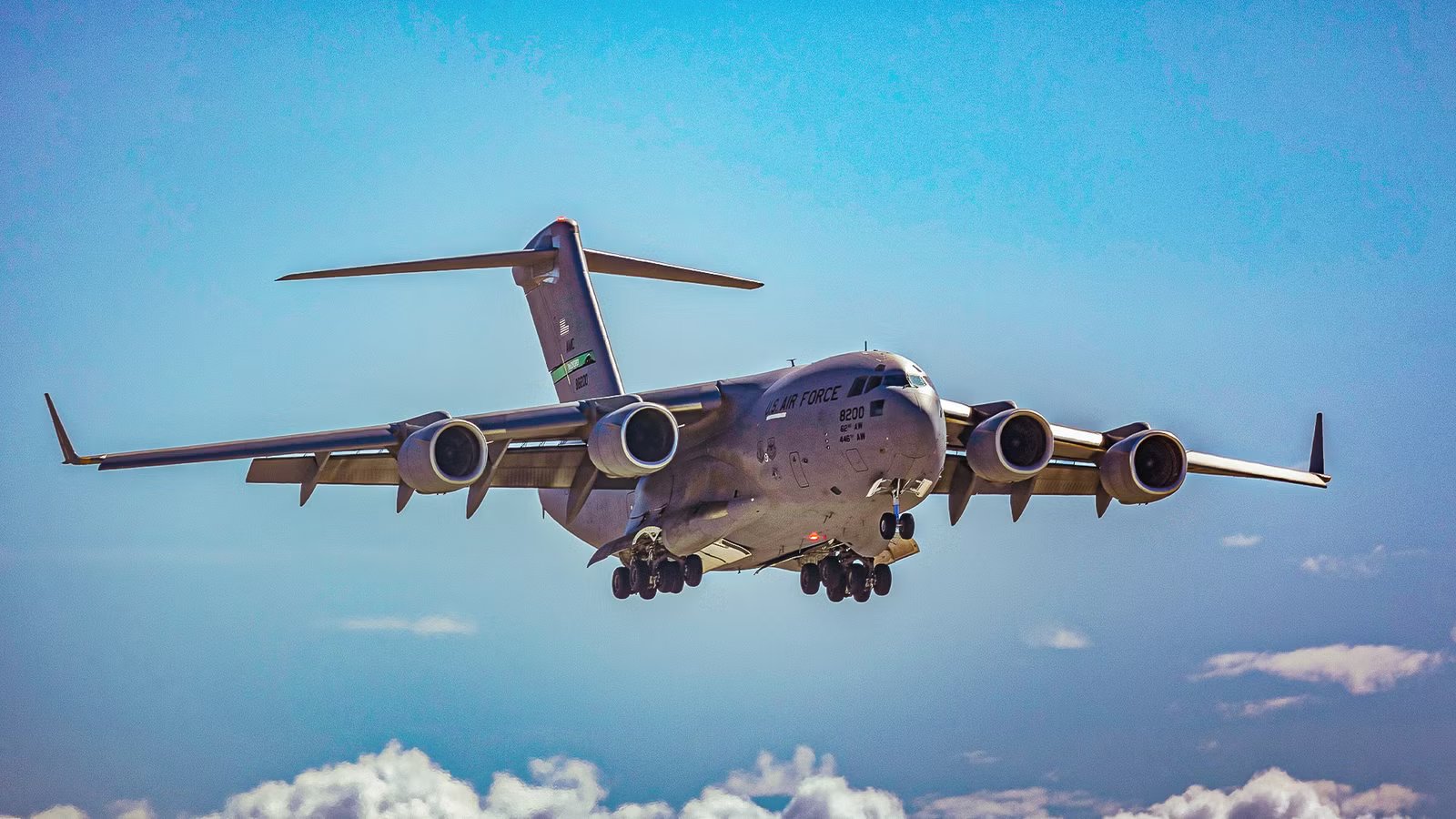
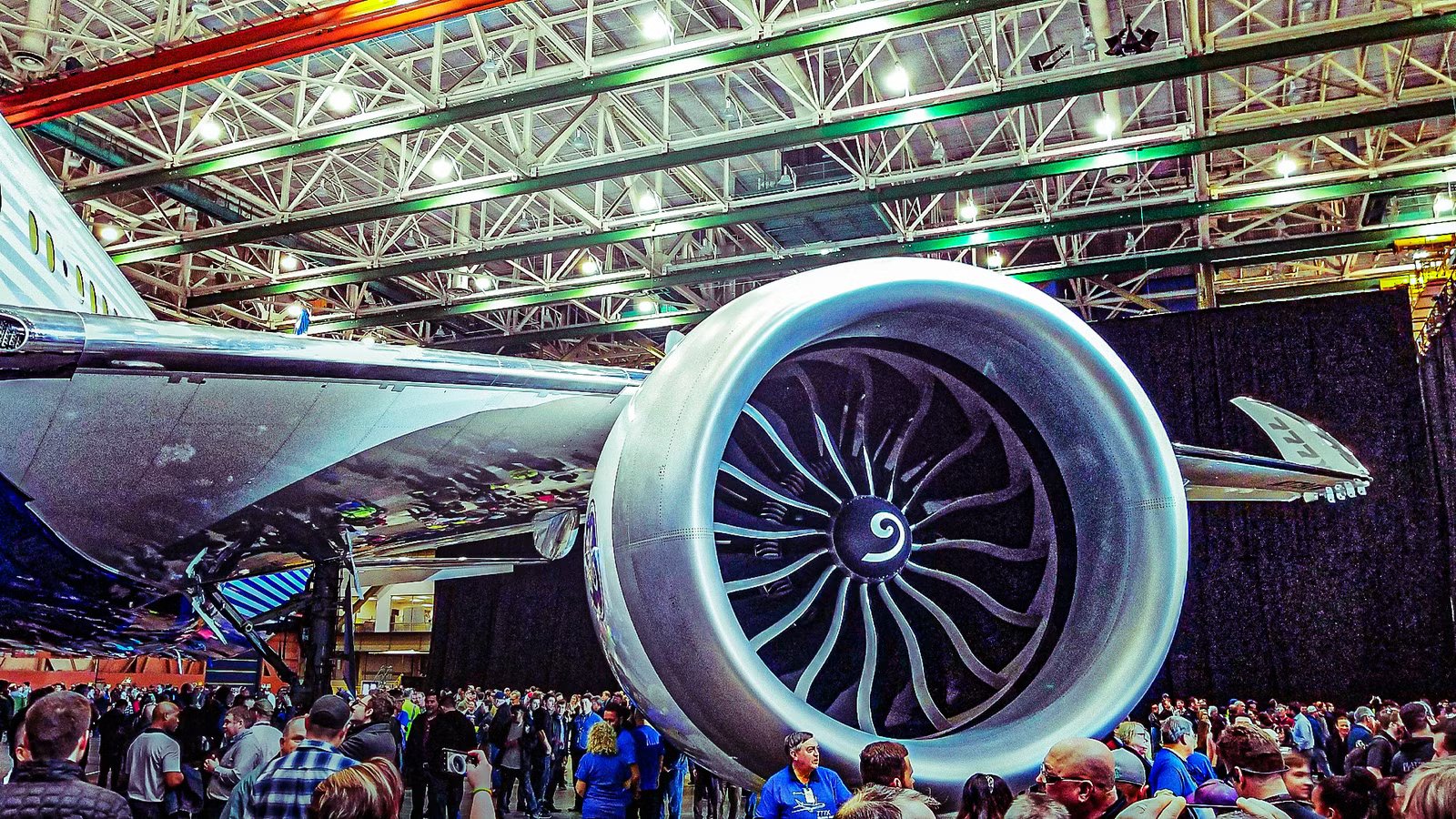
Yes, it’s true, the Boeing 757 airliner and the McDonnell Douglas C-17 Globemaster III are both equipped with the Pratt & Whitney PW2000 high-bypass turbofan. These two very different aircraft use the same engine, but the overlap is essentially confined to the core components. The Boeing 757 uses two of either the PW2037 or PW2040, while the C-17 is powered by four F117-PW-100 engines.
The different designations indicate the different features of the two engines. The models made for the 757 are designed to be lower maintenance and more fuel-efficient. The C-17 variant is not only a more ruggedized model but has a unique reverse thrusting capability designed for special maneuvers and backing itself up on inclined surfaces on rough airfields. Naturally, this makes sense as an airliner doesn’t have to withstand the same rigors as a military aircraft.
Cut From The Same Cloth

The C-17 Globemaster III uses a military-specific variant of the Pratt & Whitney PW2000 engine family, while the Boeing 757 utilizes several commercial models from both Pratt & Whitney and Rolls-Royce. The F117-PW-100 is the exclusive engine for the C-17 and is specifically derived from the commercial PW2040.
Across all variants, the engines for these two aircraft operate in a mid-thrust range of roughly 37,000 to 43,000 pounds. Only the F117 variant features a directed-flow thrust reverser capable of in-flight deployment and backing the aircraft up a 2-degree incline on the ground.
The PW2037 is found on the lighter 757-200 and rated at 38,250 pounds, while the PW2040 is rated at 41,700 pounds for 757 freighters, and the PW2043 is the most powerful at 43,000 pounds of thrust for the stretched 757-300. Unlike the C-17, which only uses the F117, many Boeing 757s are powered by an entirely different engine family: the Rolls-Royce RB211.
|
Aircraft |
Engine Family |
Engine Variant |
Takeoff Thrust (lbf) |
Takeoff Thrust (kN) |
|---|---|---|---|---|
|
C-17 Globemaster III |
P&W PW2000 |
F117-PW-100 |
40,440 |
180 |
|
Boeing 757-200 |
P&W PW2000 |
PW2037 |
38,250 |
170 |
|
Boeing 757F |
P&W PW2000 |
PW2040 |
41,700 |
185 |
|
Boeing 757-300 |
P&W PW2000 |
PW2043 |
43,000 |
191 |
|
Boeing 757 |
RR RB211 |
RB211-535C |
37,400 |
166 |
|
Boeing 757 |
RR RB211 |
RB211-535E4 |
40,100 |
178 |
|
Boeing 757 |
RR RB211 |
RB211-535E4-B/C |
43,100 |
192 |
The F117-PW-100 generates 40,440 pounds of thrust. This rating gives the C-17 enough power to carry massive payloads (up to 170,000 pounds) and take off from short 7,600-foot runways. The F117 gearbox includes more hydraulic pump pads to meet the C-17’s increased hydraulic demand for operating massive cargo ramps and flight controls.
The Ultimate Airlifter

The F117’s thrust reversers can be used in flight, allowing the C-17 to perform extremely steep tactical descents at speeds exceeding 15,000 feet per minute. The F117 enables the C-17 to back up a 2-degree incline and make tight ground turns on its own power, which is critical for tight tactical airfields where tugs are unavailable.
The F117’s system reroutes both primary exhaust and bypass air upward and forward, in contrast to the 757’s reversers, which only reroute bypass air. When using austere or unpaved runways, this design keeps dust and debris from being consumed. The F117 is designed to resist ingesting large amounts of dust and sand. Even after operating in hostile desert conditions that would normally result in considerable wear on a commercial engine, it is made to function flawlessly.
The C-17’s externally blown flap system depends on the F117’s location and exhaust control. Exhaust from the engine is specifically directed through and beneath big, slotted flaps. The enormous aircraft can make remarkably slow and steep approaches for short-field landings thanks to this design, which effectively doubles the wing lift.
The engine is designed to work in conjunction with a powerful onboard Auxiliary Power Unit (APU) that allows for independent operation in remote areas without ground support equipment. Recent enhancements use second-generation single-crystal turbine materials and advanced thermal coatings to lower operating temperatures, extending the engine’s time on the wing despite harsh conditions.
From Muscle Jet To War Sled

The C-17 Globemaster III was first developed as the C-X program in the 1980s, with the goal of replacing the aging C-141 Starlifter with a versatile jet capable of combining strategic range with short, tactical landings. In the 1980s, few engines could deliver the necessary 40,000 pounds of thrust while maintaining the high reliability required for remote military operations.
When development started, the PW2000 was already a workhorse on the Boeing 757, having entered commercial service in 1984. Aircrew still find the 757 to be among the most enjoyable planes to fly because of its great performance, with the plane sometimes referred to as a “muscle jet.”
The military could take advantage of established supply chains, maintenance know-how, and shared technology, such as the full authority digital engine control (FADEC) system, which made its debut on the PW2000, by utilizing a derivative of a major commercial engine. For a number of reasons, the F117 is still the only engine available for the C-17 as of 2025, despite improvements in engine technology.
Replacing engines in an existing fleet would be eye-wateringly expensive (see the Boeing B-52J Stratofortress). While newer engines are more efficient, the benefits are insufficient to justify the enormous engineering costs of modifying a ruggedized military airframe. The C-17’s wing and airframe were specifically designed to match the F117’s weight and thrust profiles. Increasing engine power significantly may exceed the airframe’s structural limits, implying that a new engine will not necessarily allow the plane to carry more cargo.
The current four-engine configuration provides critical redundancy in combat zones, allowing the aircraft to finish missions even if one engine is lost—a standard tactical requirement that remains unchanged. Instead of a full replacement, Pratt & Whitney introduced the Reduced Temperature Configuration (RTC) in 1994 and continued durability improvements into the 2020s. As of late 2025, current Air Mobility Command projections indicate the C-17 fleet will remain in service until approximately 2075.

Why In The World Does Delta Still Fly The Boeing 757?
The aircraft is a key piece of the airline’s fleet.
Made To Fight, Made To Last

The C-17 Globemaster III is widely regarded as the best modern airlifter because it bridges the gap between massive “strategic” transport and agile “tactical” deployment. As of late 2025, the United States Air Force has finalized a long-term plan that will keep the C-17 in service while retiring the older C-5 Galaxy in 2045. The F117-PW-100 engines are critical to the aircraft’s ability to carry out missions that neither smaller tactical aircraft nor the larger C-5 can match.
279 examples were constructed, including the prototypes, with manufacturing running from 1991 to 2015. The C-17 was also successfully exported, on top of the hundreds made for the USAF. The jet-powered airlifter has been so popular, Boeing is even considering reopening the production line due to interest from potential buyers under foreign military sales (FMS) like the Japanese air Self Defense Force (JASDF).
|
Operator |
Fleet Size (2025) |
|---|---|
|
United States Air Force |
222 |
|
Indian Air Force |
11 |
|
United Kingdom (RAF) |
8 |
|
Australia (RAAF) |
8 |
|
Qatar (QEAF) |
8 |
|
United Arab Emirates |
8 |
|
Canada (RCAF) |
5 |
|
Kuwait Air Force |
2 |
|
NATO (SAC) |
3 |
The Air Force plans to maintain the C-17’s capacity to land intercontinental cargo, like an M1 Abrams tank, directly into a combat zone for the next fifty years. The C-5M Super Galaxy is physically restricted to large, well-paved commercial-style runways, but it can transport twice as much cargo as a C-17.
Due to its size, the C-5 requires more maintenance than the C-17, with mission-capable rates typically ranging from 48 to 55% as opposed to 85 to 92%. The C-5 fleet is anticipated to be gradually replaced by a new Next-Generation Airlift (NGAL) platform in the 2040s. The NGAL won’t start replacing the C-17 fleet until the C-5 is completely retired.

What Was The Point In Boeing Merging With McDonnell Douglas?
The main reason why Boeing wanted the merger and the decisions that led to the company’s current state.
Herald Of A New Era

The 1997 merger of  Boeing and McDonnell Douglas was a watershed moment in aviation history, fueled primarily by the allure of McDonnell Douglas’ elite defense programs, including the C-17 Globemaster III. McDonnell Douglas’ commercial division was struggling against Boeing and Airbus, but its military portfolio was regarded as the “crown jewel” of the industry.
The merger transformed Boeing into a defense titan, allowing it to compete more effectively in the space and missile sectors with rivals such as Lockheed Martin. Boeing relied heavily on the volatile commercial market. Acquiring McDonnell Douglas provided them with reliable, long-term government revenue from iconic programs such as the F-15 Eagle, F/A-18 Hornet, and C-17 Globemaster III.
The C-17 was a highly lucrative program that provided billions in steady income through both production and long-term sustainment contracts. Many industry analysts describe the event as “McDonnell Douglas buying Boeing with Boeing’s money” due to the profound cultural shift that followed. The merger is often cited as the point where Boeing transitioned from an engineering-first company to one focused on financial metrics and shareholder value.

The Striking Differences Between The C-17 Globemaster & The C-5 Galaxy
From strategic airlift to tactical flexibility, delve into the unique roles of the C-5 Galaxy and C-17 Globemaster III.
The Last Days Of The Globemaster

Key McDonnell Douglas executive, Harry Stonecipher, took top leadership roles at Boeing. Stonecipher famously stated his intent to run Boeing “like a business rather than a great engineering firm.” Shortly after the merger, Boeing moved its headquarters from its historic home in Seattle to Chicago, a move seen by many as a symbolic and literal distancing of management from the engineering and production lines. Critics argue this shift toward cost-cutting and outsourcing contributed to later crises, including the 787 Dreamliner delays and the 737 MAX safety issues.
The C-17 is the last aircraft manufactured at the historic Long Beach, California, facilities. Douglas Aircraft opened the Long Beach plant on the eve of World War II, and it produced over 15,000 aircraft over its 74-year history. Boeing discontinued commercial production in Long Beach (the Boeing 717) in 2006, leaving the C-17 as the sole remaining line.
On November 29, 2015, the 279th and final C-17 Globemaster III (bound for Qatar) left the Long Beach assembly plant. Its departure signaled the official end of all aircraft production in Long Beach, as well as the end of California’s role as a hub for large fixed-wing aircraft manufacturing.