dailynewsnblog
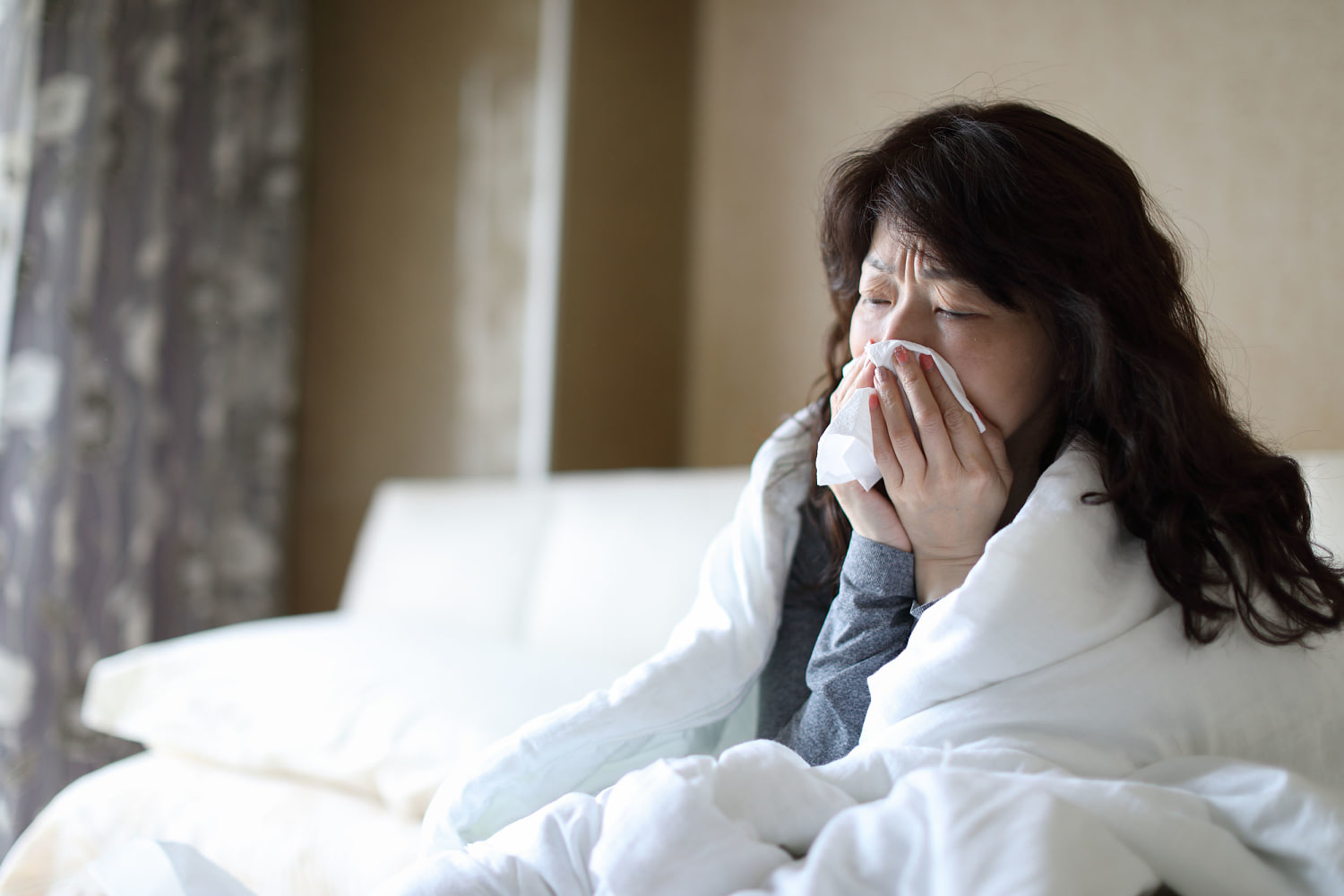
It may be spring, but virus season isn’t over yet.
Flu and Covid, including a new variant called BA.3.2, nicknamed “cicada,” are still circulating, along with several other respiratory illnesses and a nasty stomach bug that are leaving many Americans feeling cruddy.
The symptoms for most of the viruses are so similar — sniffles, cough, muscle aches, fever — that doctors say you really can’t tell what you’ve got without a test.
Influenza A was really bad in the U.S. at the end of last year, driven by the H3N2 subclade K variant. As it began to peak in January, “we transitioned into seeing more of these other viruses,” said Marlene Wolfe, an assistant professor of environmental health at Emory University. “Every year we think of fall, winter and spring as this respiratory illness season,” she added, “but the reality is that there are different viruses that pop up throughout that season.”
Arkansas, North Dakota, Vermont and Wyoming are still experiencing moderate amounts of respiratory illnesses, while infections are low elsewhere in the country, according to the latest Centers for Disease Control and Prevention data.
Cases of RSV, or respiratory syncytial virus, remain high in some states, including Michigan, Nebraska, Nevada, South Dakota, Tennessee, West Virginia and Vermont.
Which illness do I have?
“Unfortunately, there is not really a distinct trait between these respiratory illnesses,” Dr. Greeta Sood, an epidemiologist at Johns Hopkins Bayview Medical Center in Baltimore, said.
Covid symptoms are no longer hallmarked by the loss of taste and smell as they were in the first couple years of the pandemic, she said.
“We also can’t really predict, like before, what someone has based on what is circulating. It could be Covid, it could be influenza, and now we have added the prolonged RSV to the mix,” Sood said.
Right now, local wastewater data, which measures how prevalent different viruses are in a community, may be able to hint at which virus you may have.
“It’s relatively quiet for these diseases compared to other years, but where you live may put one or another as more likely,” said Jennifer Nuzzo, director of the Pandemic Center at Brown University School of Public Health.
Wolfe agreed it’s important to understand which viruses are circulating in your community, since this can vary widely from one state to the next.
“The dynamics of when and where we see more cases differs from virus to virus, so it’s important to know what is happening in your community. We do still have a number of respiratory viruses right now that commonly circulate at the beginning of spring,” she said.
Do I have Covid?
Masks are mostly gone. Relatively few people got the new Covid shots this winter, partly because of confusion over who was eligible to get them.
The CDC has reported that the heavily mutated Covid variant called BA.3.2 has been detected in wastewater and nasal swabs in 25 states. The variant’s spike proteins carry mutations that experts worry could allow it to evade immunity from prior infections or booster shots.
“This variant is very immunologically distinct compared to previous variants, and whenever that happens, there always is a risk that due to the fact that we have less immunity to this organism, so it could cause a spike in cases,” said Sood.
Only about 0.55% of Covid viruses sampled in the U.S. as of mid-March were the BA.3.2 variant, the most recent CDC data shows. Covid cases did not spike in Europe following the first detected case of BA.3.2 last April, the agency reported. Right now, CDC data shows that Covid cases, although at low levels, are rising in Florida and Massachusetts, while declining across the rest of the country.
In the U.S., “Covid cases overall don’t look like they are increasing dramatically,” Sood said, adding that it’s too soon to tell whether BA.3.2 will cause Covid cases to spike. “There have been a number of variants that similarly have been very immunologically distinct, and we haven’t seen a wave.”
CDC data shows Covid cases are mixed across the country. Their numbers are high or moderate in parts of the South, Midwest, D.C. area and Appalachia, and low in the West and Southeast. Data from WastewaterSCAN, a public health initiative that collects wastewater surveillance data, is showing an uptick in Covid cases.
“Covid still hasn’t fallen into a predictable pattern,” said Nuzzo, adding that a slight increase in Covid cases in certain states “are not something to be alarmed about. We don’t see any concerning trends for Covid right now.”
Still, people who are at high risk for complications should consider getting a booster every six months or so, she said.
“I have timed Covid boosters with either travel, when I really don’t want to get Covid, or when my local numbers are climbing. People need to look at different factors in their lives, based on local trends and other circumstances,” Nuzzo said.
Influenza
An early surge of flu cases this season was driven by a mutated influenza A, or H3N2, strain called “subclade K.” Cases spiked between Thanksgiving and early January, and some experts feared the U.S. would repeat last year’s deadly flu season, which killed nearly 800 kids and teens.
“It didn’t shake up to be as bad as last year’s flu season, which isn’t saying much, since last year’s was the worst on record,” Nuzzo said. “Last year, more children died of flu than any other year including 2009, when we had a flu pandemic.”
The CDC has recorded 115 pediatric influenza deaths so far during this flu season, after two consistent record-breaking years. The 2023-24 flu season killed 199 kids and teenagers, tying the previous record during 2019-20 flu season. However, the infections are still proving deadly — a teenager in California died in early March from the flu, one of 14 pediatric deaths that week.
Influenza A cases began dropping in January and continue to drop across the country, though the strain is still causing infections and accounts for the lion’s share of infections. Influenza B cases are rising in Washington and North Dakota, but falling nationwide, according to CDC data. WastewaterSCAN data showed the opposite — that influenza B cases are still high across the country and are rising.
“Influenza B is absolutely still showing up in wastewater quite regularly,” said Wolfe, who is also the program director of WastewaterSCAN.
Sood said there is still time to get the flu vaccine, especially for people who got their last one in early fall.
“If you’re going to be traveling and want to get a vaccine, it’s not too late, but we are closer to the end of the season than the beginning of the season,” Sood said.
Respiratory syncytial virus (RSV)
Respiratory syncytial virus, or RSV, can cause a nasty cough along with a runny nose and fever. While it can be difficult to tell apart from the common cold, RSV can be dangerous for kids and babies.
For this season, “RSV has plateaued, but we are still seeing quite a bit of it in wastewater,” Wolfe said.
CDC wastewater data shows that, overall, RSV is circulating at moderate levels across the country, but the virus is still high or very high in Hawaii, Iowa, Michigan, Minnesota, Nebraska, Nevada, New Hampshire, South Dakota and Wyoming. Cases are still rising in North Dakota.
“RSV normally comes early in the season, which it did, but what is abnormal about RSV right now is that it’s not going down as much as we would expect,” Sood said. “Some states are still recommending babies born right now should still receive antibodies for RSV, normally RSV season would be considered finished by around now.”
Human metapneumovirus (HMPV)
Human metapneumovirus, or HMPV, is a virus related to RSV that causes similar symptoms to the common cold. According to WastewaterSCAN, HMPV is circulating at high levels across the country — though this is to be expected, Wolfe said.
“HMPV is quite consistent in wastewater data, and it tends to peak in mid-April,” she said.
Norovirus, the ‘two-bucket disease’
Of the viruses spreading widely right now, you will know if what you’ve got is norovirus. Although it’s sometimes called the stomach flu, it’s a gastrointestinal virus, not a respiratory one. The nasty, extremely contagious bug has been at high levels for months and is still causing misery. In a recent outbreak, more than 150 people, including passengers and crew, on board a Princess cruise fell ill with norovirus, according to the CDC.
People with norovirus suddenly come down with vomiting, diarrhea and nausea, which typically lasts for a couple of days, earning it the name “two-bucket disease.”
WastewaterSCAN shows norovirus loads are still high across the country but are not increasing. Last cold and flu season, the U.S. experienced abnormally high cases of norovirus, Wolfe said. So far, the CDC has recorded less than half the number of norovirus cases this season compared to last.
“This year what we are seeing looks very much like the pattern we saw before that,” she said. “We saw norovirus peaking around the end of February and cases appear to be plateauing. It’s good to see it’s not as bad as it was last year.”