dailynewsnblog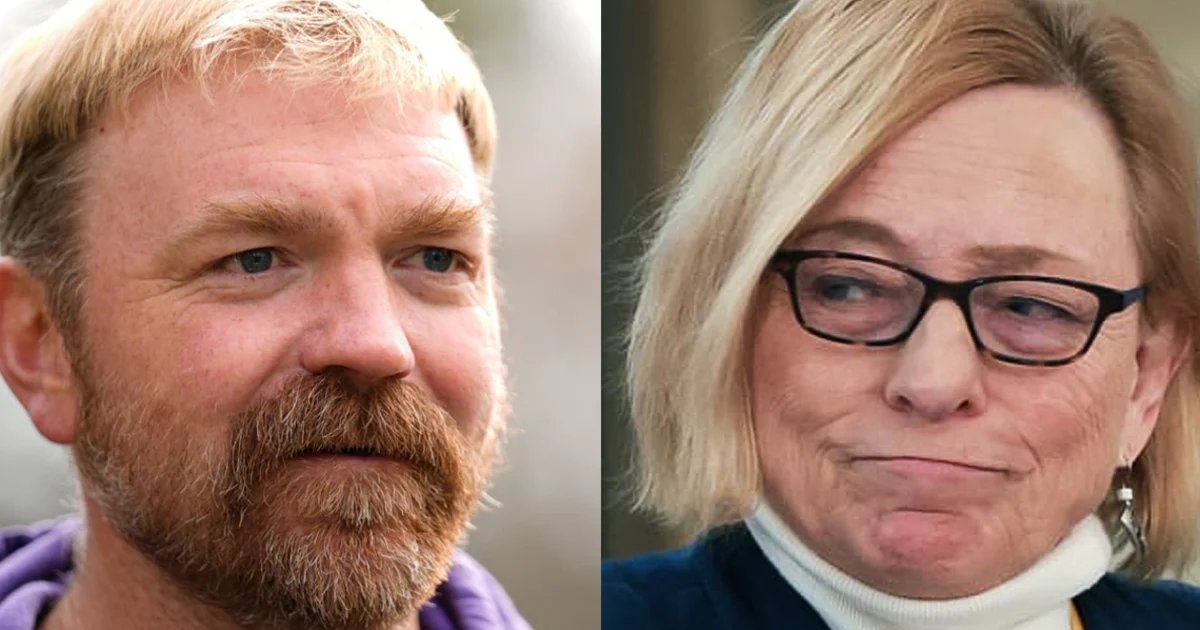
Some Democratic voters may be down on their party, but they’re still heavily engaged in the 2026 elections and are prioritizing electability when thinking about upcoming primaries, according to focus group conversations with Democrats in Maine and Michigan.
Subscribe to read this story ad-free
Get unlimited access to ad-free articles and exclusive content.

Both states will be central in this year’s battle for the Senate, and the Democratic primaries there have exposed ideological and generational divides within the party. But above all else, these voters want to win.
All 13 focus group participants, seven from Maine and six from Michigan, said they are likely to vote in upcoming primaries and said they preferred a Democratic candidate who can beat a Republican in November over a candidate who would vehemently fight President Donald Trump.
“I think the only way we’re going to get Trump under control is through the midterm elections,” said Jennifer R., 61, who is reluctantly backing oyster farmer Graham Platner over Democratic Gov. Janet Mills in the Maine Senate primary, because she believes Platner can defeat longtime GOP Sen. Susan Collins.
The focus groups, conducted Tuesday, included 10 self-described progressives and three moderates. The discussions were produced by Syracuse University and the research firms Engagious and Sago and observed by NBC News.
These Democrats were very dissatisfied with their party broadly, describing it as “weak,” “spineless,” “floundering,” “ineffective” and “distracted.”
“Have a plan,” Julie S., a 54-year-old Mainer, advised Democrats. “Whether it’s for health care, whatever else, but have a plan of what your platform is other than anti-Trump.”
The panelists’ negative views reflect their party’s historically low favorability ratings in recent polls. Unlike a poll, which uses statistical methods to demonstrate how a larger population feels, focus groups dig deeper into how a handful of individuals feel about key questions facing the country.
A successful November election for Democrats runs through both the Maine and Michigan Senate races, as the party tries to net four seats and flip the majority. These voters viewed these races as the next chance to blunt Trump’s power.
“These likely Democratic primary voters realize they can thwart President Trump in 2027 only if they win elections this November, so electability is a key factor as they approach their primaries,” said Rich Thau of Engagious, who moderated the sessions.
Backing Platner
All seven Maine voters — six progressives and one moderate — said they’re backing Platner in the June 9 primary.
“Graham Platner is Maine. He’s rough around the edges. He isn’t polished like all the politicians that we’ve seen for most of our lives,” said Julie S., noting that Platner was also endorsed by Sen. Bernie Sanders, I-Vt.
“It’s a different Democrat and these times need someone that’s different,” said Kris K., 48, who also said he did not necessarily dislike Mills. But he did raise concerns about the 78-year-old governor’s age.
“I’m worried about Mills just feeling like what we’ve had before, and what everyone’s had before, and just not inspiring and not inspirational and is not going to do the job that needs to be done,” Kris said.
Still, a few Mainers described their support for Platner, a political newcomer, as reluctant.
“I was leaning towards Mills. I don’t particularly love Platner. I don’t trust him completely,” said Jennifer R., the self-described moderate. But she also raised concerns that Mills is “way too old” when explaining her decision to vote for “change” with Platner.
The Maine race has heated up in recent weeks as Mills launched her first attacks against Platner, highlighting past social media posts in which he downplayed sexual assault. Platner, an Army and Marine veteran, made a slew of other controversial Reddit posts during a time when he said he was struggling with post-traumatic stress after serving in Iraq and Afghanistan.
After seeing Mills’ first attack ad, none of the seven Mainers changed their minds about supporting Platner.
“There’s no justifying the statements he’s made. He’s tried to make excuses for ‘em, which I’m personally probably not buying much of, but I just need somebody who’s going to win,” Edward T., 53, said. “We need to get the Republicans the hell out. They’re ruining our country, literally.”
Diana F., 52, said revelations that Platner had a tattoo that resembled a Nazi symbol were “the closest I have come to not voting for Platner.” Platner said he got the tattoo while drunk with fellow Marines and said he was not aware of the symbol’s Nazi ties at the time. He has since covered it up.
“Any other signs of antisemitism, and I’m out,” Diana said.
Margaret Talev, director of Syracuse University’s Institute for Democracy, Journalism and Citizenship, which helps lead the focus group project, noted that Collins was on these Democratic voters’ minds even as they consider their own party primary.
“Many explained that they like Gov. Mills, and expressed concerns about Platner, before concluding Platner is best poised to win,” Talev said.
“As for what makes a candidate electable, youth, authenticity, an outsiders’ fearlessness about shaking up the status quo, and the idea that Platner’s weathered, unpolished brand reflected Maine’s identity were all factors we heard from these voters,” Talev added.
Each of the voters had negative views of Collins, though three voted for her in the past, describing her as “corrupt,” “self-serving,” “absent” and toeing the Republican Party line.
Divided in Michigan
Electability is also a top priority for the Democrats from Michigan as they choose between three prominent primary candidates: Rep. Haley Stevens, state Sen. Mallory McMorrow and former Wayne County health director Abdul El-Sayed.
Paul B., 62, said one of the “primary factors” driving his decision to back Stevens is that “she’s got the best chance of beating” Republican Mike Rogers, the former congressman and likely GOP nominee.
The Aug. 4 primary is still a few months away, and the focus group reflected the unsettled race: Two of the Michigan Democrats were undecided; two backed Stevens, in part because of her electability and experience in Congress; one supported El-Sayed, largely on name recognition; and one backed McMorrow.
“She’s young. She appears to care about the working class and the lower classes,” Lucy G., a 61-year-old self-described socialist, said of McMorrow.
The Michigan primary in particular has exposed Democratic divisions on Israel that have deepened since the country went to war against Hamas in the Gaza Strip.
El-Sayed, who has accused Israel of perpetrating a genocide, supported the “uncommitted” movement in the state’s 2024 presidential primary to protest the war. McMorrow, who also called the conflict a genocide, has called for a two-state solution. Stevens, who has backed a ceasefire in Gaza, has described herself as “a proud, pro-Israel Democrat.”
Even as divides over Israel have played out in other Democratic primaries, the Michigan Democrats who participated in the focus group said the issue would not affect their votes in the Senate contest.
The panelists’ answers reflected the broader souring of Democrats on Israel and rising sympathies for the Palestinians since the war began.
Stevens supporter Paul B. called Hamas’ Oct. 7, 2023, attack on Israel “horrible” but blasted the Israeli response as “committing genocide in the name of defense.”
But Paul B. distinguished between the Israeli government and Israelis broadly, suggesting Israelis aren’t being adequately represented by their leaders.
“I’m just going to make the analogy the same way with the United States — four years, maybe we were viewed much more positively. [Now,] we’re viewed much more negatively worldwide, but that shouldn’t reflect back on the people in the country itself,” he said.
Down on Trump
Unsurprisingly, these voters were down on Trump — not just personally, but when it comes to key issues in their lives.
A handful said the war with Iran was their top concern. All of them opposed Trump’s launching the military action, arguing that America should be more focused on issues at home and raising fears about another lengthy military quagmire. The Maine panel met as Trump announced a two-week ceasefire with Iran Tuesday night, and the Michigan panel took place shortly after.
“[Trump] said no more wars,” Cindy M., a 60-year-old Michigander, said, noting that the Trump administration claimed it destroyed Iran’s nuclear capabilities in strikes last year. “Why are we in there then?”
The vast majority of the respondents supported immediately ending America’s military action in Iran, even if that risked jeopardizing America’s military goals or potentially strengthening Iran.
Many panelists invoked the rising price of oil and gasoline as part of their frustration with the war as they broadly criticized Trump’s handling of the economy, which they framed as erratic, and connected it to their own lives.
“I’m more anxious about a recession happening. I’m anxious about my 401(k) value going down as I’m getting closer to retirement age,” Bill S., a 56-year-old from Michigan, said.
Lucy, another Michigan panelist, mentioned how her “dear friend” used to drive 30 miles to take her to lunch each week, but rising gas prices meant fewer lunches.
Some of their proposed economic solutions echoed Trump’s own “America First” promises that they felt had not been kept, including ending the war with Iran and increasing dependence on American goods and resources.
The panelists sharply criticized Trump’s handling of immigration, particularly Immigration and Customs Enforcement’s tactics. As the debate over ICE’s fate plays out in key primary elections across the country, the panelists were divided.
Seven wanted to see ICE reformed.
“I’m not opposed to the immigration policy and ICE because other presidents have done it as well. What I’m opposed to is how it was implemented,” 47-year-old Todd G. from Maine said.
Six called for ICE to be flat-out abolished.
“This isn’t supposed to be who America is. This isn’t what he said it was going to be. He’s got his own Gestapo out on the streets — terrorizing people, killing people in a couple instances. That’s not what America is. We’re supposed to accept immigrants,” Edward, from Maine, said.