dailynewsnblog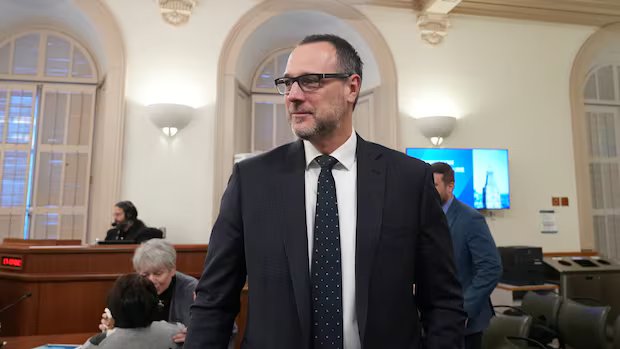
The Quebec government defended its decision to expand the province’s controversial secularism law as consultations got underway for Bill 9 at the National Assembly on Tuesday.
As the legislature resumed, some groups spoke out on the ways the new secularism bill could infringe on fundamental rights, while others called it crucial in protecting the education system and public services.
Bill 9 would ban subsidized daycare and private school workers from wearing religious symbols, going further than the current secularism law known as Bill 21.
Groups wanting to pray in public would also need to acquire a permit from a municipality to do so, and prayer spaces in public institutions, including universities, would be banned.
And the proposed legislation would extend the ban on face coverings to anyone present in a public education setting.
With his government in flux as it searches for a new leader, Jean-François Roberge, Quebec’s minister responsible for secularism, said getting the bill adopted remains a top priority.
“The reinforcement of the secularism law is a subject on which there is consensus,” said Roberge. “I’m confident we’ll adopt this bill.”

For the last 20 years, one issue has kept resurfacing in Quebec politics. It’s not language or separatism, but the relationship between Quebec society and religion — often one religion in particular.
Distraction from ‘real issues’
The National Council of Canadian Muslims (NCCM) is among the groups scheduled to speak on the first day of consultations into the bill and one of the organizations challenging Bill 21 before the courts.
The NCCM expressed concern Bill 9 misinterprets the concept of secularism by targeting visible religious minorities instead.
“[It] actually focuses more on policing the identities of individuals as opposed to regulating the way institutions operate,” said Stephen Brown, NCCM CEO. “Where exactly does the power of the state stop when it comes to regulating the personal lives of the citizens?”
Liberal MNA Madwa-Nika Cadet also criticized the bill as a solution to a non-existent problem and a distraction from “real issues” like the health-care system and the cost of living.
“When I go to the grocery store, when I go in my community in Bourassa-Sauvé, no one is telling me about this bill,” she said.
Cadet is also concerned the bill could make it more difficult to find daycare educators by banning them from wearing religious symbols, when there is already a shortage of them in the province.
The CSN labour federation echoed that concern in a news conference Tuesday.
“I have a question for Mr. Roberge: Where will he find CPE workers?” said vice-president François Enault. “Where will he find these people, all for a type of ideology we don’t understand.”
He added that educators who wear a hijab do exceptional work just like all other educators.

The bill follows the release of the Pelchat-Rousseau report published last year. It was commissioned by the government and looked into the implementation of secularism laws in institutions like schools, following reports of religious interference at Bedford elementary school in Montreal.
Cadet said on Tuesday that nothing in Bill 9 would actually prevent religious interference in schools or daycares.
Debate over religious accommodation
There is also concern over a section of the bill that would allow public sector employers to decline requests for accommodation, such as a day off for a religious holiday, if it imposes “more than minimal hardship on an organization.”
“The state already accommodates the majority religion in society, which is Christianity, so people can celebrate their holidays. There are break periods at Easter or at Christmas where almost nobody is working for the state,” Brown argued. “In a truly neutral, in a truly equal setting, every last single employee of the state would be able to get time off paid for their religious holidays.”
On Tuesday, Guillaume Rousseau, the lawyer who co-authored the secularism report, said he found in his research that religious accommodation is leading to a shortage in public services in some cases.
“A good way to favour good quality services is to avoid religious accommodations that are too often,” said Rousseau.
He and Christiane Pelchat, the report’s other co-author, also told the committee they received multiple complaints of face coverings in public institutions like CEGEPs, which they said made people “uncomfortable.”
But when asked to describe just how many students they estimate wear face coverings, they refused to respond.
“It’s completely far-fetched to ask that question,” said Pelchat. “It’s a question of principle.”
For his part, Brown isn’t against all aspects of the bill. Bill 9 would also allow the government to stop subsidizing private schools that select students based off their religion or that include religious content during the school day.
“That is perfectly coherent with the basic principles of secularism,” Brown said.
Potential for lawsuits
The Union des municipalités du Québec (UMQ) also spoke out against Bill 9 on Tuesday.
In its brief, the group says the bill would add an unnecessary administrative burden to municipalities, by requiring groups to request a permit from them every time they want to hold a religious gathering in public.
The UMQ also argues the definition of “religious gathering” is too broad and open to interpretation, leaving the municipalities vulnerable to costly lawsuits should they unintentionally refuse a permit for the wrong reasons.
“Municipalities already have the power to regulate the use of public areas under their authority, particularly with regard to public safety issues,” the UMQ writes.
It also points to a lack of data demonstrating collective religious gatherings are an issue, and says there are better, more targeted ways to deal with the few gatherings that grow out of hand.
Consultations into the bill will continue until Feb. 10 at the National Assembly, with groups including the Ligue des droits et libertés and the Association québécoise des centres de la petite enfance expected to weigh in.