dailynewsnblog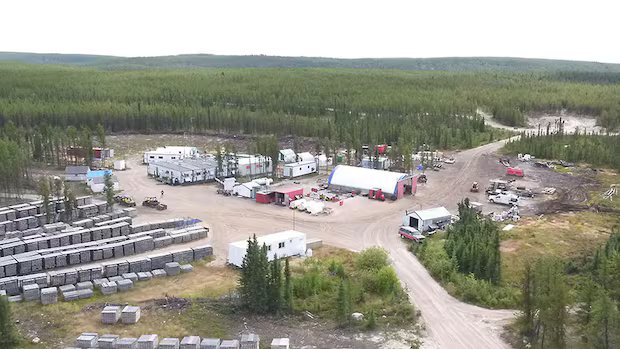

Listen to this article
Estimated 4 minutes
The audio version of this article is generated by AI-based technology. Mispronunciations can occur. We are working with our partners to continually review and improve the results.
Denison Mines Corp. is moving ahead with construction of a proposed uranium mine in northern Saskatchewan now that it has approval from its board of directors, a licence to build it from the national nuclear regulator and the support of nearby communities.
The company’s Phoenix mine at Wheeler River in the Athabasca Basin, which is in Treaty 10 territory, could be the first uranium mine to be built in Canada in a generation. Initial capital costs are now estimated at $600 million.
On Tuesday, the company’s board of directors made its “final investment decision” to proceed with site preparation and construction of the Phoenix mine in March.
The company is headquartered in Toronto.
Earlier this month, the Canadian Nuclear Safety Commission issued Denison Mines a licence to prepare the site and build the mine and its associated mill. The company will have to apply to the commission for another licence to actually operate the mine once construction is done.
Production could start in 2028, Denison Mines CEO David Cates said in an interview.
“There are very few new mines of large scale that are in the pipeline for uranium globally,” Cates said. “We are likely the only meaningful source of new uranium supply that enters the market before the 2030s, so that situates Denison uniquely amongst our peers.”
Denison plans to operate the mine for 10 years. The company estimates it has 56.7 million pounds of proven and probable uranium reserves, according to the Phoenix project website.
The provincial government approved the project in August 2025.
It could be the first uranium mine to use an in-situ recovery method, which pumps an acidic solution into the ore body to dissolve the uranium so it can be pumped back to the surface.
Who benefits
Before the hearings last year, Denison Mines signed impact benefit agreements with English River First Nation, the Metis Nation—Saskatchewan and Ya’thi Néné Lands and Resources, a group representing three First Nations and four communities in the Athabasca Basin.
Details of the agreements are confidential, but typically include employment and training guarantees, contracts for locally-owned businesses and financial benefits.
Ya’thi Néné Lands and Resources endorsed the Phoenix project after Denison satisfied its concerns about the environment and other potential impacts, executive director Garrett Schmidt said in an interview.
“We are satisfied with the mitigation measures that are being implemented, but that being said, we’re also very interested in how development continues to occur in the basin,” Schmidt said.
“So we’re very mindful of and observing planned projects and how they’re being proposed just to make sure that the balance is always maintained. Having clean water, intact ecosystems and land is very important to the communities to support their culture and their way of life.”
Ya’thi Néné Lands and Resources is owned and jointly run by Hatchet Lake Denesułiné First Nation, Black Lake Denesułiné First Nation, Fond du Lac Denesułiné First Nation, Stony Rapids, Uranium City, Wollaston Lake and Camsell Portage.
Other communities aren’t as enthusiastic. Submissions to the regulatory hearings from communities such as Birch Narrows Dene Nation and Peter Ballantyne Cree Nation did not endorse the project.

Last year, Peter Ballantyne Cree Nation took the province and Denison Mines to court over an environmental assessment and duty to consult.
Cates said the company has “an open dialogue” with Peter Ballantyne Cree Nation and Birch Narrows Dene Nation.
“That’s a work in progress and the reality is that Indigenous engagement is not something that stops when a permit is granted,” Cates said.
“It really starts with approval of projects and has to continue through life of mine. So we will be looking for opportunities to enhance our programs and enhance our engagement.”
The commission held hearings in Saskatoon in December and in Gatineau, QC in October. Hearing submissions from Denison Mines, communities and individuals are publicly accessible through the commission’s website.
Denison Mines is one of two companies interested in joining Cameco Corp. as uranium producers in the province. Vancouver-based NexGen Energy Ltd. is awaiting the commission’s construction licence decision for its Rook I project, an underground uranium mine also in the Athabasca Basin.
In 2005, Cameco started construction at its Cigar Lake mine, the last uranium mine approved in Saskatchewan.