dailynewsnblog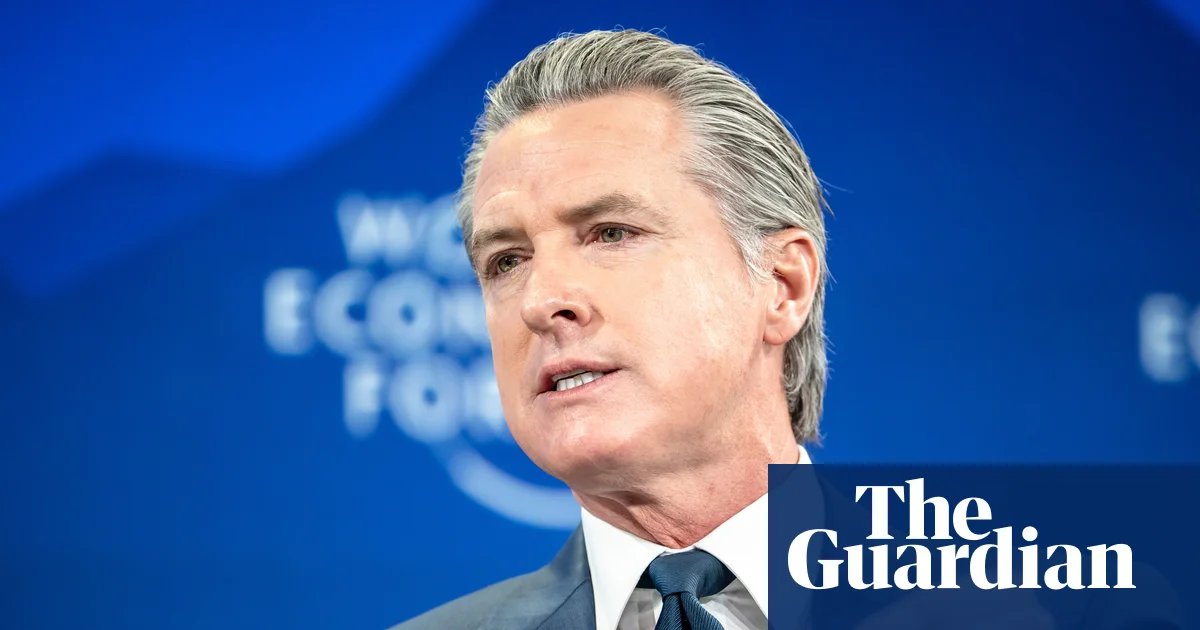
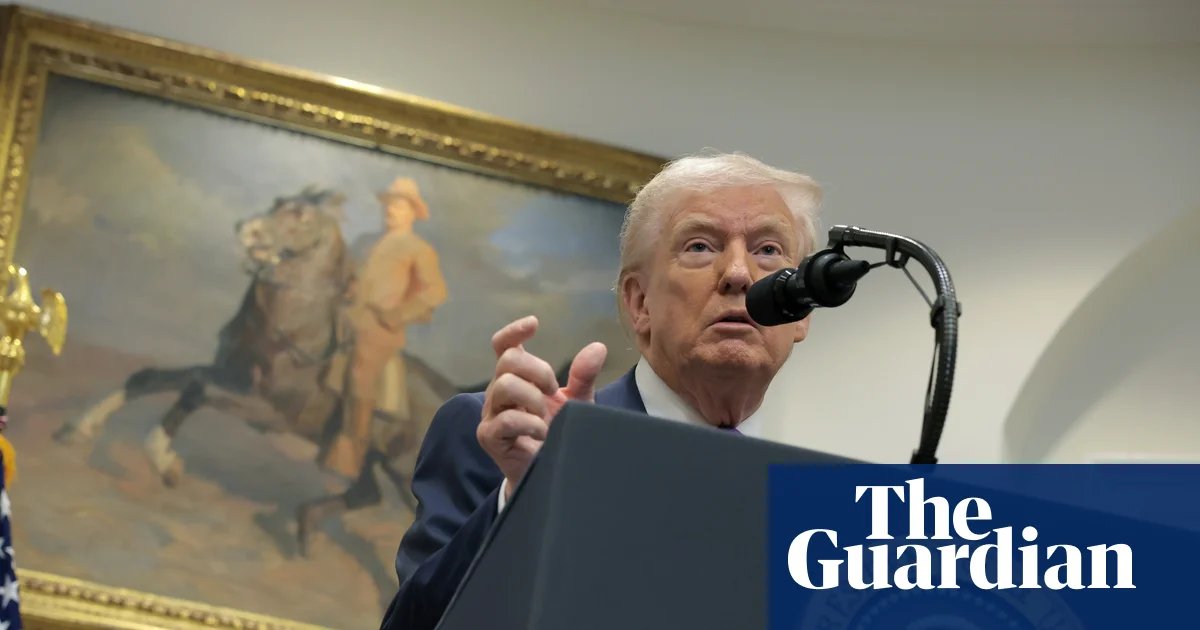
US Democrats will use a security summit this weekend to urge European leaders to stand up to Donald Trump, with the continent divided over how to keep the unpredictable US president on side.
Democrats at the annual Munich Security Conference will include some of Trump’s most outspoken critics, such as the governor of California, Gavin Newsom, the New York congresswoman Alexandria Ocasio-Cortez, the Arizona senator Ruben Gallego and the Michigan governor, Gretchen Whitmer.
Newsom has already urged Europeans to realise that “grovelling to Trump’s needs” makes them “look pathetic on the world stage”, telling reporters at the World Economic Forum in Davos last month he “should have brought a bunch of knee pads”.
Gallego was almost as forthright. “[Trump] is destroying our world reputation or potentially our economic might around the world because he is being petty. None of this is rational. Everyone needs to stop pretending this is rational,” he said.
The US delegation will, however, be led by the US secretary of state Marco Rubio. And while European leaders will be hoping he will deliver a more emollient message than the speech meted out last year by the vice-president JD Vance, they are also divided over how to deal with Trump.
Some, led most prominently by the French president, Emmanuel Macron, have said that a new, more defiant diplomacy is essential to counter what the Munich organisers have called Trump’s “wrecking ball politics”. Others, such as the Nato secretary general, Mark Rutte, have said maintaining Trump’s goodwill is indispensable for European security.
The Vance speech launched a debate inside European capitals over whether the US and Europe still shared the same values, and if they no longer did, how quickly the two sides could disengage.
Since then Trump has repeatedly insulted the EU, embarked on a form of resource imperialism across the globe, and found reasons to excuse Vladimir Putin. On his European trip, Rubio has chosen to visit Hungary and Slovakia, the two EU states most opposed to the bloc’s support for Ukraine.
Traditionally the US delegation to Munich has tried not to air its domestic political differences, but this year, those differences look irrepressible and Democrats are likely to side with Europe in rejecting what they see as Trump’s coercive diplomacy.
Democrats could be tempted to tell Europe to be patient and wait for normal service to be resumed. Trump’s plunging poll numbers have already prompted Republicans in congress to defy the President on tariffs, a disloyalty that they hope could grow as the prospect of a Republican party bloodbath looms in the November midterm elections.
But many in the west now think the old rules-based order has gone for good, replaced by a new, deals-based order in which the great powers transact and transgress, and declare their might is right. That was the key message Mark Carney, the Canadian prime minister, delivered in his speech at Davos. “We know the old order is not coming back,” he said. “We shouldn’t mourn it. Nostalgia is not a strategy, but we believe that from the fracture, we can build something bigger, better, stronger, more just.”
As a result, much of the three-day Munich conference – at which the German chancellor, Friedrich Merz, the UK prime minister, Keir Starmer, the French president, Emmanuel Macron, and the president of the European Commission, Ursula von der Leyen, are due to speak – will be about this interregnum.
At one extreme lies Macron who this week said tensions between Europe and the US could intensify after the recent “Greenland moment”, when Trump threatened tariffs against European countries opposed to his bid to seize control of the Arctic island from Denmark.
In an interview with several European newspapers, Macron described the Trump administration as “openly anti-European” and seeking the EU’s “dismemberment”. He added: “When there’s a clear act of aggression, I think what we should do isn’t bow down or try to reach a settlement. I think we’ve tried that strategy for months. It’s not working.”
The French leader noted a “double crisis: we have the Chinese tsunami on the trade front, and we have minute-by-minute instability on the American side”. He is due to make a speech later this month on whether France could offer its nuclear weapon as an umbrella for a Europe that can longer rely on the US.
At the other end of the spectrum lies Rutte, who recently said: “If anyone thinks here … that the European Union or Europe as a whole can defend itself without the US, keep on dreaming. You can’t.”
One Baltic diplomat sensed the tide was turning against the Nato leader’s conciliatory approach. They said the lesson of the recent row with Trump over Greenland was that when Europe threatened to wield its economic muscle, he backed away. But the same diplomat admitted he woke up each morning thinking how he could make his country more relevant to the US.
The path to a more sovereign European defence is not easy. Defence spending is increasing but the continent knows effective rearmament will take time. On Ukraine, Starmer is insistent that the required security guarantees after any settlement with Russia still require US capability commitments to be credible.
But in other ways, the distancing from America has started.
In recent months Carney, Starmer and Macron have tried to reset relations with China, offering dialogue without enmity. Beijing has shown it has the capacity to reshape global supply chains, and stands to be the beneficiary of Trump’s destruction of multilateralism.
In a further sign of Europe’s willingness to beat an independent path, Italy and Poland, two countries currently closest to the US, have joined other European nations in refusing to join Trump’s Board of Peace, an elaborate construct designed to put Trump’s ego at the centre of peace-making at the expense of the UN.
But as it has for the past four years, Europe’s future remains bound up with the fate of Ukraine. Trump has demanded a peace deal on Putin’s terms within months – JD Vance has declared it is “not our war” – and that leaves Europe facing stark choices about its priorities. As Macron might say, waiting for the return of the Democrats will not save Kyiv.