dailynewsnblog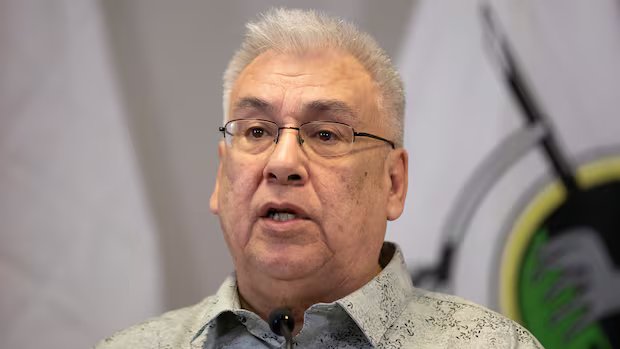
The death of Chief Donny Morris’s three-year-old grandson in a house fire Monday has led to renewed calls for Ottawa to take quick action to address the lack of firefighting resources in Kitchenuhmaykoosib Inninuwug (KI).
KI, a remote Oji-Cree community of about 1,200 people in northwestern Ontario, is also known as Big Trout Lake. It’s about 580 kilometres north of Thunder Bay and is only accessible by plane or seasonal winter road.
“Our communities have been raising concerns about fire safety and lack of resources for years, and those concerns have not been meaningfully addressed. The conditions we are seeing today are the result of that ongoing neglect,” Vernon Morris, chief executive officer with the Independent First Nations Alliance (IFNA), said in a release Wednesday.
IFNA, a tribal council that represents KI and four other First Nations in northwestern Ontario, jointly launched a human right complaint with KI against Indigenous Services Canada (ISC) in August 2025, arguing systemic discrimination is behind chronic underfunding of on-reserve fire services.
Reached by CBC Thunder Bay, Donny Morris said “it is a hard time for me” when he was asked about the house fire.
Just last month, he told CBC News that KI has a fire truck and firehall but needs a bigger space. KI is also seeking permanent funding and staff for health-care and emergency services, including paramedics, nurses and mental health counsellors, and accommodations for them.
2 adults treated for serious injuries
Members of the Ontario Provincial Police (OPP), IFNA Regional Fire Rescue and the KI Fire Department responded to the house fire around 3:30 a.m. CT Monday.
In a news release, the OPP said emergency personnel worked to ensure public safety and prevent spread of the “fully engulfed house fire,” and that one individual was found dead.
As well, two adults were transported out of the community to be treated for serious injuries, according to IFNA.
The OPP said the Office of the Fire Marshal and the Office of the Chief Coroner of Ontario continue to investigate, in collaboration with the KI OPP, the Sioux Lookout Crime Unit and Forensic Identification Services.
The Canadian Human Rights Commission provided an update on the complaint in October, saying an intake analyst hadn’t yet been assigned to the case. IFNA and KI say they haven’t received any updates from the commission since then.

(Independent First Nations Alliance)
“IFNA chiefs are condemning the commission’s inaction and calling for the complaint to be advanced without further delay,” Wednesday’s statement said.
“Additionally, given the serious implications for First Nations communities, IFNA chiefs are calling on the auditor general [of Canada] to investigate the commission’s handling of this complaint and the broader systemic failures that continue to put lives at risk.”
IFNA chiefs also want the federal government to “take immediate responsibility for ensuring equitable, sustainable and properly funded fire safety services in First Nations communities.”
A spokesperson for the Canadian Human Rights Commission told CBC News that it can’t comment on individual cases before the commission. It added “there is a trend of turning to the complaints system under the Canadian Human Rights Act to address underfunding of services on reserve, often when requests for adequate funding have been ignored.”
“The problems we’re seeing are longstanding, serious and systemic,” wrote the commission’s acting director of communications, Véronique Robitaille. “That’s why the commission has long been calling for real, systemic changes to address the chronic lack of funding in First Nations communities.’’
CBC News has also reached out to ISC and the federal auditor general for comment, and will update this story if any responses are received.
Sol Mamakwa, Kiiwetinoong member of provincial parliament (MPP) and a member of Kingfisher Lake First Nation, issued a statement Thursday afternoon in support of IFNA’s and KI’s calls for action.
“The death of this three-year-old child, like many of the deaths that came before, is a result of systemic discrimination and neglect from Canada and Ontario,” said Mamakwa. “It should not have to come to this level of tragedy for the governments to take action. But at this point, if this event does not trigger urgent action, I don’t know what will.”
‘Canada continues to ignore our pleas’
KI has had to deal with other fire-related deaths.
In May 2019, a woman and four children died of smoke inhalation following a house fire. Archie McKay was found guilty in April 2025 of five counts of second-degree murder. On Monday, he received five concurrent life sentences.
That fire prompted KI to declare a state of emergency over the mental health effects of the losses. The First Nation did not have a fire department at the time.

Indigenous people are over five times more likely to die in a fire than non-Indigenous counterparts, according to the National Indigenous Fire Safety Council.
“That number increases to over 10 times for First Nations people living on reserves,” its website says.
Lac Seul First Nation Chief Clifford Bull expressed concerns about the lack of federal action in a statement issued Wednesday.
“Canada continues to ignore our pleas for urgently needed fire safety funding. We warned that lives would continue to be lost. However, the commission has made itself complicit in this discrimination by refusing to take our complaint seriously.”
The Sioux Lookout OPP is asking anyone with information about Monday’s house fire to contact them at 1-888-310-1122.
Mental health counselling and crisis support is available 24 hours a day, seven days a week through the Hope for Wellness hotline at 1-855-242-3310 or by online chat at www.hopeforwellness.ca.