dailynewsnblog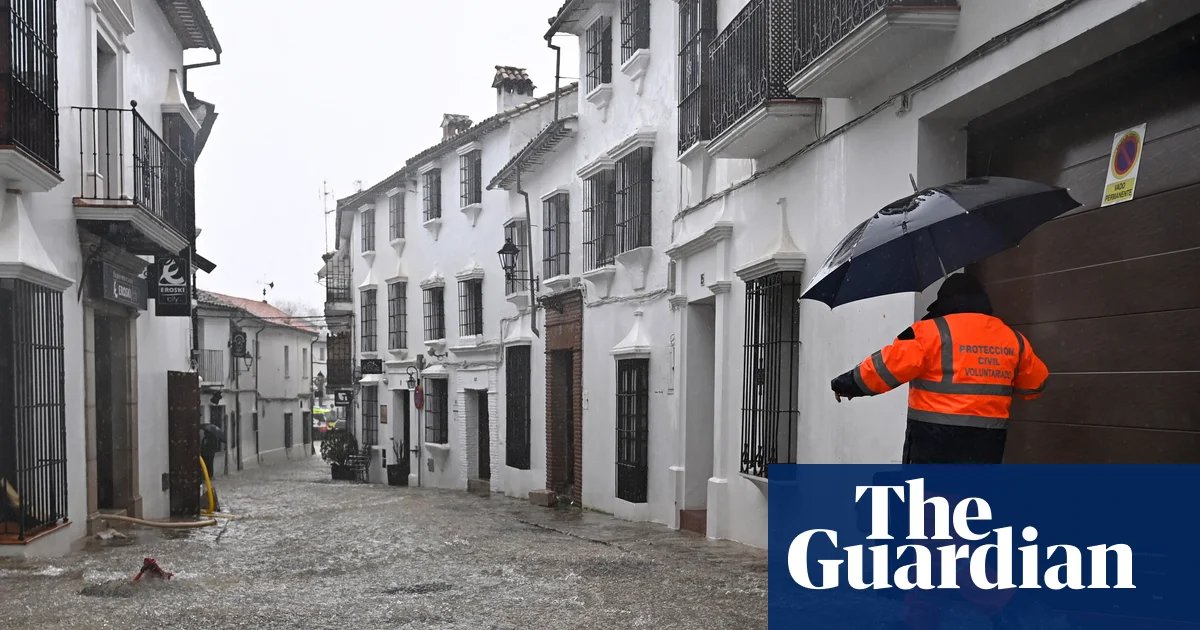
Keeping Europe safe from extreme weather “is not rocket science”, a top researcher has said, as the EU’s climate advisory board urges countries to prepare for a catastrophic 3C of global heating.
Maarten van Aalst, a member of the European Scientific Advisory Board on Climate Change (ESABCC), said the continent was already “paying a price” for its lack of preparation but that adapting to a hotter future was in part “common sense and low-hanging fruit”.
“It is a daunting task, but at the same time quite a doable task. It’s not rocket science,” said van Aalst, who used to lead the climate centre at the International Red Cross and Red Crescent and is now the director general of the Royal Netherlands Meteorological Institute (KNMI).
The ESABCC describes current efforts to adapt to rising temperatures as “insufficient, largely incremental [and] often coming too late” in a new report that advises officials to prepare for a world 2.8-3.3C hotter than preindustrial levels by 2100.
Such a dramatic rise in temperatures – the prospect of which has left some leading climate scientists feeling hopeless – would be double the level of global heating that world leaders promised to aim for when they signed the Paris agreement in 2015. The ESABCC recommended officials stress-test even hotter scenarios.
Weather extremes in Europe in recent years have at times surprised climate scientists with their strength and adaptation experts with their lethality as rising temperatures have warped the climate.
Heavy rains supercharged by climate breakdown killed 134 people in Germany’s Ahr valley in 2021 and 229 people in the Valencia region of Spain in 2024. Across the continent, summer heat kills many tens of thousands of people each year, with studies attributing between half and two-thirds of the death toll to the rise in temperatures caused by fossil fuel pollution. Last year’s wildfires, meanwhile, torched more of Europe than scientists have ever recorded.
Last week, Portugal was urged to draw up climate adaptation plans as the country was hit by an unprecedented series of storms that killed at least 16 people and caused an estimated €775m (£675m) of damage.
Van Aalst said: “Twenty years ago, we’d have said those extremes are indeed going to be a problem, but primarily in poorer countries that cannot cope. What we’re now noticing is that Europe itself is vulnerable, especially for conditions it has not faced in the past.
“It turns out our preparedness is not so great. And we have real work to do to upgrade our early warning systems.”
The ESABCC report recommends that the EU mandate climate risk assessments, embed climate resilience into all policies and channel more money – including from private sources – into protective measures. It does not estimate the scale of investments needed to keep Europe safe.
Van Aalst, who was an author of the last Intergovernmental Panel on Climate Change (IPCC) report, said the most important message was to avoid a future in which the world heats to such an extreme degree.
“The IPCC is clear this is a very problematic future with rapidly rising risks,” he said. “And for a number of risks, we’ll reach the limits of adaptation.”