dailynewsnblog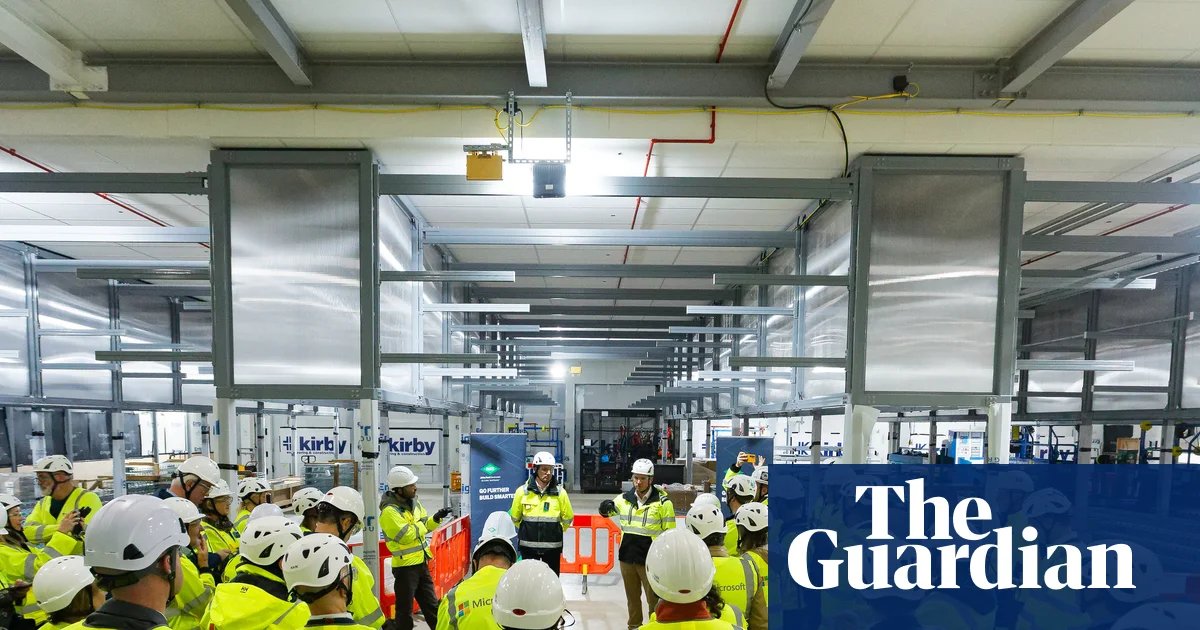
Datacentre developers are facing pressure to reveal whether their projects will increase the UK’s net greenhouse gas emissions, amid concerns the sites could double national electricity demand.
Campaign groups have written to the UK technology secretary, Liz Kendall, warning that the energy required by new AI infrastructure poses a “serious threat to efforts to decarbonise the electricity grid”.
Developers should demonstrate that their projects will not cause an increase in the UK’s overall CO2 emissions or local water scarcity, as part of a forthcoming national policy statement (NPS) on datacentres, the letter says.
“Without these commitments, such vast electricity use will inevitably generate vast climate emissions,” the campaigners write.
The letter is signed by Foxglove, a group that campaigns against big tech dominance, and five other non-governmental organisations including the environmental campaign group Friends of the Earth.
This week, MPs on the environmental audit committee announced an inquiry into the environmental sustainability of datacentres and published a letter from the energy secretary, Ed Miliband, in which he said future energy demand from datacentres “remains inherently uncertain”. The UK is committed to achieving net zero emissions by 2050, meaning total greenhouse gas emissions would be equal to the emissions the UK removes from the atmosphere.
Ofgem, the energy regulator for Great Britain, recently published a calculation that the amount of power being sought by new datacentre projects would exceed the current peak of national electricity consumption. Ofgem said in a consultation this month that about 140 proposed datacentre schemes, driven by the use of artificial intelligence, could require 50GW of electricity – 5GW more than Great Britain’s current peak demand.
Datacentres planned for Elsham in Lincolnshire and Cambois in Northumberland will each have an electricity demand of 1GW, equivalent to the output of a nuclear power station, the letter says, which will need to be matched by new, renewable energy output.
Britain is undergoing a datacentre boom amid an AI-related investment spree. Datacentres represent the central nervous system of AI tools such as chatbots and image generators, playing a vital role in training and operating products such as ChatGPT and Gemini, but require significant amounts of power for their servers, and water to cool them down.
The campaigners also cite the example of a proposed new Google datacentre in Essex that is expected to emit more than half a million tonnes of carbon dioxide a year, equivalent to about 500 short-haul flights a week.
The letter says: “With an estimated 100-200 proposed new datacentres in the planning system already, it is crucial that the NPS fully acknowledges and addresses these challenges, to ensure that the public and the climate do not end up footing the environmental bill for these facilities.”
The UK has set a target to create a virtually carbon-free power system by 2030, an aim that is already in doubt amid concerns over the rising cost of the country’s electricity.
The letter calls for a framework for calculating the environmental impact of datacentres, as well as requiring developers to fund the construction of renewable energy generation related to their proposals.
It also calls for the prevention of “greenwashing”, which can include avoiding the construction of new green energy capacity by buying renewable energy certificates. These certificates show a company is buying green power that matches a portion of their demand, even though the energy they actually use is drawn from the general grid – which includes fossil-fuel-powered electricity.
A government spokesperson said datacentres were driving economic growth and would help the UK meet environmental challenges, while a recently formed energy committee would help source renewable power for projects.
“Datacentres will increasingly be powered by renewables and our AI energy council is exploring opportunities to attract investment in new clean power sources for the industry, while the planning system takes water scarcity into account,” the spokesperson said.