dailynewsnblog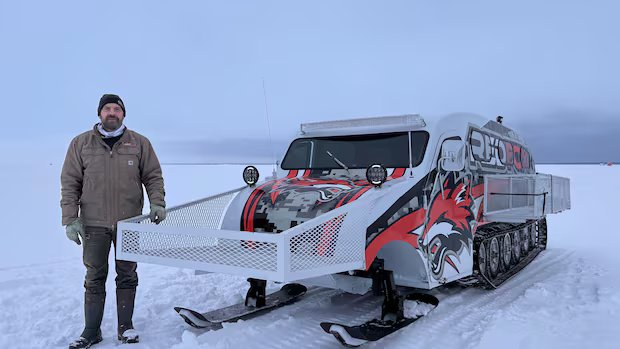
Residents of remote communities along the Canada-U.S. border are asking Ottawa not to scrap a trusted traveller border entry program that pre-clears them, making it easier to travel into Ontario and Manitoba without reporting to a customs checkpoint.
“Go to school, grocery shopping, doctor’s appointments, go see your accountant…. No matter what you’re going for, you’re traveling quite frequently,” said Jason Goulet, owner of Angle Outpost Resort and Red Fox Ice Fishing in Northwest Angle, Minn.
“We have a family of 10. There’s almost somebody travelling every day…. So it’s a pretty big deal to us.”
Canadian and American residents can currently get pre-clearance through the Canada Border Services Agency’s Remote Area Border Crossing (RABC) program, which includes background and security checks.
If approved, they receive an annual permit that allows them to travel into Canada in five remote areas without calling or checking in with a Canada Border Services Agency (CBSA) officer. The agency says there are about 11,000 permit holders every year, and 90 per cent are American.

In Ontario, that includes Cockburn Island and Sault Ste. Marie’s upper lock system on the border with Michigan; waterways from Pigeon River to Lake of the Woods; and the Canadian shore of Lake Superior.
It also includes Northwest Angle — the only part of the U.S., outside of Alaska, that is north of the 49th parallel. It’s surrounded on three sides by Canada, with no road connecting it to the rest of Minnesota.
Residents and tourists can get there by boat or ice road when conditions allow, but the only way to drive there is through Manitoba.
Anyone without an RABC permit must either go through a border station or use a designated telephone reporting site.
In Northwest Angle, there are currently three — and they are all outside, so people have to fight off bugs in the summer and cold in the winter. Travellers have to give their passport number and vehicle information to a customs officer on the phone.
Starting on Sept. 14, the CBSA is ending the permit program, so that will be the procedure for everyone.

Security, Indigenous access key concerns
Ottawa says this is all part of a $1.3-billion border security upgrade, in part because of pressure from U.S. President Donald Trump.
The CBSA said it “builds on processes already in place across Canada, where travellers are required to report to the CBSA from designated sites every time they enter Canada.”
However, it’s hard to find someone who believes mandating a phone call to a customs agent, instead of pre-clearance and security checks, will make the border more secure.
“Someone who was not supposed to cross the border is not going to call and report,” said Goulet, who is also a deputy sheriff for Lake of the Woods County. “So that’s not stopping anyone as far as security goes.”

An old mapping mistake means that an area of Minnesota can’t be reached without driving through Manitoba. Now, Canada is scrapping the border entry program that made that trip easier for thousands of people — mostly Americans.
The area has a thriving ice-fishing season, and some tourists do go through the process of applying for an RABC permit.
Gerry Jochimsen and his wife, Mary, have never done that in the dozen or so years they’ve transited through Manitoba from Wisconsin to fish in Northwest Angle.
“Usually, out of all the times we’ve been up here, you get on the phone in maybe five to 10 minutes and you’re through,” Jochimsen said, adding he’s also had some very slow experiences waiting on the line for a CBSA officer to answer his call.
“We were there for over two hours that one time, so luckily we didn’t have to get anywhere quick to get home,” he said. “But if you were in an emergency, you know, you’d be getting a little antsy on it … waiting your turn because by law, you’re not supposed to leave until they say it’s OK.”

Indigenous communities are concerned the new process will further impede their access. Under the Jay Treaty of 1794, First Nations people are guaranteed the right to cross the Canada-U.S. border freely.
But, that’s become complicated these days, with increased pressure from the White House on border security and more enforcement by U.S. Immigration and Customs Enforcement (ICE) agents.
“I used to use my status card a lot, but … I’ve heard people with status cards kind of having a lengthier time to cross,” said Brittany Powassin, a band councillor for the Animakee Wa Zhing #37 First Nation, which is located on islands in Lake of the Woods, Ont.
“For me, it’s been a little bit easier to cross just because I do have the Nexus card and I do rely on the RABC, too.”
The CBSA declined an interview, but it told CBC News in an email that it’s consulting with Indigenous communities, local businesses and local law enforcement to decide where additional reporting sites should be located.
“While all travellers, including Indigenous Peoples, are required by law to report their entry to the CBSA, the CBSA is committed to ensuring that this change does not negatively impact Indigenous mobility or access to their territory,” spokesperson Karine Martel wrote.

Technology is the answer
Nathan Truesdell owns Jerry’s Bar and Restaurant in the Angle, where border crossing has been the topic of conversation since the CBSA made its announcement in December.
He said there’s an easy solution: Do what the Americans do.
“It’s 2026, right, we’ve been working with apps,” Truesdell said. “We all have smartphones. They’re super easy…. I think an app system is where we need to go.”
Visitors to Northwest Angle check in with U.S. Customs and Border Protection using an app called Reporting Offsite Arrival – Mobile (ROAM) on their own devices, or at designated electronic kiosks, video phones or tablets located at specific, unmanned locations, including the school and local resorts.

The app asks for a scan of the traveller’s passport and vehicle information, and it can include a video call if needed.
“As soon I cross that physical border, I can hit my app for the U.S. government, tell them I’m checking back in, and by the time I get to my house, I usually have approval — and I don’t have to stop at a physical booth, I don’t have to get out of my car in the elements,” Truesdell said.
CBSA spokesperson Martel said while the agency is “constantly looking for innovative ways to facilitate and expedite border processing without compromising safety and security,” it is not currently developing an app.
The focus, she wrote, is on the use of telephone reporting. Call volumes will be monitored and officers allocated accordingly, she said.