dailynewsnblog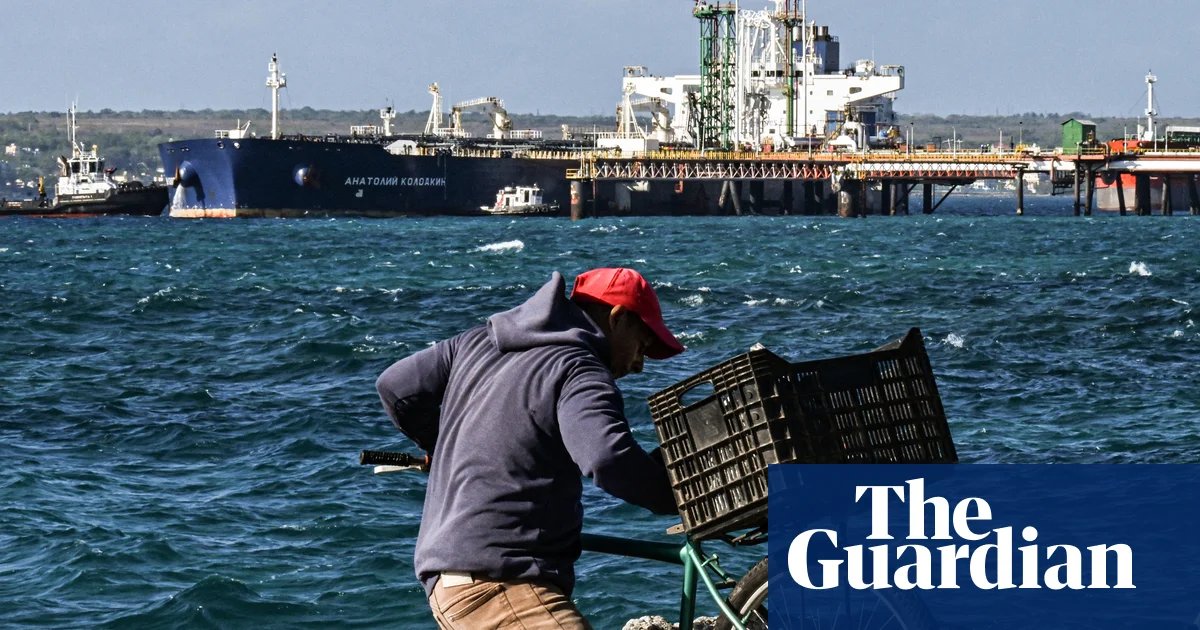
When a sanctioned Russian oil tanker, the Anatoly Kolodkin, docked at Cuba’s Matanzas oil terminal on Tuesday, unloading 700,000 barrels of crude, it was not immediately clear why the ship had been allowed to pass through Donald Trump’s oil blockade.
In January, the US president had proclaimed on social media: “THERE WILL BE NO MORE OIL OR MONEY GOING TO CUBA – ZERO!” yet last week he told reporters, “If a country wants to send some oil into Cuba right now, I have no problem with it” – and waved the Russian ship through.
Then, on Thursday, came news that Cuba was releasing 2,010 prisoners. The government framed the move as a humanitarian gesture for Holy Week, but observers were quick to link the two events – and see both as evidence that negotiations between Washington and Havana are continuing.
The US oil blockade has caused an already stuttering Cuban economy to trundle into the ditch. Tourism is all but dead, after airlines from Canada, Russia, China and France ceased operations, and Iberia is leaving at the end of May.
Most petrol stations are closed. Blackouts, long a problem, are now a daily grind.
Those Cubans who still live on the island, estimated at 9.5 million after a 2 million-strong exodus in the last five years, are exhausted. “Everything is collapsing – health, education, transport, everything,” said one man outside a church in El Cobre, a famous site of pilgrimage in the east of the country.
Meanwhile, the population is left studying the scraps of information leaked – always from the US side – about the talks.
It’s a dialogue between apparently irreconcilable positions: Trump has vowed to “take” the island, while Cuba maintains that its political system is not up for negotiation.
Initially many diplomats credited the tanker’s arrival to the worsening crisis on the island. “One option is that it’s a tactical move by the White House,” said one ambassador, attempting to parse the week’s events. “So that as the humanitarian emergency worsens they can point to something specific they did – even though we know it’s nothing in the grand scheme of things.”
This, however, did not seem in character for Trump, whose humanitarian instincts have never been obvious. But the diplomat went on: “Or it could mean there is a bit of progress on negotiations. And this is a confidence-building measure.” The prisoner release suggests the latter.
William LeoGrande, professor of government at the American University in Washington, said: “It suggests that the two sides may be making reciprocal gestures of good will to advance the conversations they have been having,” pointing to similar episodes in prevents efforts at detente.
Meanwhile, another tanker with 200,000 barrels of Russian fuel – the Sea Horse – has been floating in the Atlantic. As the Anatoly Kolodkin arrived in Cuba, the Sea Horse moved to Venezuela, whose government since the US abduction of Nicolás Maduro has been keen to appease Trump’s demands. The choreography suggested the oil shipments were a series of carrots being offered to the Cuban government.
While no amount of oil or pressure seems likely to encourage the Cuban regime to give up the power it has held since 1959, other events over the last week suggest a more transactional way forward.
Since they were first permitted by the government in 2021, Cuba has become home to more than 10,000 small to medium-sized private businesses, called Mipymes. They are apparent in the small corner stores across the island, but also in the big container lorries running down the highways.
The Mipymes have created a group of very wealthy Cubans, many with links to the regime and Gaesa, the army’s economic wing which controls large swathes of the economy. Raúl Guillermo Rodríguez Castro, who has been at the front of negotiations with the US, is not only the grandson of former president Raúl Castro, but also the son of the former head of Gaesa, Luis Rodríguez López-Calleja, who died in 2022.
This week CNN interviewed another member of the Castro family, Fidel’s grandson Sandro Castro. Sandro is a 33-year-old influencer, often treated by Cubans with exasperation for the bling lifestyle he projects, but diplomats say he is also a successful businessman and importer.
“There are many people here who want to do capitalism with sovereignty. I think the majority of Cubans want to be capitalist, not communist,” he told CNN.
Normally such a statement – let alone his subsequent opining that the current Cuban president, Miguel Díaz-Canel, “is not doing a good job” – would have earned the speaker a visit from state security. But it seems not in this case. Díaz-Canel’s political defenestration has been touted by the US as one of the prices for negotiations to go forward.
So perhaps a route forward is forming where Cuba’s economy would open up, while senior members of the regime, including several Castros, retain power and influence. That would conform with Trump’s statement that he wanted a “friendly” takeover of Cuba, mirror events in Venezuela and – as Iran continues to frustrate his hopes of an easy victory – give him a win.
“At the moment, it is this smallish group who is making all the money,” said another senior diplomat in Havana. “If the Americans are saying, ‘you can keep your businesses, but you need to open the economy up to the US too,’ then I can see that happening.”
How that would sit with Marco Rubio, Trump’s Cuban-American secretary of state, who has long expressed his commitment to unseating the Castros, remains to be seen. “I suspect the hardliners in Miami would have a hard time accepting anyone named Castro in a position of authority,” said Pedro Freyre, a Miami attorney at the heart of the exile community. “But while the Castro name carries a heavy historical load, it may prove difficult to dislodge. Díaz-Canel is a leader by consensus without deep historical connections, which make him easier to move around.”
More worryingly is where such a deal would leave the roughly 40% of Cubans who do not work for the private sector or receive money from relatives abroad. These people are often elderly and gave their lives to a revolution that promised to look after them from cradle to grave. The answer is probably nowhere good: they are now on the edge of starvation.