dailynewsnblog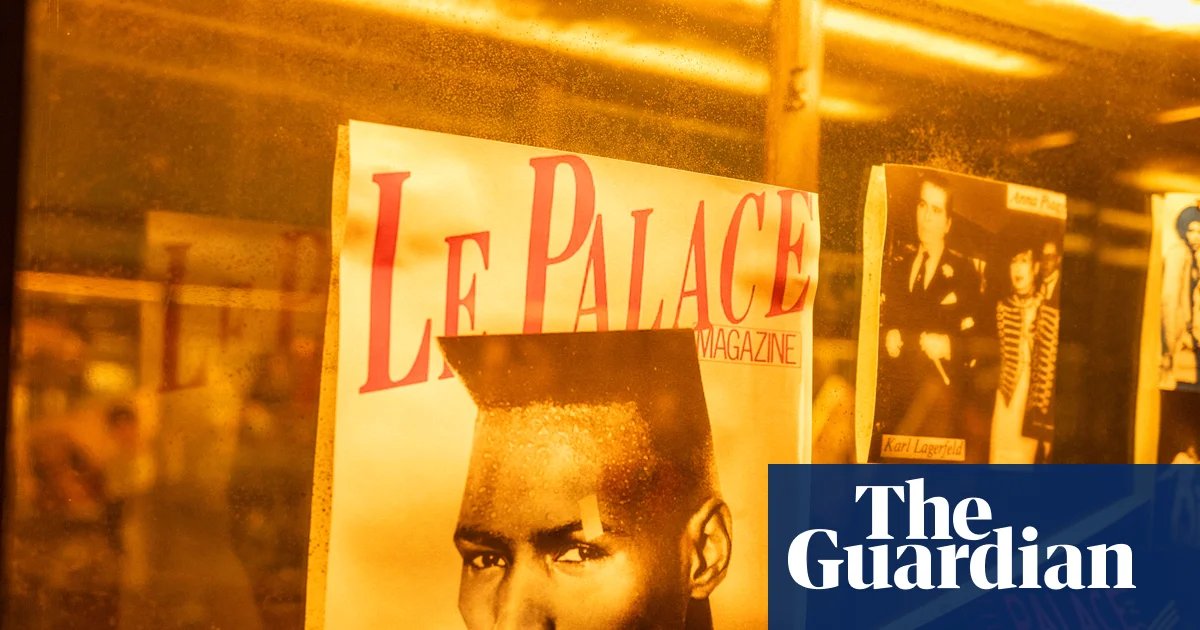
In the late 1970s, Le Palace in Paris’s busy theatre district was one of continental Europe’s most famous nightclubs.
On the opening night on 1 March 1978, Grace Jones stunned VIP guests with her rendition of Edith Piaf’s classic La Vie en Rose. Later, Serge Gainsbourg and Prince came to perform, Bob Marley was photographed there and Mick Jagger, Andy Warhol and Karl Lagerfeld were part of a glittering cast of international celebrities, politicians, designers and models who came to drink and dance.
It was, as the queen of disco Donna Summer would sing, hot stuff. But within five years of Le Palace opening, disco was on its way out. The Parisian boogie wonderland where they had strutted their stuff to Stayin’ Alive was dead and not even Gloria Gaynor’s defiant I Will Survive would save it.
The avant garde nightclub that had attracted a glitterball generation closed temporarily in 1982 when its owner, Fabrice Emaer, was ill with terminal cancer. It turned out to be the end of Le Palace as everyone knew it.
But today, Le Palace is rising from the rubble strewn across its famous dancefloor. The French producer Mickael Chétrit bought the iconic building last year and wants to revive Le Palace as a popular venue and breathe some of the spirit of the era back into it.
“I’m too young to remember the club in its heyday but I’ve seen the photos and documentaries and I’ve spoken to people who used to come here,” he said during a tour of what is left of the historic building.
“In those days everyone knew Le Palace.”
Since news of its reopening – planned for the start of 2027 – spread, Chétrit says he has been inundated with requests from artists all over the world who want to visit and perform.
“We’ve had lots of requests, and from some great artists. Everyone wants to come back and have a show here. Many French artists and foreign artists want to perform at Le Palace because they started here and want to return to where it all began for them,” he said, refusing to name names.
“It’s a big thing. When you said you were singing at Le Palace, it was like saying you were performing at Olympia. Le Palace is still a well-known name.”
“I knew it was a symbolic place but I never knew how much it meant to people,” he said. “It’s a beautiful place. You can feel its spirit.
“The idea of the renovation is to respect that spirit, the history and what people experienced here. I didn’t want to change everything and create something completely new, it’s about keeping the name and using the history of what it was to create what it will become.”
The building on the busy Rue du Faubourg Montmartre first opened in 1912 as a cinema before being transformed into a concert and music hall where Tino Rossi, Maurice Chevalier and Joséphine Baker appeared. In the 1920s an operetta containing a scene of simulated sex caused a scandal and nearly had the authorities closing the place down.
After the war it became a cinema once more, but it closed in 1969 as France turned to television.
In the late 1970s it was bought by Emaer, a restaurant and nightclub owner, who modelled it on the celebrated Studio 54 nightclub in New York.
Celebrities had a laissez passer but the club’s unusual door policy meant you were just as likely to be bopping with a local firefighter or a Parisian plumber as a well-known name. Fame was only one way in; guests were also admitted for having a certain style, look or attitude.
After Emaer’s death in 1983, Le Palace reopened under new management, but eventually lost its beat. By the end of the 1990s, the legendary nightclub was abandoned to squatters and looters. It was eventually revived as a theatre and concert venue, but closed definitively in 2023.
“The place was squatted in and completely ransacked. There used to be magnificent chandeliers here and wall lights, but everything was stolen,” Chétrit said. “We can’t recover everything but we have photos of how it was and we’re going to try to restore it to its original state.”
Today, the facade’s neon sign is partly hidden with scaffolding in preparation for the renovations that begin next month to recreate a basement nightclub and a theatre-concert venue with a capacity of up to 1,400 people.
Parts of the main theatre, including a large hand-painted fresco depicting naked dancers that dates back to when the building opened in 1912, are listed and the renovation has to be overseen by official architects responsible for protecting France’s heritage.
“It costs a lot of money when things are listed because the work has to be done by specific companies and craftsmen chosen to restore it to its original state. It complicates things, but it’s a way of respecting the architecture and the historical aspect of the place,” Chétrit said.
The revamp is being overseen by the interior designer Jacques Garcia, best known for his contemporary redesigns of luxury Paris hotels and for creating the Gainsbourg boutique and cafe bar next to the late singer-songwriter’s home, which is now a museum.
The 78-year-old designer told French media: “I spent my life here, with one party after another alongside some incredible people. We were crazy, without limits, but with a certain elegance.
“The name Le Palace is a setting in itself. It represents a myth for many people who experienced it. I can only embrace the myth and the setting.”
The glass cabinets flanking the entrance corridor still display posters of some of Le Palace’s most famous patrons. Photographs from the late 1970s and early 80s feature Yves Saint Laurent, Tina Turner, Jerry Hall and Gainsbourg.
Chétrit says these will brought alive on video screens when Le Palace reopens. “You will be able to experience Le Palace with photos, videos of the people who frequented it, so that those who didn’t know it back then can understand what Le Palace was like,” he said.
“There is no other venue of its kind in Paris with such a history. It’s been neglected but we’re going to restore it all.”