dailynewsnblog
Unlock the White House Watch newsletter for free
Your guide to what Trump’s second term means for Washington, business and the world
Corporate America is lining up for refunds from President Donald Trump’s emergency tariffs after the US Supreme Court ruled they were illegal, with more than $130bn at stake.
The US Chamber of Commerce and the National Retail Federation were among the industry groups to immediately push for reimbursement for the billions of dollars in duties paid since Trump’s tariffs took effect last year.
The Supreme Court ruled in a 6-3 decision that the president overstepped his authority in using the International Emergency Economic Powers Act to place new tariffs on dozens of countries.
The ruling provided no framework to settle whether anyone is entitled to refunds or how they would be paid, leaving it to a lower court.
Trump on Friday said it was “crazy” that the Supreme Court did not address whether the administration needed to issue refunds for tariff payments based on the ruling.
“It’s not discussed. We’ll end up being in court for the next five years,” he said.
Some of the biggest business groups in Washington immediately called for a swift process to provide refunds.
The NRF, which represents retail giants such as Walmart as well as independent shop owners, urged courts to “ensure a seamless process to refund the tariffs to US importers. The refunds will serve as an economic boost and allow companies to reinvest in their operations, their employees and their customers.”
The Chamber of Commerce welcomed the ruling and invoked its smaller members in seeking repayment of the duties.
Neil Bradley, the group’s chief policy officer, said: “Swift refunds of the impermissible tariffs will be meaningful for the more than 200,000 small business importers in this country and will help support stronger economic growth this year.”
The American Apparel & Footwear Association, a trade group representing clothing and shoe companies including Ralph Lauren and American Eagle Outfitters, said the decision mandated refunds.
It called on the Customs and Border Protection agency to “move quickly and provide clear guidance to American businesses on how to obtain refunds for tariffs that were unlawfully collected. CBP’s recently modernised, fully electronic refund process should help to expedite this effort.”
CBP’s data covering up to mid-December shows $133.5bn was collected in tariff revenue generated by the IEEPA measures.
Recent research by the New York Federal Reserve and German think-tank the Kiel Institute has indicated US businesses and consumers have paid at least 90 per cent of the cost of tariffs.
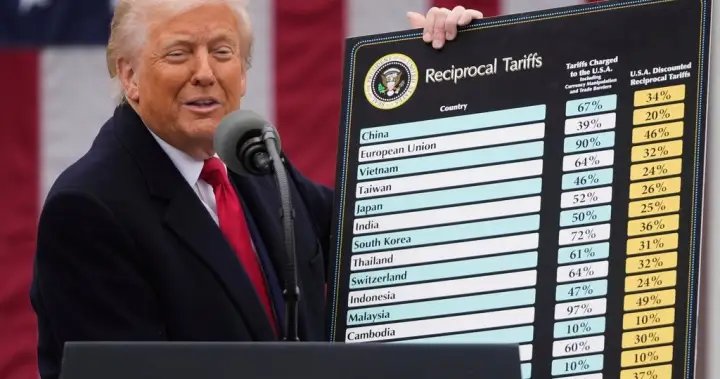
Most of Trump’s so-called reciprocal tariffs took effect on August 7, four months after he invoked IEEPA at the start of April.
The White House also used IEEPA to impose tariffs of as high as 125 per cent on China last April, which have subsequently fallen to 10 per cent, and levies on Canada and Mexico over their alleged role in the fentanyl trade.
Most large US companies did not join litigation challenging Trump’s emergency tariffs. But warehouse club retailer Costco Wholesale filed a lawsuit in November to secure a refund if the tariffs were struck down. Costco did not immediately reply to a request for comment.
Industry officials said they expected a number of new claims to be filed after the Supreme Court decision.