dailynewsnblog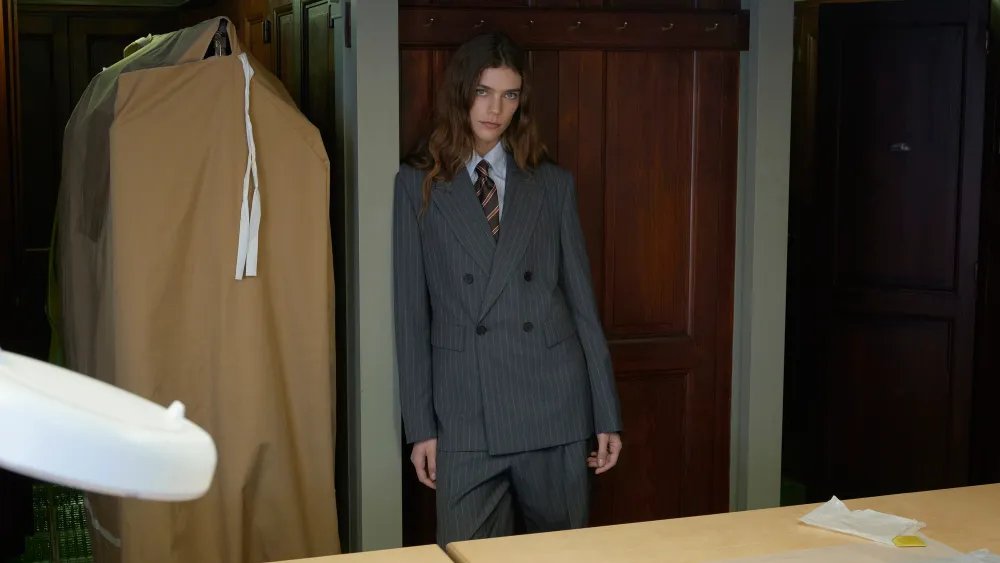
Across Paris during fashion week, contemporary brands continued to raise the stakes — and borrowing tactics long associated with luxury houses — by associating with arts and culture (as well as taking a page from the clienteling playbook) as they seek to elevate brand positioning.
Labels staged increasingly elaborate presentations and events, such as Sandro’s evening at the extravagant Opéra Comique, while Longchamp linked its ready-to-wear offering to a collaboration with artist Caroline Hélain.
Iro has begun organizing hotel-based VIP experiences for its highest-spending clients in China, signaling the growing importance of luxury-style clienteling strategies even among mid-market labels, and brought in set designer Remy Pierre to kit out its showroom.
That shift is also reflected in the clothes themselves. Much like the big runway shows this season, designers looked to sharper structure and renewed femininity after several years dominated by oversize silhouettes.
Collections highlighted tailored jackets, cinched waists and sculptural shoulders alongside lingerie-inspired touches and body-conscious silhouettes. From collegiate tailoring at Claudie Pierlot to precise New Look-inspired silhouettes at Paul & Joe, brands appeared to be rediscovering the power of polished dressing.
Behind the scenes, the real commercial push remained accessories. Across the contemporary segment, handbags, shoes and small leather goods are increasingly positioned as the main engines of growth. Maje introduced a new bag and expanded jewelry and footwear; Iro added a new gathered pump; while Zadig & Voltaire showed every model with some kind of bag after founder Thierry Gillier stated his ambition to increase the share of sales coming from handbags.
Here, a roundup of what some of the leading contemporary brands showed in Paris.
Ba&sh
With founders Barbara Boccara and Sharon Krief back at the creative helm of Ba&sh, the fall collection returned to the label’s bohemian roots.
To an extent the collection went against the trendy grain with a Coachella-inspired collection. Key pieces included the feather-embellished “June” dresses, laser-cut minidresses, and intricately beaded bustiers, alongside fringed jackets, laced-up jeans and embroidered-inspired hippie. The palette favored khaki, white and pops of glitter, echoing California heat and sun-drenched desert colors. Accessories and shoes added quirky utility, while every piece radiated youthful energy. For a season when many labels opted for restraint, Bash’s latest offering was focused on music and movement.

Bash Fall 2026
Courtesy of Bash
Claudie
Claudie Pierlot — the legacy brand that goes by just her first name now — worked with collegiate cues for fall, in checked pleated skirts, varsity-style bombers and layered silhouettes as a nod to campus nostalgia while maintaining a polished, grown-up approach.
Under studio creative head Maria Rosa Fragapane, who joined in late 2024, the collection continued to define a cohesive sporty-meets-academic aesthetic, balancing structured tailoring with organic touches and bursts of color. The palette was rich in chocolates and cinnamon.
At its fashion week press presentation, Claudie invited podcasters to its headquarters to explore and discuss the collection, another SMCP brand positioning itself at the center of the cultural conversation — this time more literally — in a deliberate move to boost awareness of its evolving ready-to-wear offerings.
Fragapane‘s work has resulted in a more refined and confident collection, even if it has not yet panned out in sales. But the brand’s hit low trainer, the Swing shoe — distinguished by hiking boot-style laces — returned in new colorways. It’s been a “huge success,” said a brand representative, and is a cornerstone of Claudie’s strategy to build signatures and expand its accessories offer.
Iro
After a year of restructuring, Iro chief executive officer Isolde Andouard has positioned the brand for a new phase of disciplined growth with clearer positioning in the contemporary designer market.
Andouard said the company spent the past year “rationalizing” its global retail footprint, closing underperforming locations and reorganizing teams as part of a broader transformation. The process left the brand with roughly 150 stores worldwide, a network she described as more focused and efficient.
“Now that we have fewer stores, we can put more energy into each of them,” said Andouard, adding that the goal is to drive stronger like-for-like performance rather than aggressive space expansion.
Growth is currently led by Asia, where the brand has built a substantial presence. Iro operates about 65 stores in China and around 40 in South Korea, markets that posted like-for-like growth of 18 percent and 13 percent, respectively, in 2025. Strategic openings in China remain part of the plan, supported by localized product adaptations and a supply chain capable of quickly restocking popular styles.
The U.S. is another focus. The company recently brought wholesale operations in-house after previously working with an agent, allowing the team to manage relationships with retailers more directly through showrooms in New York and Los Angeles. The move has helped revive momentum there, Andouard said, with flagships in both of those key cities.
At the same time, the brand is investing more heavily in top clients, particularly in China, where VICs account for an increasingly large share of sales. Iro hosts immersive events for these clients, inviting them to overnight stays in luxury hotels where they attend fashion shows, preview collections and participate in private styling sessions.
On the product side, the company is repositioning the brand closer to the designer segment and Andouard sees it sitting alongside brands like Acne and Ganni, without raising core price points. The strategy focuses on a stronger design direction, more distinctive silhouettes and upgraded materials while keeping the brand codes intact under artistic director Nicolas Rohaut. It also involves upscaling the showroom experience, as evidenced by a fashion week presentation set designed by Pierre.
For his part, Rohaut explored what he described as a more “nocturnal” interpretation of the brand’s identity, mixing references from the 1980s, the free-spirited “It” girl style of the early 2000s and even Renaissance painting.
Rohaut cited figures like Kate Moss, Sienna Miller and Chloë Sevigny as touchstones for the collection’s instinctive, slightly undone attitude, harking back to a time, he said, when getting dressed felt more spontaneous and less calculated for social media likes.
The lineup worked the brand’s signature contrasts such as sharply belted biker jackets, spiral-cut leather dresses applied over silk bases and body-skimming jersey pieces constructed on the bias for movement. Rohaut also experimented with material, developing a denim treated to resemble velvet and tweed, as well as leather manipulated into ruffled textures.
While some silhouettes appeared more dramatic on the presentation racks, such as with pronounced shoulders or sculptural shapes, the designer said many of those elements are softened when the pieces move into production.
“My job is to make creation coexist with reality,” Rohaut said, adding that the goal is a wardrobe that feels directional but ultimately wearable.

IRO Fall 2026
Courtesy of IRO
Longchamp
Longchamp is also strengthening its ties with the art world, focusing this season’s collection on a collaboration with French artist Hélain.
Overall the strategy signals the company’s decisive push into the U.S. ready-to-wear market. Traditionally strong in Asia, the French brand is now showcasing Italian-made outerwear, tailored separates, and versatile staples designed to appeal to the accessible luxury market. It currently has four standalone stores in the U.S., in New York and Washington, D.C., and is planning events in the coming weeks in Miami and Dallas to gauge local appetite ahead of possible retail expansion.
In the collection, Hélain’s abstract textile landscapes appeared on Le Pliage totes, Daylong bags, knit dresses and tops, for a tactile artwork. Other prints inspired by interior designer Thomas Heatherwick’s grand Art Deco staircase at Longchamp’s SoHo flagship translated the boutique’s architectural drama into sculptural coats and skirts, in a very meta branding move.
Creative director Sophie Delafontaine extrapolated those codes to shirts and separates across the wider collection. The palette ranged from earthy olive and caramel to bold pastels and monochromatic burgundy, with a little something across categories.
The leather goods company continues to add more handbag shapes and textures, including patent, croc-embossed and nubuck, as well as small leather goods such as bag charms.

Longchamp Fall 2026
Courtesy of Longchamp
Loulou de Saison
Loulou de Saison’s Chloé Harrouche looked to the elegance of New York high society from the 1960s, citing inspiration from cultural figures including Lee Radziwill and Maria Callas — though the minimalism and cuts of the collection were easily on trend with the current Carolyn Bessette Kennedy-inspired minimalism.
Round-neck, collarless jackets, black coats with buttoned scarves, Nehru-collar blazers in faux fur, and lace-trimmed suits were paired with fluid silk skirts and feathered outerwear, all in a mostly monochrome palette of black, white, navy and gray. Colors broke through softly, such as an ice blue.
The brand’s popular knitwear is a key building block for the business, but the presentation focused more on Harrouche’s obsession with tailoring, such as reinforced shoulders, shaped sleeves and sculptural heels. These hinted at the collection’s architectural underpinnings, with practical touches such as adjustable collars that allow variety.
Though the collection was titled “Birds of Paradise,” and there were a few nods with feathered textures, Harrouche mostly held back on extravagance and embellishment. Slim pencil skirts should also resonate this season.

Loulou de Saison Fall 2026
Courtesy of Loulou de Saison
Maje
Sandro’s “little sister brand” Maje seems to be growing up. Over the last couple of seasons it has moved away from “party girl collections,” and this season embraced a vision of Parisian elegance with its “Living Suite” collection. Set in the rooms of an apartment-inspired set, the presentation invited guests to move through a series of rooms, each showcasing the pieces and how they fit into daily life.
Silky satin, luxe cotton blends and Hansa-inspired fabrics brought lingerie-inspired touches — think Saint Laurent-style lace shorts and bodysuits — into the offering, with the theme to transform intimate pieces into confident public statements. Underwear-as-outerwear is nothing new, but the brand was on trend with this overtly feminine take on the season.
There was lots of layering, such as casual joggers and pajama tops paired with tailored coats and evening-ready dresses, while faux fur accents added depth. Chunky cardigans over belted blazers added an unexpected twist, courtesy of stylist Emilie Kareh.
Accessories are a key growth category of the brand, and it introduced a new mini clutch called “The Bijou” bag, expanded shoe offerings, and enhanced jewelry categories. It also introduced a new heart-shaped M monogram to emphasize branding.
An after party that brought Brit Award winner Celeste upped the ante, as Maje spent its second season outside of its showroom as it seeks to elevate the brand, in the footsteps of Sandro.

Maje Fall 2026
Courtesy of FT
Paul & Joe
For fall, Paul & Joe channeled classic Parisian elegance with a collection titled “La Vie Parisienne,” built around precise tailoring and cinched silhouettes subtly inspired by the New Look. Designer Sophie Albou embraced fitted waists and narrow shoulders as a counterpoint to the oversize shapes dominating recent seasons, delivering jackets with subtle Basque waists, coordinated skirts and high-waisted trousers. It was perfectly on trend with what was shown on the runways during the season, with a focus on feminine tailoring.
Outerwear remained central, from structured peacoats to wool coats trimmed in velvet, while fabrics leaned heavily on Harris tweed, herringbone wool and silk organza jacquards sourced from traditional European mills. The collection is produced largely in its Parisian ateliers and priced to target professionals seeking polished daywear at a price point of about 1,000 euros for a coat, as well as occasion dressing with some fun beaded dresses and short jackets.
Alongside the main line, Albou launched a capsule developed with 2025 Silver Shears tailoring award winner Tilda Jonathan, blending Savile Row techniques with French style. The collaboration featured sharply cut jackets, pleated trousers with side buckles and striped shirting, alongside Victorian-inspired velvet pieces, highlighting traditional British construction details adapted for the modern working woman.
Sandro
French label Sandro continued to lean into more elevated positioning for fall with a presentation at Paris’ extravagant Opéra Comique. Taking a page from the luxury playbook, the brand invited roughly 500 VICs, along with a slew of influencers, for an immersive cultural event complete with dance performances, a short film, photography exhibits and plenty of Champagne.
It was all part of CEO Isabelle Allouch’s direction to elevate the brand toward “accessible luxury,” through both cultural events and association with arts institutions, as well as overall elevation. Her strategy focuses increasingly on premium materials, such as wool, and meticulous construction including a dress with beading that takes upward of 12 hours to make.
The clothes were almost secondary in the gilded halls of the theater, but here the brand presented a wardrobe of sharp tailoring, Prince of Wales checks and cable-knit sweaters, layered with paisley prints that nodded to the 1970s. Leather outerwear, faux-fur-trimmed coats and embellished knit dresses anchored the collection, while a laser-cut day dress focused on the brand’s work on detail and precision.

Sandro Fall 2026
Courtesy of Sandro
Time
Staged at the Bibliothèque Nationale Richelieu, the fall show of South Korean company Time epitomized its position as a brand built for everyday over the course of three decades. Taking a turn under the gilded ceilings in the central reading room, the lineup unfolded like the streets of any major city with its cohort of women-about-town.
Creative director Choi Jung In continued to mine the ’90s and a sense of minimalism that felt very much of the moment given the release of “Love Story,” the Carolyn Bessette-Kennedy and John F. Kennedy Jr. series out on Hulu.
The clothes were a wearable mix of generous slacks that pooled at the ankle, extra-wide-leg skorts, rounded cape coats and funnel neck suede blousons. Other outerwear spanned from puffy duvet styles to tailored coats, via leather trenches.
Such staple-minded pieces were made more interesting thanks to clever accessories, mainly long scarves with buttoning down the middle working overtime as capelets, overskirts and shawls.

Time Fall 2026
Courtesy of Time
Zadig & Voltaire
Zadig & Voltaire returned to the runway after an absence of two years with a show at the Palais Galliera that provided a jolt of energy from newly appointed creative director Dan Sablon.
The Paris-born and -bred designer examined his roots while amplifying the brand’s rock ‘n’ roll codes. The collection opened with laser-cut leather dresses mimicking lace, pitch-black denim, moto jackets and full looks nodding to ’90s grunge and rave culture. Skinny scarves read early 2000s and berets — some studded or grommeted — were an unabashed reference to clichéd-Parisian style, and were paired with lace, velvet and sequined LBDs. The chunky gold-and-black boots are bound to be a hit.
Gillier’s business focus on handbags was evident as the founder seeks to take the category to above 60 percent of sales. Every model carried pouches, clutches, messengers or even a Jansport-style that had another bag Frankensteined on top.
Outerwear ranged from faux-fur parkas to military jackets, while denim pieces bore subtle floral embroidery. Sablon called the collection “more about attitude than trend,” aimed to capture that certain je ne sais quoi. The show offered accessibility and signaled Gillier’s bigger intention to build it into a lifestyle-driven brand, as evidenced by the Chateau Voltaire coffee cart.

Zadig & Voltaire Fall 2026 Ready-to-Wear Collection at Paris Fashion Week
Courtesy of Zadig & Voltaire
— With contributions from Lily Templeton