dailynewsnblog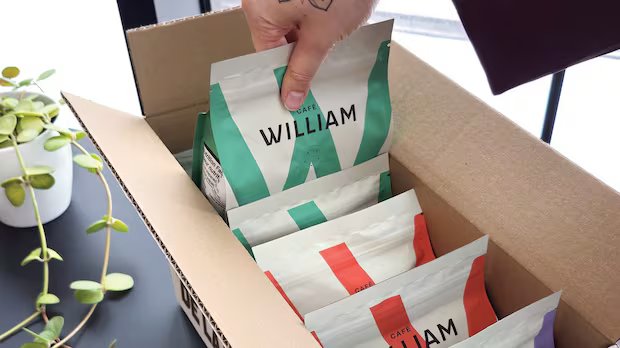

Listen to this article
Estimated 4 minutes
The audio version of this article is generated by AI-based technology. Mispronunciations can occur. We are working with our partners to continually review and improve the results.
An Eastern Townships coffee roaster is bringing its production back to Quebec following a major U.S. Supreme Court ruling that struck down controversial “reciprocal” tariffs.
Café William, which has operated in the province for nearly 40 years, is in the process of repatriating operations to Sherbrooke, Que. The move marks a reversal of a strategy the company adopted last year to survive the trade war.
“With tariffs of 25 and 35 per cent in the food sector — where margins are very low for manufacturers like us — we had to find a solution,” said president and CEO Rémi Tremblay.
The American market represented between 30 and 40 per cent of the roaster’s business volume, explains Tremblay.
That solution involved a cross-border partnership with a New Jersey roaster. Under the agreement, the American firm handled roasting and packaging for Café William’s U.S. clients, while the Sherbrooke plant did the same for the partner’s Canadian customers.
The shift was meant to bypass the reciprocal tariffs imposed last April by the Trump administration. However, after the U.S. Supreme Court struck down those duties last week, the company says it is now more than ready to return home.
Looking to fill 20 positions
In a statement, the company noted that, while they utilized work-sharing programs over the summer, they avoided permanent layoffs during the transition.
Now, the roaster claims its current business volume is higher than it was before the trade war began and it is looking to fill nearly 20 positions.
However, industry experts warn that the broader manufacturing sector remains on edge.
Rosemarie Bégin is a senior director of economics and policy at the professional services firm PwC Canada. She said the U.S. tariffs are pushing more companies to consider a cross-border manufacturing model, but for now, cost assessments are being made.
“We haven’t seen a big movement towards that just because it’s a big investment,” she said, noting the U.S. Supreme Court’s ruling has created even more uncertainty.
“We don’t know what the next move will be.”
She said the legal back-and-forth could complicate upcoming Canada-U.S.-Mexico Agreement (CUSMA) negotiations.
Bégin said moving production is not an easy decision to make, with many factors coming into play. Moving or building factories can take years and would only be in response to a long-term threat, she explained. But for a company like a coffee roaster, the move can make sense when considering the cost benefits, she said.
Those assessments can include researching and understanding the cost of setting up shop in the U.S., she said.
“You have to make sure your costs will be paid back because you’re more competitive in that market,” she said, but the U.S. is such a big market, it makes sense to explore moving at least some production stateside.
“We’re seeing companies that are targeting companies to acquire.”
Instability slows growth in Quebec
Véronique Proulx, the head of the Quebec federation of chambers of commerce, said the ongoing instability is causing many firms to hold back on major investments in Quebec.
“They’re not sure if they should invest in Quebec to grow their facilities, to grow in other markets,” she said.
“Should they go to the U.S. and invest in the U.S. so they’re not affected by the uncertainty and the tariffs or should they diversify their export markets?”
The federation is calling on the provincial government to provide a “strong signal” to businesses by reducing taxes and cutting red tape.
Quebec’s labour minister declined to comment on the repatriation.

In interviews with the CBC’s Sylvia Thomson and Katie Simpson, U.S. trade representative Jamieson Greer laid out where he sees the status of negotiations with Canada at the moment. Greer suggested Canada should accept some form of tariffs in order to reach a deal with the Trump administration.
Meanwhile, U.S. President Donald Trump’s point man on trade talks says Canada needs to accept that tariffs will be a part of any deal with the administration, including renewal of the CUSMA.
U.S. trade representative Jamieson Greer suggested Canada can’t expect to land a trade agreement that is free of tariffs.
“When we go to other countries, and we make a deal with them … they agree that we can have a tariff on them,” Greer said.
“If Canada wants to agree that we can have some level of higher tariff on them while they open up their markets to us on things like dairy and other things, then that’s a helpful conversation.”