dailynewsnblog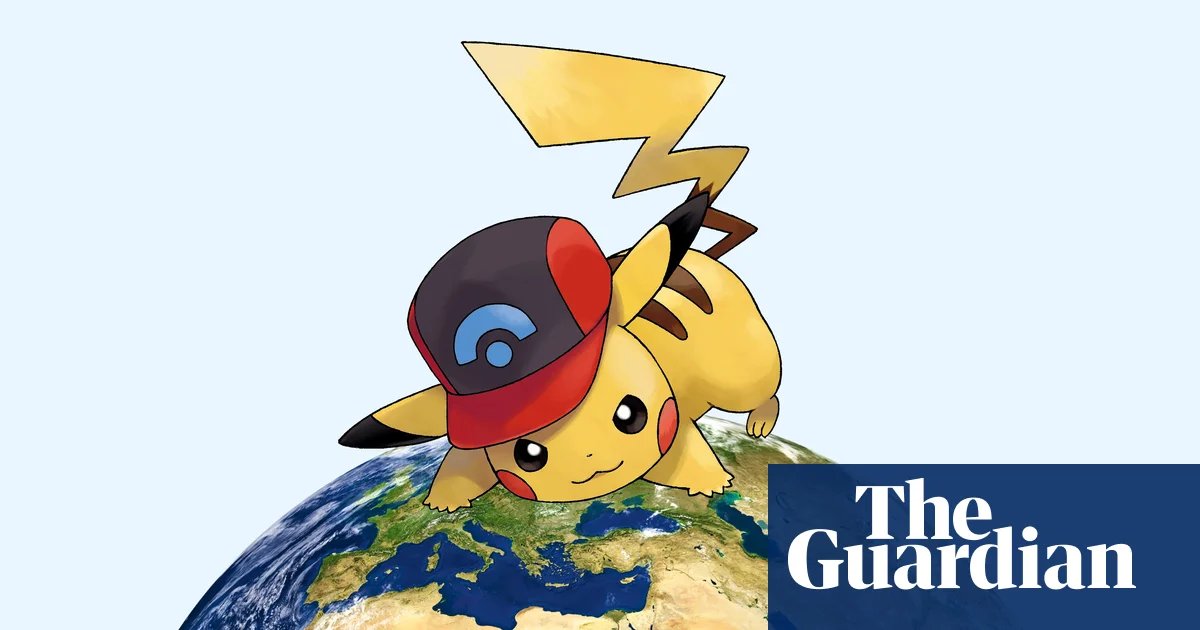
When I was 11, it was my dream to compete in the Pokémon World Championships, held in Sydney in 2000. I’d come across it in a magazine, and then earnestly set about training teams of creatures, transferring them between my Pokémon Red Game Boy cartridge and the 3D arenas of Pokémon Stadium on the Nintendo 64. I never made it as a player but I did finally achieve this dream on my 26th birthday, when I went to Washington DC to cover the world championships as a journalist. I was deeply moved. Presided over by a giant inflatable Pikachu hanging from the ceiling, the competitors and spectators were united in an unselfconscious love for these games, with their colourful menageries and heartfelt messaging about trust, friendship and hard work.
It is emotional to see the winners lift their trophies after a tense final round of battles, as overwhelmed by their success as any sportsperson. But it’s the pride that the smaller competitors’ parents show in their mini champions that really gets to me. During the first wave of Pokémania in the late 90s, Pokémon was viewed with suspicion by most adults. Now that the first generation of Pokémaniacs have grown up, even becoming parents ourselves, we see it for what it is: an imaginative, challenging and really rather wholesome series of games that rewards every hour that children devote to it.
Over the three decades since the original Red and Blue (or Green, in Asia) versions of the video game were released in Japan in 1996, Pokémon has earned a place among the greats of children’s fiction. Like Harry Potter, the Famous Five and Narnia, it offers a powerful fantasy of self-determination, set in a world almost totally free of adult supervision. In every game, your mother sends you out into the world with a rucksack and a kiss goodbye; after that, it’s all on you.
Like The Simpsons, Pokémon is a kind of cultural shorthand for the millennial generation. More than Mario, Zelda or any other Nintendo creation, Pokémon brings people together. It was designed from the beginning to be a social game, encouraging (and indeed necessitating) that players traded and battled with each other to complete their collection of virtual creatures and train their teams up into super-squads. Today, the internet has entirely normalised the idea of video games as social activities, but in the late 90s this was a novel idea. You can’t play Pokémon without other people: in 1999, that meant huddling in the playground, using a cable to link your Game Boys together; later, in 2016, at the height of the Pokémon Go phenomenon, it meant hundreds of people converging improbably at the same park with their phones to catch a Gengar.
Pokémon is often thought of as a turn-of-the-century fad, so it might be surprising to learn that it brings in more money now than it ever did at the height of its first wave of popularity. It has become the highest-grossing entertainment franchise of all time: between the TV series, the merchandise, the trading cards, the games and everything else adorned with the adorable faces of Pikachu and pals, the franchise has brought in north of $100bn, more than Star Wars or the Marvel Cinematic Universe.
This global phenomenon has its roots in Machida, a city on the outskirts of Tokyo, where Pokémon’s creator Satoshi Tajiri was born in 1965. Like many Japanese children in the 60s and 70s, little Satoshi collected bugs, becoming such an expert that his elementary school classmates referred to him as Dr Bug. As a teenager a new obsession arrived: video games, then just making their way into Japanese arcades. His enthusiasm was such that he started putting together a monthly zine, with his friend Ken Sugimori, called Game Freak – later the name of the video game development company they founded together, which still adorns the title screens of modern Pokémon games.
The idea for Pokémon began to percolate for Tajiri around 1990. Watching people link their Game Boys together with cables to play Tetris, the hit puzzle game, he envisioned the bugs he’d collected crawling between the consoles. But it took six long years for this idea to transform into a monochrome world full of 151 collectible critters, in chunky black Game Boy pixels. During this time the developer nearly went bust several times, taking on projects for Nintendo and other game developers to keep afloat; Tajiri regularly went without a salary.
Pokémon’s astronomical success wasn’t instant, but the result of slow-burning sales over years. When it eventually came out in 1996, Pocket Monsters Red and Green – as they were known in Japan – were indie underdogs, made by a tiny team with limited technology for the ageing handheld Game Boy console. Nobody expected it to be much of a hit, but the world of Pokémon Blue has an unexpected sense of place that transcends their technical limitations. The symbiotic relationship between humans, nature and Pokémon permeates every aspect of life, and is often quite touching – particularly at in-game locations such as Lavender Town, where the mourning owners of dead Pokémon come to honour them at a giant commemorative tower.
But the real marketable genius of Pokémon was the fact that the game came in different versions. The reason that Pokémon games always come in pairs is that different monsters reside in each cartridge. If you want to collect them all, to complete your Pokédex field guide, you need to trade them. Creatures could be sent between cartridges, so friends with different versions of the game could help each other accumulate covetable creatures. With Tetris, the Game Boy’s link cable was used for competition. Here it was used for connection.
Pokémon’s popularity spread through playground word-of-mouth. By the time it arrived in the US in 1998, and Europe in 1999, it was already a franchise: Pikachu-adorned games, TV shows, toys, films and lunchboxes, were rolled out carefully by marketers with a proven playbook.
Today, Tajiri is a reclusive figure. Almost everything we know about him comes from a single 1999 interview with Time magazine. The tone of Time’s piece is shockingly dismissive. Declaring the series “a pestilential Ponzi scheme” it describes the “delinquent” and “criminal” behaviour of young Pokémon fans, and the moral bankruptcy of the whole craze – which, it comforts, is likely to peter out soon, like it did for the Power Rangers.
Now that Pokémon has become one of the most enduring and successful entertainment properties of all time, this alarmist attitude seems ridiculous. But the scaremongering was very real. Some of this was simply older people failing to understand the new thing that the kids were into. But there was also an alarmingly xenophobic flavour to the moral panic, this scary Japanese thing with its sinister monsters coming over the seas to captivate children. Christian pastors in the US were proclaiming Pikachu to be a demon. There were movements to ban the TV show from airing.
Perhaps understandably, given the disrespectful and, presumably, hurtful tone of that Time interview, and the moral panic that Pokémania unwittingly ignited, Satoshi Tajiri has shunned the limelight ever since. Now 60, he remains at Game Freak and is still involved in the creation of each new Pokémon game (as of 2025, there are 38 in total), though he reportedly stepped back from day-to-day development in 2012.
July 2016 saw the launch of Pokémon Go, a mobile game that quickly became the most popular in US history, with 232 million players across the world. Pokémon Go works kind of like magic. With the app open, you walk around your neighbourhood; on your phone screen, you see a map of your real surroundings, with icons showing where Pokémon might be found. When you encounter a creature it is superimposed on your real surroundings, a Gengar posing casually in your local park. From there you simply flick a Pokéball at the creatures to capture them.
There’s a unique aspect too to Pokémon Go that makes it different to every other video game-related phenomenon I’ve witnessed. Most of the time when we talk about how games can help people through hard times, we talk about escapism: how virtual worlds can be a reprieve from the problems of the real one. But Pokémon Go was not so much about escapism as connection, a continuation of the lineage of those first games decades before.
At its height, it connected its players with their local area and the people around them. For a few months, there we were, all looking at our surroundings through a different lens, thinking that there might be a little bit of magic out there in the world, like a bug hiding under a rock.
Dr Bug may not be as involved as before, but the pastoral nature he instilled in Pokémon has persisted throughout the last 30 years: the interrelationships between people and Pokémon form the touching core of the games, movies and TV shows, and there is even a quasi-environmentalist bent to its stories. This is, after all, a game about evolution and living in harmony with the natural world. There is a resonance with nature that prevents this $100bn franchise from feeling nakedly cynical or exploitative. Pokémon’s story speaks to an important truth about video games: they are a powerful vector for connection between people. Millions are united by these imaginary creatures, born from one boy’s love of the natural world.
Super Nintendo: How One Japanese Company Helped the World Have Fun by Keza MacDonald is published by Guardian Faber. To support the Guardian, order your copy for £16 at guardianbookshop.com. Delivery charges may apply.