dailynewsnblog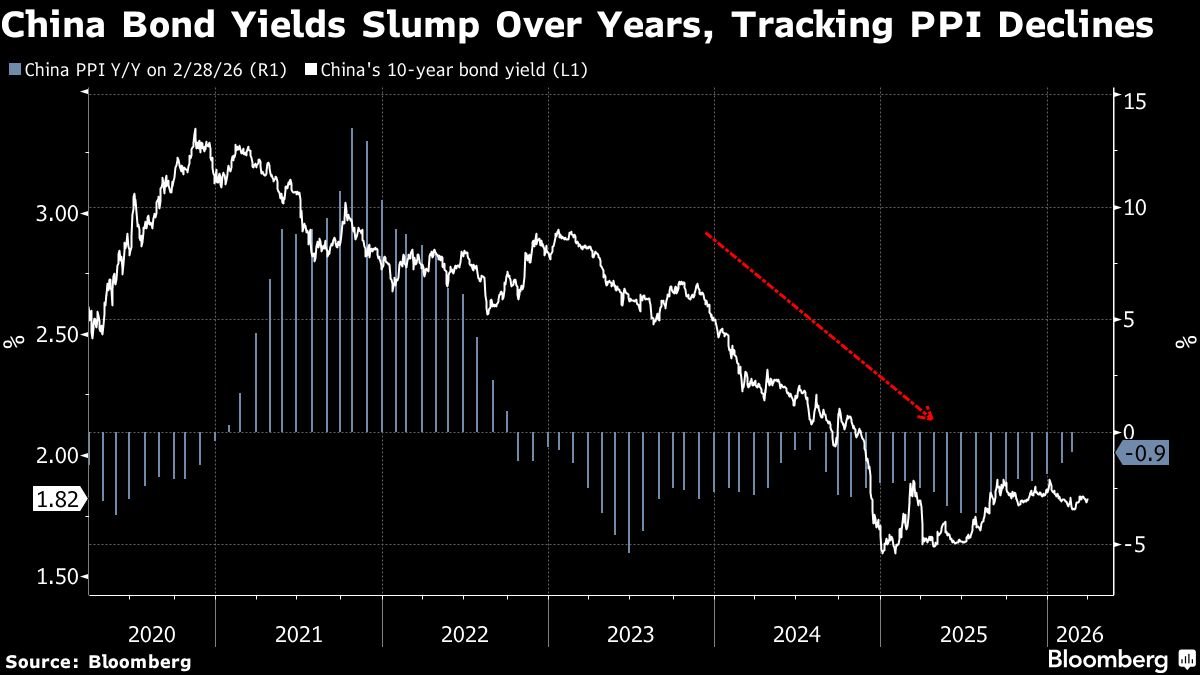
(Bloomberg) — Chinese bonds may be reaching an historic turning point, with yields climbing from record low levels as deflationary pressures ease and expectations for monetary loosening recede.
The benchmark 10-year yield has the potential to finally break out of its recent narrow trading range and rise toward 2% or even higher this year from around 1.8% now, some analysts say. Meanwhile, the yield spread between five-year and 30-year notes, a measure of inflation expectations and supply pressure, has reached its widest in about four years and the gap may increase.
Sentiment in the largest emerging debt market has shifted after a slew of upbeat data, from a surprise growth rebound to slower factory-gate price declines, cast fresh doubts on the deflation-driven narrative that has dominated trading in recent years. As nations around the world adjust to the new reality of elevated oil prices caused by the war in Iran, some analysts even suggest the rise in Chinese yields may have broader repercussions across developing-nation bonds.
“The deflation trade has reached an inflection point,” said Lynn Song, chief economist for Greater China at ING Bank. “It is not a normal situation for an economy expected to grow around 4% for the next decade to have 10-year yields under 2%.”
Some local brokerages are even more aggressive in calling for sharper gains in yields. Kaiyuan Securities Co., for one, sees the benchmark yield returning to a range of 2%-3% later this year as inflation gains momentum.
Signs of repricing intensified last month, when the inflation-sensitive 30-year yield briefly hit the highest since September 2024, after data showed a consumer price uptick and moderating factory deflation, as well as an expanding export boom and stronger retail sales. China’s interest-rate swap market is also flashing signals of reduced expectations for further policy easing by the People’s Bank of China.
The brighter outlook for the world’s No. 2 economy has prompted global banks including Goldman Sachs Group Inc. and Australia & New Zealand Banking Group Ltd. to withdraw or scale back forecasts for a PBOC rate cut this year. Some of these banks also revised up their inflation forecasts for China following the oil shock resulting from the Middle East conflict.
The shift in bond markets hasn’t been confined to China, with the average yield on emerging-market local-currency bonds climbing to the highest in almost two years in March. Energy importing nations saw a big selloff, with bond yields jumping by 50-100 basis points in Poland, South Africa and Thailand.