dailynewsnblog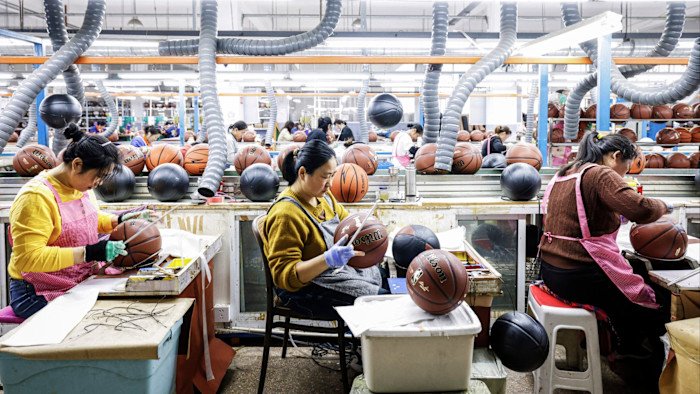
Stay informed with free updates
Simply sign up to the Chinese economy myFT Digest — delivered directly to your inbox.
The writer is chair of Rockefeller International. His latest book is ‘What Went Wrong With Capitalism’
China is famous for pushing growth zealously, so much was made of its recent decision to lower its GDP target to 4.5-5 per cent. But this was a marginal change, and China’s irrational hopes for growth are an increasingly big problem for the world.
The target is not based in economics. It’s a political goal, reflecting Beijing’s ambition to surpass the US and become a developed economy by 2035. Pursuing that aim, Beijing has been overinvesting for years, but lately it has been dumping the excess output it can’t sell at home. In the past, China’s export volumes rose with prices; this decade, Beijing has dropped export prices by nearly 20 per cent, producing a 40 per cent surge in volume.
Booming exports along with weak imports increased China’s trade surplus last year by 20 per cent to a record $1.2tn. Net exports accounted for almost a third of its 2025 GDP growth, a bloated share even by China’s standards. As a share of global GDP, no nation has ever had a larger trade surplus, and that includes Japan during its 1980s heyday.
China’s dumping offensive is deindustrialising rival exporters the world over, idling car factories in Thailand and textile plants in Indonesia. Across Asia, nations where Chinese imports are rising fastest also tend to have the weakest job growth.
More than 50 of the world’s 70 largest economies have taken steps to defend themselves against Chinese dumping. The leaders of France and Germany have complained directly to Xi Jinping about Beijing’s trade practices. Yet the pace of new protective measures slowed last year — as many nations turned their attention to attacks from the US.
In my recent travels across Europe, the Middle East and Asia, policymakers in several countries said they can’t fight a two-front global trade war, so they have focused on managing the more volatile threat of Trump tariffs. This makes it easier for China to keep dumping its surplus production.
The root of the problem is the country’s growth target. Of the nearly 40 nations that rose into the developed ranks after the second world war, none faced the twin hurdles confronting China today: depopulation and massive debt. No other major nation in history has managed to sustain growth above 2 per cent with a shrinking labour force. And at 340 per cent of GDP, China’s total debts are higher than any other emerging economy by far.
Beijing is trying to engineer a historically implausible miracle. Given its demographic decline, China can hit its target only by raising output per worker, but maintaining overall productivity growth near 5 per cent would be an unprecedented feat at this stage of development.
Lately China has been moving in the opposite direction. Productivity growth includes contributions from labour, capital, and a critical “total factor” that aims to capture how much growth labour is squeezing out of the investment. The Conference Board estimates that this key third factor has fallen to near zero this decade, implying that China is generating growth only by investing more heavily.
China keeps pumping out credit to fund more investment, but mostly it’s getting a bigger debt pile. To generate $1 of GDP growth in China, it now takes $6 of new debt, up from $1 two decades ago.
Beijing is counting on investment in new technologies including AI to boost productivity, but it’s highly unlikely that boost will be big enough to sustain productivity growth near 5 per cent. China’s real potential growth rate is probably between 2 and 3 per cent.
For decades outsiders have told Beijing it could generate steadier growth and mollify trade partners in one stroke. Just shift focus from exports to domestic consumption. True, consumption is a relatively small share of China’s economy but not because it has been “suppressed”, as the received wisdom would have it.
Despite the recent weakening, consumer spending has grown at an annual pace of 5 per cent this decade — faster than in any other major economy. While Chinese consumers have increased their savings rate in recent years, this is more a reaction to their high debt burden and losses in the property market than a sign that they have ample room to raise their spending.
The real problem is that investment keeps growing faster than consumption, compelling China to flood the world with its excess production. Chinese exports, now $3.8tn a year, recently surpassed US imports for the first time, and the gap is growing.
If Team Trump believes America is being “ripped off” in global trade, it should focus less on battling its partners and more on China’s export offensive and the inspiration behind it: the growth target. That target is completely unrealistic, damaging for the world and self-destructive for China.