dailynewsnblog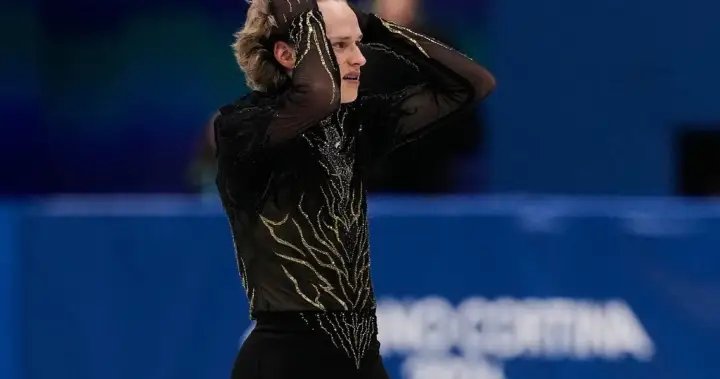
MILAN – Patrick Chan was having flashbacks when Ilia Malinin squandered his golden opportunity in a stunning Olympic moment Friday night. Kurt Browning could relate, too.

The two Canadian figure skating legends watched with the rest of the sporting world in astonishment as the American star crashed under pressure, tumbling to eighth after a disastrous free skate.
“I felt for him. I really did. Because I was like, ‘Dude, I was there,’” Chan said. “I remember when I was experiencing this moment.”
Malinin entered the Milan Cortina Games as the overwhelming favourite to capture the Olympic men’s figure skating title. The self-named “Quad God” had won 14 straight competitions — untouchable for more than two years — and gold felt like a foregone conclusion.
“That’s the Olympics,” Chan said over the phone. “Maybe the analogy is like Icarus flying too close to the sun and burning his wings a little bit, but that’s sport for you.
“The Olympics is a different beast.”
Chan said the moment stirred memories of his own painful near-miss at the 2014 Sochi Games.
The three-time world champion needed only a solid free skate to win gold after rival Yuzuru Hanyu put down a mistake-filled program. But Chan followed with an error-riddled routine of his own and settled for silver, a moment that “still lingers” in his memory.
Browning, meanwhile, was the heavy favourite at the 1992 and 1994 Games, but fell in both his short programs and missed the podium entirely.
“I am one of the few people in the world who knows what it’s like to go on the Olympic ice, and not have it go your way,” said the four-time world champion, who’s calling figure skating on the CBC’s broadcast.
Related Videos

Olympic history is rife with upsets and surprising results, speaking to the unique pressures of competing in an event that only comes around every four years, attracting a global audience.

Get breaking National news
For news impacting Canada and around the world, sign up for breaking news alerts delivered directly to you when they happen.
Browning described the pressure of taking Olympic ice as, “‘I’ve got it, I’ve got it, I’ve got it,’ and then you don’t.”
“And the part where you don’t have it sneaks up on you,” he added. “This is just skating. I’ve done this before. I’m trained, I’m good, I’m having fun. The Olympics are cool. I got this. And then you just don’t.
“It seems like we see it in all sorts of sports, where very strange things happen to athletes that haven’t happened before, and I guess it’s the Olympics … on a less romantic note, everybody’s watching, so if something does happen, we all really take it in.”
A two-time world champion at only 21, Malinin was a poster boy for the United States Olympic team.
Chan believes the Malinin media frenzy, from a flurry of interviews to posing for pictures in the Olympic Village with Snoop Dogg, could have taken a physical and mental toll.
He also described how nerves can build from the six-minute warm-up — where Malinin appeared loose and even faked attempting a backflip — to the 45-minute wait for his turn, as contenders who hit the ice before him struggled.
“Personally, that’s the scariest time,” Chan said. “Especially in his case, where the gold was essentially one step away from being handed to him. It’s such a human thing to be like, ‘Wow, I’m this close. In a few minutes, I’m going to be Olympic champion.’


“That chatter and the what-if and the wanting to get to the end, all of that takes a huge toll physically, it just drains your battery.”
And then there was the quad axel — a once-unthinkable 4 1/2 revolution jump only Malinin can land, but hadn’t yet in Milan. A constant source of headlines, he held back from attempting it in both the team event and his short program, anticipation rising that it would come in his final skate.
On his second jumping pass, he went for it, but singled.
“It felt rushed, and then that was just the catalyst to the rest falling apart,” Chan said. “All of a sudden, you start pulling back, and you’re like, ‘Oh wow. I don’t trust myself anymore.’
“Then you start spiralling mentally, so the pressure is unimaginable … there’s nothing that compares to that sort of expectation, the weight of the world being on you. It’s really a frightening place to be sometimes.”
Gasp after gasp rippled through Milano Ice Skating Arena, followed by frantic, nervous cheers in support as Malinin went on to fall twice and complete only three of his planned seven quads.
“He couldn’t get it back,” said Browning, who lauded Malinin for the way he congratulated improbable gold medallist Mikhail Shaidorov of Kazakhstan. “And then what happens is that you make another mistake because you’re in shock. You make another mistake because you’re trying too hard, and then you make another mistake because you’re being careful. You’re literally not running on instinct anymore.
“A huge jump is 0.8 seconds. There’s not a lot of time to do anything other than just run on instincts.”
Chan said he had no doubt Malinin would bounce back and turn the heartbreak into a redemption story.
“The grit and the success come later on how he’s going to recover from this,” he said. “He’s young, he’s going to go to probably two more Olympics, and he is going to look back on this moment and be like, wow, I was so young and immature in a way. But we all went through that; I have my moments as well.
“That’s the Olympics.”
This report by The Canadian Press was first published Feb. 15, 2026.
© 2026 The Canadian Press