dailynewsnblog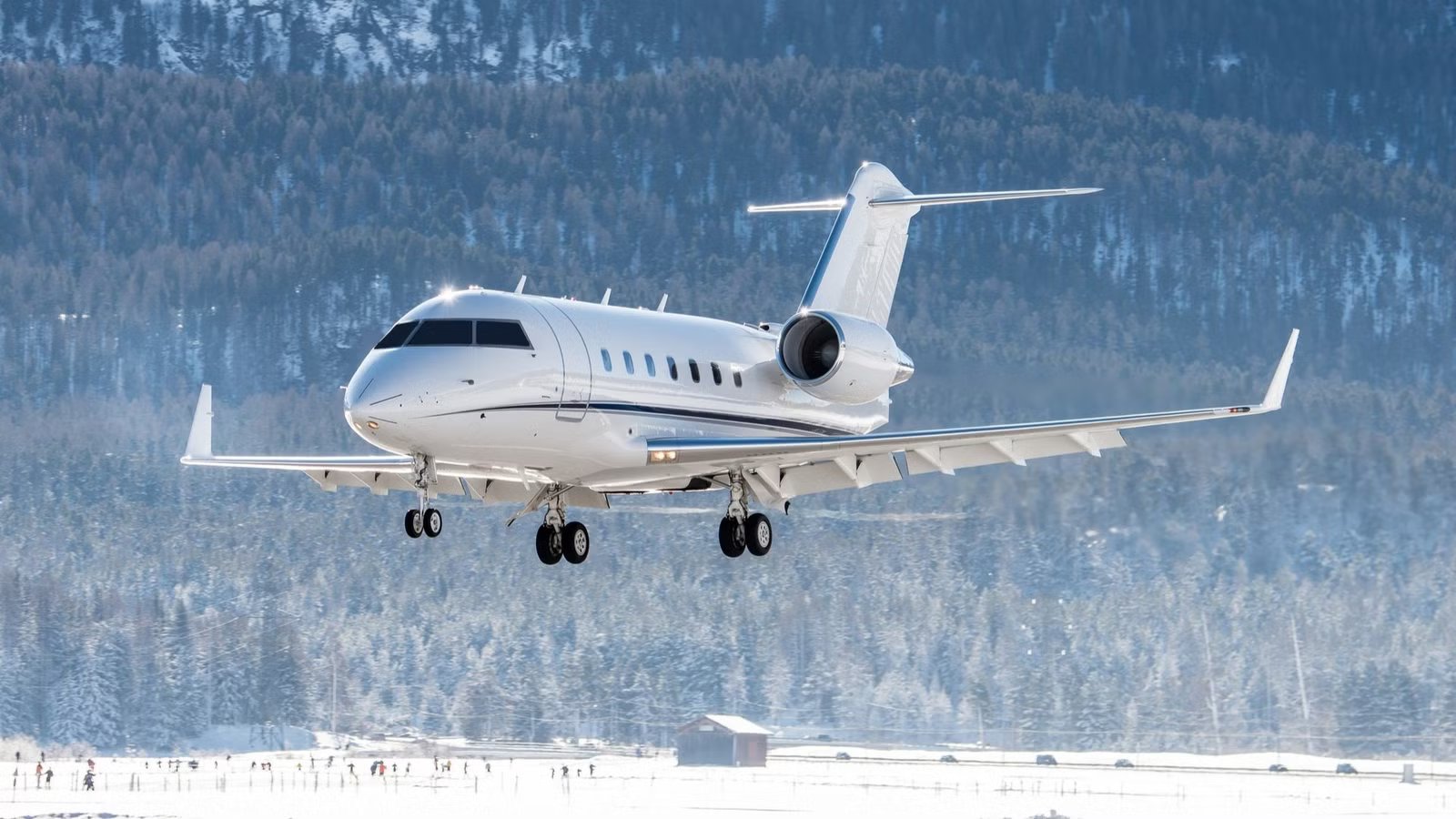
A private jet has crashed while departing Bangor International Airport in Maine on Sunday evening. The Bombardier Challenger 600 was taking off at approximately 7:45 PM local time when the accident occurred. The incident took place as a severe winter storm affected much of the US Northeast, leading to widespread flight cancellations and difficult operating conditions across the region.
Initial reports from the Federal Aviation Administration (FAA) indicate that there were eight people on board at the time of the accident, with the only survivor being a seriously injured crew member. The accident has shone the spotlight on the safety record of the Challenger 600 series, particularly the design of its wings and their sensitivity to icy conditions.
The Latest Details On The Incident

The Challenger 600 series is a family of business jets originally developed by Canadair from a Bill Lear concept, and then produced from 1986 by its new owner, Bombardier. The aircraft involved in the incident (tail number N10KJ) was just five years old, and registered to Houston law firm Arnold & Itkin. Earlier on Sunday, the aircraft had flown in from Houston and landed just after 6:00 PM, making a fuel stop before departing Bangor for Paris less than two hours later.
Shortly before N10KJ was given takeoff clearance, an Allegiant Air flight can be heard on liveATC saying they had attempted to takeoff after de-icing, but aborted when they determined that they failed their decontamination test. They said the ice was “sticking to us like there was nothing [no deicing] there.” Just ten minutes later, N10KJ began its takeoff roll amidst heavy snowfall.
Flight tracking data shows that the aircraft reached a speed of 152 knots before abruptly coming to a halt to the right of the runway. Air traffic controllers can then be heard saying, “Aircraft upside down. We have a passenger aircraft upside down” about 45 seconds after takeoff clearance was given, and first responders arrived on the scene less than a minute later to find the aircraft engulfed in fire.
The National Transportation Safety Board (NTSB) later released the following statement:
“The NTSB is investigating the crash of a Bombardier CL 600 airplane in Bangor, Maine. The preliminary information we have is the plane crashed upon departing Bangor International Airport and experienced a post-crash fire. A team of investigators is expected to arrive on scene shortly, and will begin the process of documenting the scene and examining the aircraft. The aircraft will then be recovered to a secure facility for further evaluation.”
Concerns Over The Challenger 600 Wing Design

In the aftermath of the crash, focus within the aviation community has shifted to the design of the Challenger 600 series wing and its susceptibility to icy conditions. The aircraft has a clean, swept wing with no leading-edge slats or Krueger flaps, which is ideal for high altitude cruise performance, but makes it very sensitive to surface contamination.
As a result, even very small amounts of ice on the wing’s leading edge can significantly disturb airflow, resulting in a substantial loss of lift and control within seconds of rotation. Winter conditions such as those associated with Winter Storm Fern make this vulnerability particularly acute. The reduced lift could then prevent normal rotation, allow liftoff without adequate climb performance, or trigger an abrupt stall at very low altitude, where recovery margins are minimal.
Added to this vulnerability is the fact that the Challenger 600 series is described by pilots as having an “unforgiving” wing and being “very light in the pitch axis,” meaning that it is very sensitive to overly-aggressive rotations. While there is no indication yet that the rotation was anything other than normal, it is worth noting that any wing contamination would have only accentuated this sensitivity.

The 5 Unique Variants In The Bombardier Challenger 600 Series
More than 1,000 examples of the Challenger 600 series, across all variants, have been built.
Other Challenger 600 Incidents Have Prompted Changes

This is not the first accident with a Challenger 600 series aircraft that has involved wing contamination or issues with rotation during takeoff. Other notable incidents include the following:
-
October 10, 2000: A Bombardier Challenger 604 crashed shortly after takeoff from
Wichita Dwight D. Eisenhower National Airport
. The NTSB found the aircraft stalled at very low altitude due to an excessive take-off rotation. -
January 4, 2002: A Bombardier Challenger 604 crashed immediately after liftoff at
Birmingham International Airport
in the UK. Investigators concluded the crash was caused by frost on the wings that reduced the aircraft’s stall angle. - November 28, 2004: A Bombardier Challenger 600 crashed while attempting to takeoff from Montrose County Airport in Colorado. The NTSB attributed the accident to ice and snow accumulation on the upper wing surfaces that the crew failed to remove.
-
December 26, 2007: A Bombardier Challenger 604 crashed during takeoff at
Almaty Airport
in Kazakhstan. The investigation found that the crew’s failure to activate the wing anti-ice system in snowy conditions led to an asymmetric stall.
As a result, aviation authorities and Bombardier have implemented several layers of regulatory and operational mandates over the past two decades. The NTSB has issued specific safety alerts (such as SA-006) targeting “hard wing” aircraft like the Challenger, emphasizing that even 1/64th of an inch of ice — roughly the thickness of medium-grit sandpaper — is enough to cause a loss of lift and an uncommanded roll on takeoff.
Authorities have also changed the standard for “clean wings” with the Challenger 600, requiring a pilot or co-pilot to conduct tactile inspections. This means they need to physically run their hands along the leading edge of the wing to check for ice or frost. Relying on a visual check from the cockpit or cabin windows is no longer legally sufficient for the Challenger 600 series. Whether this occurred in Bangor, as the aircraft looked to complete its refueling stop and head on to Paris, remains to be seen.