dailynewsnblog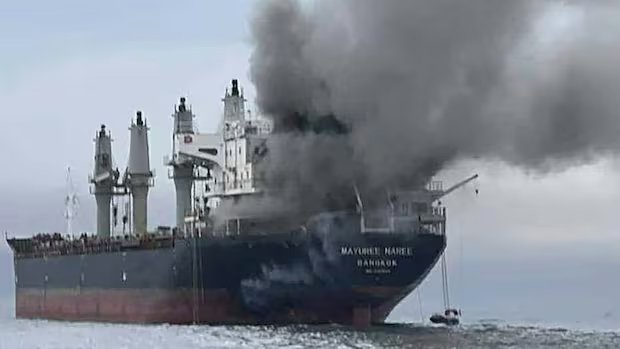

Listen to this article
Estimated 5 minutes
The audio version of this article is generated by AI-based technology. Mispronunciations can occur. We are working with our partners to continually review and improve the results.
Energy and trade experts are warning of a cascading impact on global supply chains that will only grow as the U.S.-Israeli war with Iran drags on and the Strait of Hormuz remains blocked.
Much of the focus right now is, rightly, on oil markets. Over the 12 days of the conflict so far, the effective closure of the strait has blocked around 250 million barrels of oil from leaving the Persian Gulf and being sent around the world.
That’s driven up fuel prices everywhere. But much more than oil is being held back.
The world should be bracing for a disruption to the supply of critical metals like copper, nickel and cobalt coming from the Gulf, said Jim Krane, the Wallace S. Wilson Fellow for Energy Studies at Rice University in Houston, Texas.
Nearly half of the global supply of urea, one of the most commonly used fertilizers, also comes from the region.
“It’s a critical node in the global economy and the loss of access to that single strait is just causing cascading effects across the global economy,” Krane said.
WATCH | The growing impact of the war on global supply chains:
One key aluminum producer in Bahrain has already declared force majeure — freeing it from its contractual obligations — and suspended its deliveries.
Meanwhile, Qatar, the second largest exporter of liquified natural gas, announced this week it was halting production at its facilities and told clients it was unable to complete deliveries.
Effects will ‘take months to unwind’: Carlyle Group CEO
Even if the Strait of Hormuz was completely opened today, it would take months before any of these issues are resolved.
“You’ve disrupted global supply chains. This is not just a disruption to oil — it’s gas, it’s fertilizer, it’s metals, it’s petrochemicals. The list goes on and on,” Jeff Currie, CEO of investment firm Carlyle Group, told Bloomberg this week.
“The ships are in the wrong places, insurances are being cancelled. The damage is going to take months to unwind.”

A Thai cargo ship was one of three vessels struck and damaged by ‘unknown projectiles’ in the Strait of Hormuz, Wednesday. Thailand says an explosion at the stern of the Mayuree Naree triggered an evacuation and that at least three crew members are missing.
On the other side of the continent, Reuters has reported that chip makers in South Korea have warned the conflict could disrupt the production of semiconductors.
“Officials raised a possibility that semiconductor production could be disrupted if some of these key materials cannot be sourced from the Middle East,” said Kim Young-bae of the ruling Democratic Party of Korea, naming helium as one example.
South Korea’s chip industry supplies more than 30 per cent of the global total. Qatar is one of only a handful of countries that produces helium — which is used to cool equipment during production— for export.
Poorer countries could face shortages
In the short term, the oil and gas shortage has driven up costs. But many experts say these higher costs have not fully priced in what happens if the Strait of Hormuz remains closed for even a matter of weeks.
Tankers that left the Gulf before the conflict began are still at sea, heading to their destinations. But analysts describe what’s happening as something akin to an “air bubble” in a hose.
“Every day the global oil market gets 15+ million barrels tighter. We’ve already lost more than a quarter billion barrels of oil supply, thus far, in the Strait of Hormuz stoppage — that’s not a sustainable pace, and no U.S. president will tolerate for long the price spikes that are bound to follow,” wrote energy analyst Rory Johnston in his Commodity Context newsletter on Substack.
He says ongoing disruption will continue to drive prices higher in wealthy nations and lead to outright shortages in poorer countries.
WATCH | Canadian farmers already feeling the pinch:
Krane says that’s already happening.
“We’re seeing shortages already pretty acute in Pakistan and Bangladesh. That’s probably going to lead to some power outages … and other countries will start seeing that soon,” he said on Thursday.
The international push for a co-ordinated release of oil reserves will help. But it can only do so much.
U.S. Energy Secretary Chris Wright has said it will take about 120 days for the American reserves to be deployed. That would mean about 1.4 million barrels per day to address a hole of about 250 million barrels that’s growing by the day.
“Fundamentally, the normal flow of traffic through the strait must resume or the oil market will break the global economy,” Johnston wrote on Thursday.
The biggest problem right now is no one knows for certain what specifically needs to happen for the war to end. Until it does, every hour and every day comes with new risk that the war will expand and make all of these supply-chain challenges worse.