dailynewsnblog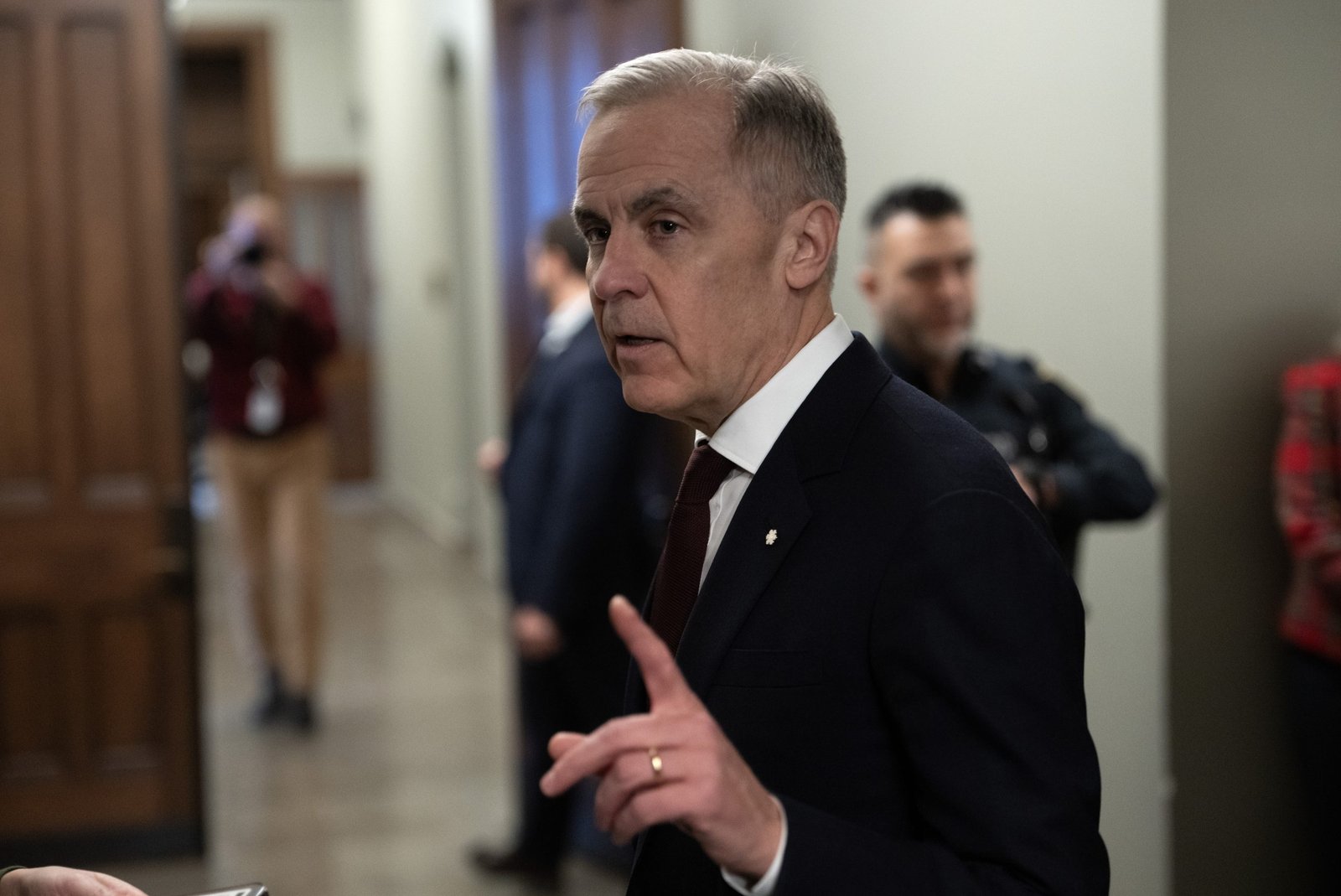
But it’s unclear how much common ground exists in Parliament as the Liberals look to pass their budget implementation bill and contentious anti-hate legislation.
Prime Minister Mark Carney and Conservative Leader Pierre Poilievre sat down for a 30-minute meeting in West Block on Wednesday, with both seeking to portray themselves as willing to work across the aisle to address Canadians’ concerns around affordability, the economy and crime.
But despite the offer for cooperation, it’s unclear how much common ground exists in Parliament as the Liberals look to pass their budget implementation bill and contentious anti-hate legislation.
In a statement distributed to media, the Conservatives described it as a “good meeting” and said Poilievre pushed the prime minister to “introduce fast-track policies for an affordable, safe and self-reliant Canada” and lower taxes.
The party said he also expressed concern his “disappointment at the size of the deficit” in the latest budget, and offered “specific suggestions on how to bring back investment and restated his offer to help in the Canada-U.S. negotiations.”
Poilievre said in a video released earlier this week that he requested the meeting after Carney didn’t respond to his offer to work together to quickly pass important policies through Parliament.
A source in the Prime Minister’s Office told iPolitics that Carney invited Poilievre to the sit-down “a couple of weeks ago” as part of his plan to meet the leaders of the parties at the beginning of the sitting.
The New Democrats confirmed that Carney’s office reached out for a meeting with the party’s interim leader Don Davies, which took place last week.
Heading into his meeting with Carney, Poilievre told reporters that his message to the PM was “let’s work together” to help lower food prices, reform bail and build new homes.
While the Liberals accused the Conservatives of obstructing legislation in Parliament, Poilievre said his party is the one “trying to hit the gas pedal,” and has supported fast-tracking several bills, including one enhancing the GST rebate to low-income Canadians that should pass later today.
“My message to Mr. Carney, [is] stop hitting the brakes, because Canadians need hope for an affordable, safe and secure Canada.”
A source in the PMO said Carney used the meeting to call on Poilievre to back the government’s budget implementation bill, pointing to measures that would support Canadians like the hospital infrastructure fund, the enhanced disability tax credit, and “key funding for programs that make life more affordable like child care and dental care.”
The Conservatives voted against a motion signalling support for the budget shortly after its introduction in November.
The source also said the PM urged to Poilievre to support Liberal criminal justice bills reforming sentencing and bail laws to “keep violent and repeat offenders off our streets,” as well as the contentious C-9, which “protects places of worship from threats of violence and combats hate.”
The Conservatives filibustered the bill at committee over a Bloc Quebecois amendment backed by the government that would remove the religious beliefs exemption for the crime of inciting hate.
Conservatives offer olive branch on expanding GST rebate but prepare to fight Liberals on criminal justice bills
But the two parties reached a detente last week, with the Liberals backing a Conservative motion to pause study of the bill to fast-track government legislation overhauling bail and sentencing laws.
The Conservatives said Bill C-14 is flawed but an improvement over the status quo, and supported its speedy passage through Parliament.
The bill would expand the use of reverse-onus provisions in bail hearings for cases involving violent auto-theft, break and enter, human trafficking and smuggling, assault and sexual assault, and extortion involving violence or violent threats.
In most cases, Crown prosecutors have to convince a judge to continue detaining an accused person while awaiting trial. But for serious crimes like murder and armed robbery, the onus is reversed and the accused has to argue for why they should be released.
Still, the Conservatives haven’t ruled out stalling C-9 when it returns to committee and are voicing concerns around the Liberals’ other sentencing bill, known as C-16.
That bill would create a new criminal offence of coercive control, upgrade all femicides to first-degree murder charges, and make it illegal to distribute explicit deepfake images, among other reforms.
But it’s drawing criticism from the Conservatives for its efforts to re-introduce minimum mandatory sentences struck down by the courts but allowing judges to order a lesser jail term in some limited circumstances.
While many provisions in the bill are ripped right from the Liberal platform in the spring election campaign, changes to minimum sentencing laws were prompted by a ruling from the Supreme Court last fall that found the one-year minimum sentences for possessing and accessing child pornography unconstitutional.
In a decision in a case known as Senneville, the court found the required jail term violates the Charter protection against cruel and unusual punishment because it could reasonably lead to a grossly disproportionate punishment.
The court said possessing child pornography is written in such a broad way that it would capture an 18-year-old receiving a nude photo of a 17-year-old. Handing down a jail term in that case “would be grossly disproportionate,” the court found.
The Conservatives urged the Liberals to use the notwithstanding clause to restore minimum mandatory sentences, but Justice Minister Sean Fraser opted for a different approach.
Bill C-16 would restore several legislated minimum sentences struck down by the courts but give judges the authority to stray from those minimum sentences in cases where doing so would risk infringing on Charter protections.
The Conservatives say that doesn’t go far enough.
During the opening round of debate in the House last week, Conservative justice critic Larry Brock warned that, although the legislation is “largely supported” by his party, “there are some red lines,” including provisions that “would make available the possibility that all the mandatory minimum penalties that were ruled unconstitutional by appellate courts, including the Supreme Court of Canada, get reopened.”
“This would include the most recent decision by the Supreme Court of Canada in Senneville, which was on the possession of child sexual abuse material,” he noted.
Brock proposed separating the bill into two parts to allow the committee to quickly pass changes that don’t deal with minimum mandatory sentences.