dailynewsnblog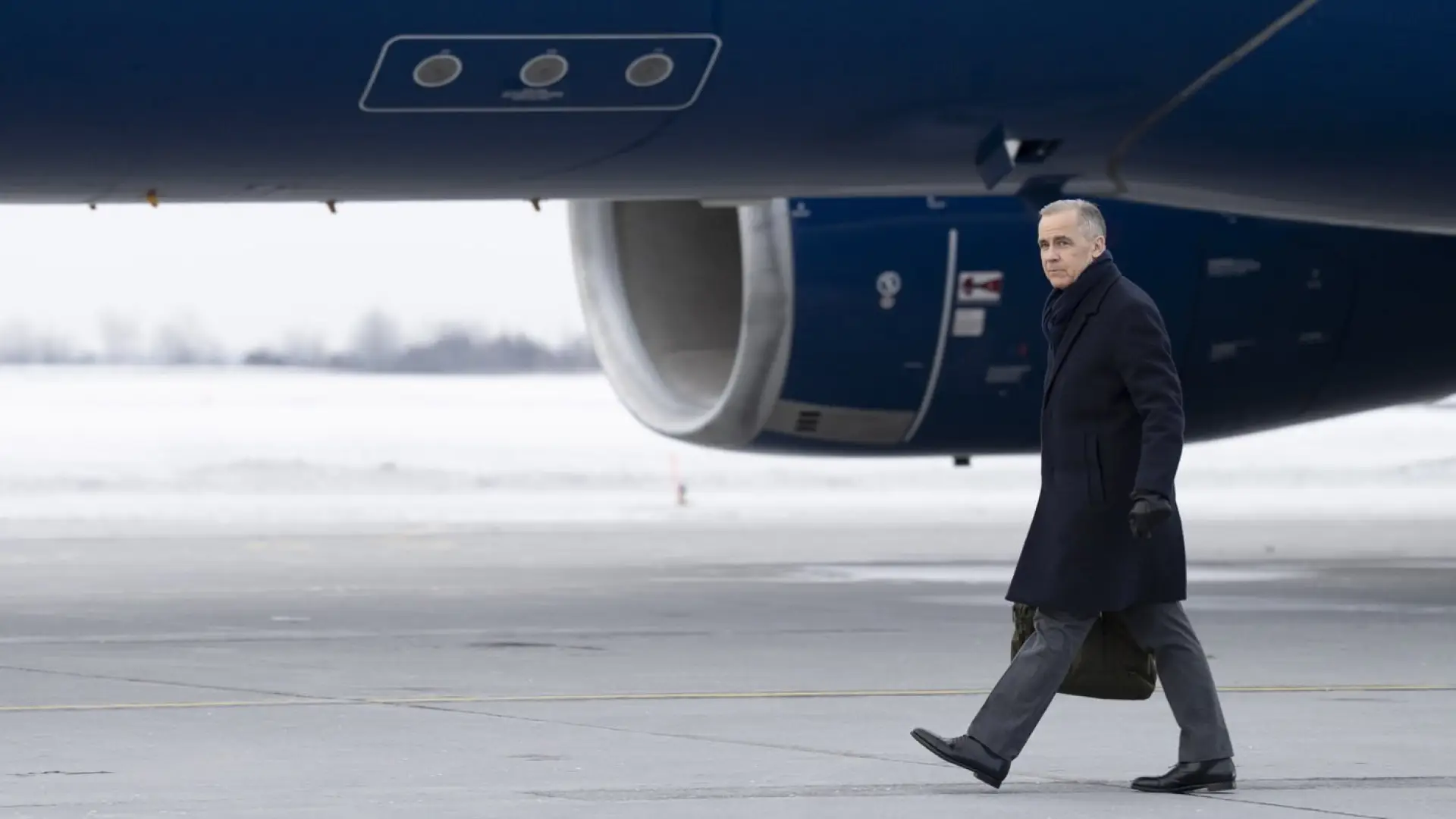
Carney will land in Mumbai on Feb. 27, then head to New Delhi on March 1, where he will meet Indian President Narendra Modi. He will then fly to Sydney March 3 before stopping in Canberra on March 5 and then Tokyo on March 6.
Prime Minister Mark Carney leaves Thursday for a 10-day visit to India, Australia and Japan — his first international trip since his headline-making speech in Davos that called for middle powers to band together.
It will give Carney a chance to put that speech into action as he visits three “powerhouses of the region,” Asia Pacific Foundation vice-president Vina Nadjibulla said in an interview.
“The Indo-Pacific is where the centre of gravity for geopolitics and economic growth … is increasingly converging,” she said.
In his speech to the World Economic Forum in January, Carney urged middle powers to work together against “American hegemony” and the efforts of great powers to coerce and subjugate smaller countries.
“In Asia, Canada is having a moment. Prime Minister Carney’s speech really was quite an important development in how Asia sees Canada,” Nadjibulla said.
University of Waterloo political science professor David Welch said the trip is a “clear follow” on the speech, since India, Japan and Australia are all important middle powers. He said Canada’s “stock has risen dramatically globally since the Davos speech.”
But it’s still not clear how much Carney will be able to accomplish with the trip, beyond symbolism.
“Whether he comes back with deals that do significantly enhance Canada’s economic relationship or security relationship with any of these countries, that remains to be seen,” Welch said.
At the G20 summit in South Africa last year, Carney launched a partnership on emerging technologies with India and Australia.
“We don’t have a lot of details but I’m hoping that we will see some announcements connected to the trilateral during the prime minister’s visit,” Nadjibulla said, noting the agreement came after India hosted a global summit on AI.
Carney will land in Mumbai on Feb. 27, then head to New Delhi on March 1, where he will meet Indian President Narendra Modi. He will then fly to Sydney March 3 before stopping in Canberra on March 5 and then Tokyo on March 6.
While Canada has a good relationship with both Australia and Japan, Carney has set out to reset Canada’s relations with India after a diplomatic crisis that erupted in 2023.
In September 2023, then-prime minister Justin Trudeau told the House of Commons Canada was pursuing “credible allegations of a potential link” between India and the assassination of Sikh activist Hardeep Singh Nijjar.
A year later, the RCMP accused New Delhi of playing a role in a network of violence linked to domestic homicides and acts of extortion.
Both countries recalled their high commissioners and diplomatic ties were suspended for months.
Then Carney invited Modi to the G7 summit in Alberta last June and the two countries have since reappointed high commissioners.
“We both decided that this is too important a relationship to let go, for it to meander the way it was meandering,” India’s High Commissioner to Canada Dinesh Patnaik said in an interview last week.
The two countries have relaunched trade negotiations that have stopped and started since 2010. Patnaik said he’s optimistic about the chances of reaching a deal in just 12 months of negotiations because both countries want stability in a turbulent world.
Both Canada and India are looking to diversify their trade links away from dependence on the United States. Sushant Singh, a lecturer on South Asian studies at Yale University, said Carney and Modi are being driven by the same motive.
“Very clearly there is a desire to close the previous chapter or whatever happened with the previous government … and to start afresh,” he said.
After India, Carney heads to Australia, where Prime Minister Anthony Albanese has been in power since 2022. Carney will address Australia’s Parliament during the trip, government officials said in a background briefing.
Both Canada and Australia are Commonwealth countries and partners in the Five Eyes intelligence-sharing alliance, along with the U.S., U.K. and New Zealand.
Nadjibulla said there is a lot of goodwill and trust between the two countries, along with strong investment ties, but the “defence and security relationship is one that absolutely needs to be strengthened.”
Canada and Australia signed an agreement last year to deploy an over-the-horizon radar system.
Welch said Canada’s relationship with Australia is good but the opportunities for interaction are limited.
“They’re a commodity exporter. We’re a commodity exporter. They’re an agricultural powerhouse. We’re an agricultural powerhouse,” he said. “Just trying to figure out what we could sell them that we don’t sell them now and vice versa is a bit of a trick.”
Carney’s last stop will be in Japan, also a close ally. His visit comes after Japanese Prime Minister Sanae Takaichi, the country’s first female prime minister, was re-elected in a landslide earlier this month.
“In some ways, the trip is long overdue given how significant Japan is as a partner for us in the region,” Nadjibulla said. Former prime minister Justin Trudeau visited in 2023.
A side-trip to Japan was considered when Carney travelled to Singapore, Malaysia and South Korea last fall, but the timing did not work out.
Canada launched an Indo-Pacific strategy three years ago. Nadjibulla said that strategy has led to a deeper relationship with Japan.
She described it as a “full spectrum partnership” that includes strong economic relations, commercial investment, partnerships on energy and critical minerals, “alignment around values and deep people-to-people ties as well.”
But Nadjibulla noted that because the relationship is in a very good place, “it’s easy to overlook it and to not give it the kind of attention that it deserves.”
Welch said Canada and Japan have grown closer as global volatility and uncertainty have increased.
“Canada and Japan in the past few years just seized on each other as stable, like-minded countries that are committed to a rules-based international order and committed to a liberal international order,” he said.