dailynewsnblog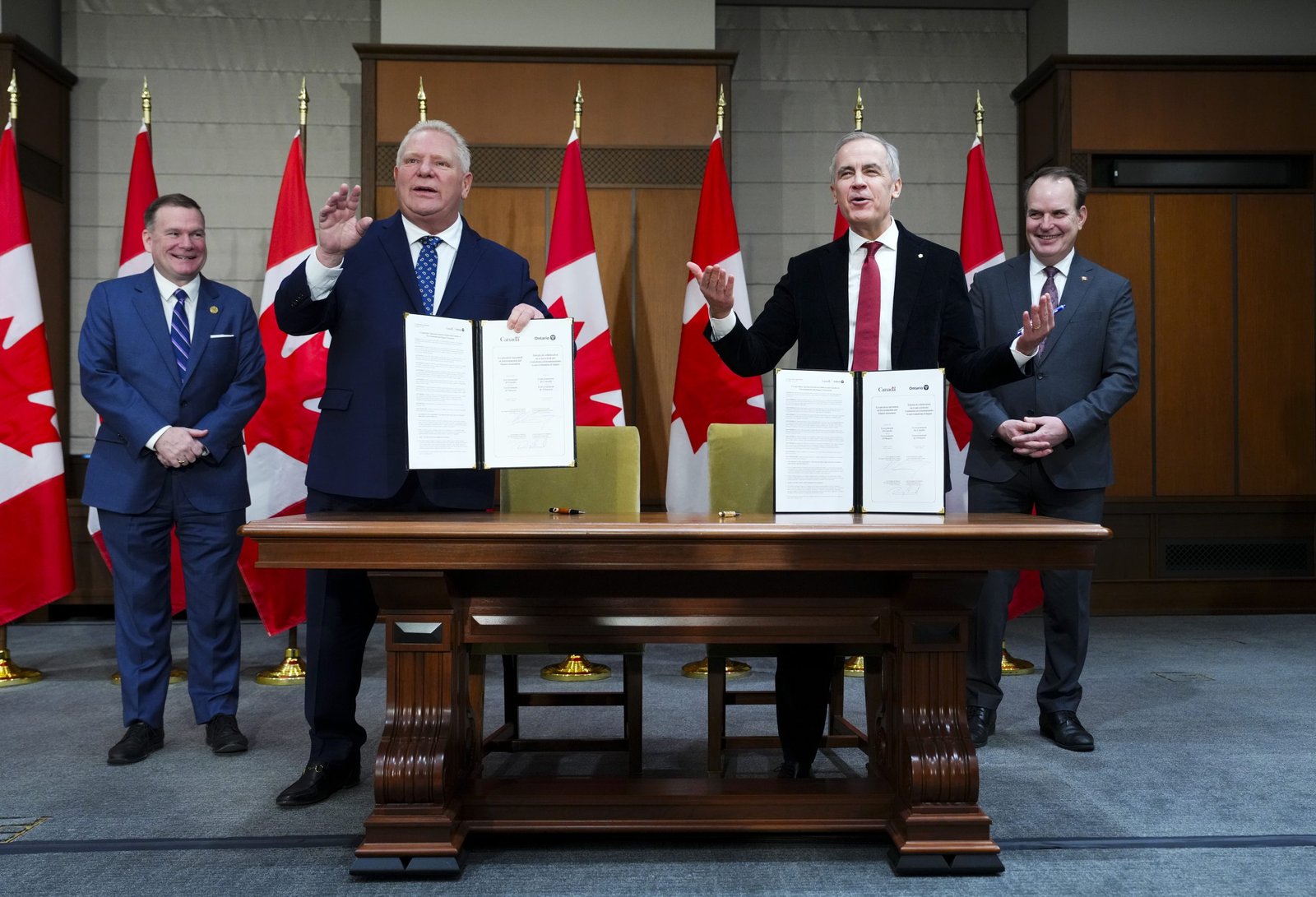
Ottawa and the province just finalized a cooperation agreement to speed up projects that require input from both levels of government.
The final cooperation agreement between Ottawa and Ontario spells out how both parties can move more quickly and efficiently on projects that require both federal and provincial approvals.
The agreement details how this can happen through a ‘harmonized’ or ‘substitution’ single assessment process. The latter means the province leads the assessments on behalf of both governments, and the former means Ontario and Ottawa jointly develop an assessment process and pool resources.
Ontario has repeatedly called on Ottawa to withdraw from assessments in the Ring of Fire region, and has hinted that the northwestern Ontario deposit could eventually be designated as a ‘special economic zone’ where the provincial cabinet has the power to waive or modify specific acts, regulations, and municipal bylaws.
The special economic zone law is set to take effect on January 1, and no area has been designated yet.
In the ceremony finalizing the deal Thursday, Carney was asked by iPolitics if he’d be comfortable using Ontario’s environmental assessments for projects located in special economic zones.
Carney’s answer went over the different responsibilities of each government, including Indigenous consultation.
“We have the federal government’s responsibilities in environmental protection, for example, in fish, fish, habitation, migratory birds, and other areas, we retain these responsibilities,” he said.
He then talked about how governments have historically delayed project approvals by working in silos, and that this agreement “gets everybody effectively in the same room.”
He did not talk about whether he’d be willing to enter into a substitution process with Ontario for a project in a special economic zone.
The cooperation agreement states that, for Ottawa to approve a substitution process, Ontario would have to demonstrate that it can meet the requirements set out in the Impact Assessment Act, but it does not detail how the federal government would evaluate that.
iPolitics sent follow up questions to the Prime Minister’s Office that were forwarded to the Privy Council Office before being transferred to the Impact Assessment Agency of Canada. A response has not been received yet.
Most advanced Ring of Fire mine to proceed without impact assessment
More to come…