dailynewsnblog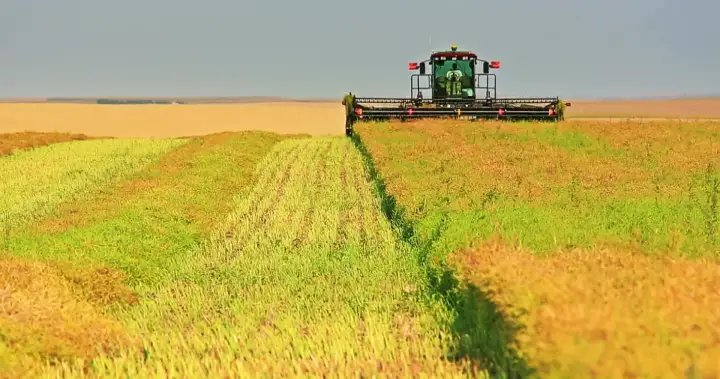
“It’s a huge step forward, but a little disappointing at the same time.”

That’s how Stephen Vandervalk, who grows canola near Fort McLeod, Alta. and is also vice-president of the Wheat Growers Association, reacted to news of the preliminary trade deal between Canada and China.
The agreement, announced Friday, following a meeting between Prime Minister Mark Carney and Chinese President Xi Jinping, in Beijing, is expected to slash punishing tariffs on the sale of Canadian agriculture and seafood products to China, part of a tit-for-tat tariff war between the two countries.
Prime Minister Mark Carney meets with President of China Xi Jinping at the Great Hall of the People in Beijing, China, on Jan. 16, 2026.
THE CANADIAN PRESS/Sean Kilpatrick
It started in the summer of 2024, when Canada announced a 100 per cent tariff on Chinese electric automobiles that Ottawa claimed were being dumped on global markets.
China responded in 2025 with tariffs of up to 100 per cent on some Canadian canola products, along with a 25 per cent levy on Canadian pork and seafood products.
Prime Minister Mark Carney, fourth right, meets with President of China Xi Jinping, fourth left, at the Great Hall of the People in Beijing, China, on Jan. 16, 2026.
THE CANADIAN PRESS/Sean Kilpatrick
The deal announced Friday is expected to result in Beijing slashing duties on canola seed to 15 per cent by March 1, 2026, in return for Canada allowing 49,000 Chinese electric vehicles to be sold in Canada at a tariff of just 6.1 per cent. That number will increase to about 70,000 vehicles within five years.
Ottawa also expects to have tariffs on Canadian canola meal, lobsters, crabs and peas reduced or removed from March 1 until at least the end of the year.

While Vandervalk called the agreement “a huge step forward,” he also expressed “cautious optimism,” saying a 15 per cent tariff on canola meal means Canada could still struggle to be competitive with other countries, like Australia, that can sell the same products to the Chinese market.
He’s also concerned about how Americans will react to the deal because the 100 per cent tariff on Chinese EVs was put in place by both Canada and the U.S. to help protect the North American auto industry.

Get weekly money news
Get expert insights, Q&A on markets, housing, inflation, and personal finance information delivered to you every Saturday.
“They’re our biggest trading partner for sure, they take almost all of our canola meal. When you crush canola seed, you get oil, and you get meal. So a huge market is our canola meal and oil and seed everything into the U.S., so it’s for sure much, much larger than China,” said Vandervalk.
“So if we somehow get a little bit of access to China at the expense of having potentially no access to our largest trading partner, we have huge concerns with that,” added Vandervalk.
The trade war between Canada and China prompted the Chinese government to impose tariffs of up to 100 per cent on the import of some Canadian canola products.
Global News
In an emailed statement, the Canola Council of Canada and Canadian Canola Growers Association called news of the deal on tariffs, “an important milestone in Canada’s trading relationship with China.”
“The Canadian canola industry has been clear since the outset that these tariffs are a political issue requiring a political solution. We are pleased to see significant progress in restoring market access for seed and meal and will continue to build on this development by working to achieve permanent and complete tariff relief, including for canola oil, moving forward,” reads the statement.
Andre Harpe, Chair of the Alberta Canola Producers, who farms near Grand Prairie, Alta., called the tentative agreement “great news.”
“I was up at three o’clock this morning looking at the announcement and I did happen to glance at the prices then and they were up quite a bit. So it was a good response to see from the market,” said Harpe.
“I’m really, really hoping things settle down a little bit, but it’s been a roller-coaster ride. It’s been absolutely terrible. The uncertainty, you know,” added Harpe.
Saskatchewan Premier Scott Moe (centre), was among the delegates who accompanied Prime Minister Mark Carney on his trip to China.
Global News
Saskatchewan Premier Scott Moe, who accompanied the Prime Minister on his trip to China and spoke to Global News from there, was almost euphoric in his reaction to the agreement, calling it “a good day for Canadians.”
“This is very significant. It is going to literally allow billions of dollars of agricultural products of all kinds, whether it’s canola, pulse crops, seafood, to flow again, which was not moving in any way to our second largest trading partner in the world,” said Moe. “So this is an absolute deal of tremendous significance to not only the Canadian agriculture industry, but to the Canadian economy.”
Related News
-
![]()
Saskatchewan Premier praises canola deal between Canada and China
-
![]()
Canola and food exports: What Budget 2025 proposes as trade war continues


“Not only does this restore trade that was existing, but it definitely provides a very foundation for us build additional trade opportunities with not only a country like China, but many Asian countries in the area,” added Moe.
Federal Conservative labour critic, Kyle Seeback, who represents the riding of Dufferin-Caledon in southern Ontario, the centre of Canada’s automobile manufacturing industry, characterized the trade deal as a double-edged sword.
“I think that if you’re a canola farmer, you’re cautiously optimistic. I think if you are an auto worker in Canada, you’re extremely worried about what this is going to mean for the Canadian auto sector,” said Seeback.
He’s also concerned that, so far, China has only agreed to lower tariffs until the end of 2026.
“We’re dealing with China and China has a history of not being a reliable trading partner,” said Seeback. “So it’s always dangerous when you make these kinds of deals with China.”
“I think that this is going to come back to be viewed as an absolutely terrible decision to try and enter into a strategic alliance with China,” Seeback added. “Time will tell, but I think the liberals are going to one day deeply regret that they’ve made this decision.”
With files from The Canadian Press.