dailynewsnblog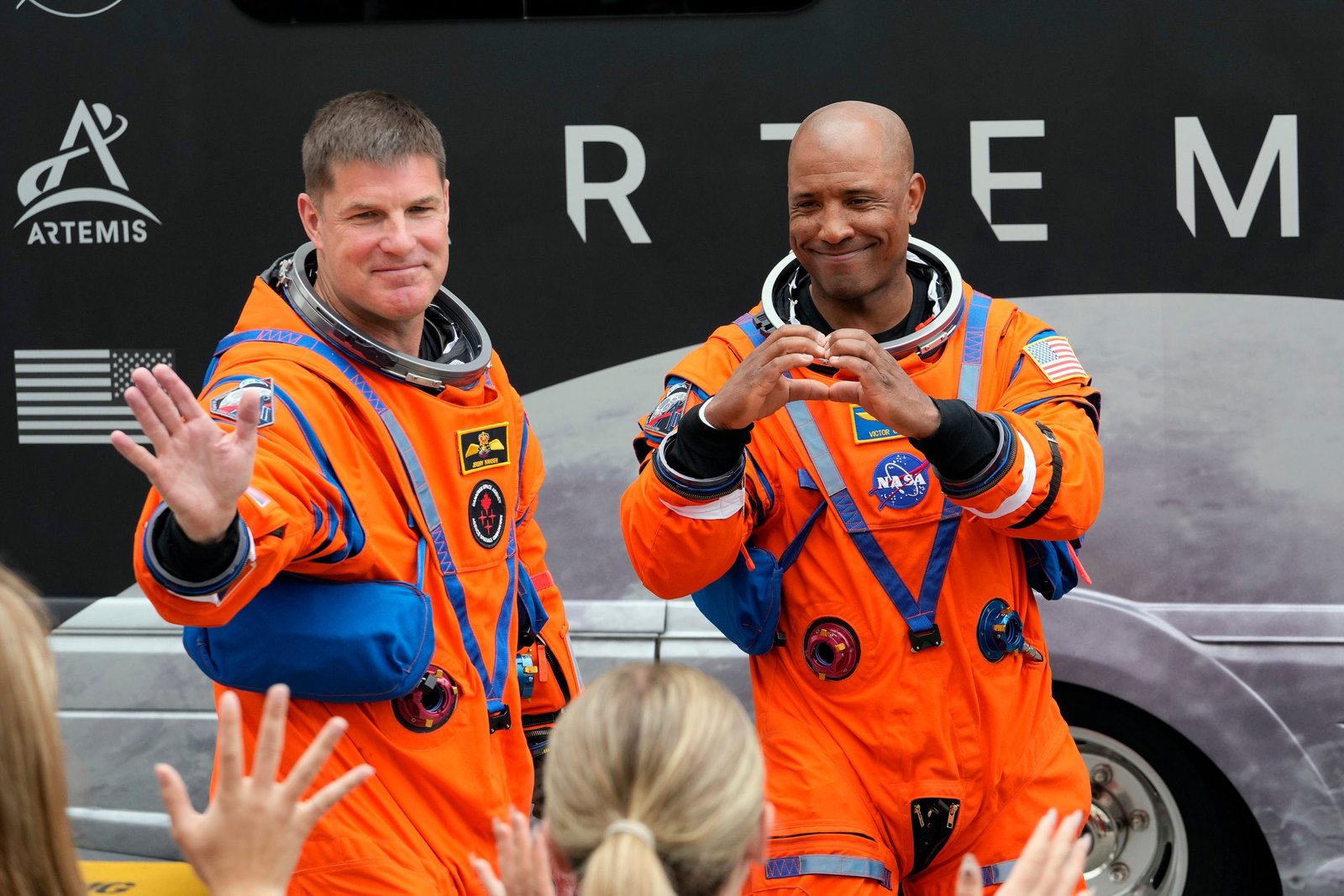
The mission is expected initially to stay close to Earth in order to test its systems before the astronauts fire the main engine to propel the spacecraft on humanity’s first voyage to the moon in more than 50 years.
Canadian Jeremy Hansen is now circling Earth in the first stage of a historic lunar mission after Artemis II successfully launched from the Kennedy Space Center on Wednesday.
On board with Hansen are veteran NASA astronauts Reid Wiseman, Victor Glover and Christina Koch.
“We are going for all humanity,” Hansen said just before the final countdown.
The mission is expected initially to stay close to Earth in order to test its systems before the astronauts fire the main engine to propel the spacecraft on humanity’s first voyage to the moon in more than 50 years.
They are set to bust out of orbit Thursday night, making Hansen the first non-American to travel beyond low Earth orbit.
Lt.-Gen. Jamie Speiser-Blanchet, commander of the Royal Canadian Air Force, watched Wednesday’s launch from the Florida-based space centre. She said the experience was emotional and inspiring.
Hansen, who is serving as a mission specialist for Artemis II, has been a member of the Royal Canadian Air Force for more than 30 years. Speiser-Blanchet said it’s really important for all serving members to see his achievements.
“He’s really just a wonderful demonstration of what it means to serve Canada,” she said. “(He) is such a good ambassador for Canada and demonstration of what hard work and professionalism and leadership and real humanity can do.”
The 10-day journey will see the astronauts fly around the moon — and they will be the first humans to see its far side.
NASA’s future plans for a sustainable moon base hinged on Wednesday’s launch going forward. The goal is to have a lunar landing by 2028.
Lisa Campbell, president of the Canadian Space Agency, said this mission will show the limitless opportunities “as we open up a new economy in the moon, and as we bring the benefits to space here on Earth.”
Canada’s space robotics, including its lunar utility rover, will play an important role as humanity explores deep space, she said after Wednesday’s launch. Canadians are also interested in power generation, position navigation timing and communications as space travel expands, Campbell said.
“This is Jeremy’s first space flight, so we’re thrilled for him, but he also profoundly believes that this mission will help show the world the benefits of space flight,” she said.
The astronauts were testing the capabilities of the Orion capsule after the historic launch. NASA said Wednesday night they did a “proximity operations” test to manually pilot Orion — much the way they would if they were docking with another spacecraft.
They were also able to solve an issue that could have become an uncomfortable problem during the mission — the toilet malfunctioned when the crew reached low orbit.
Mission Control guided astronauts through some plumbing tricks to repair the lunar loo.
— With files from The Associated Press