dailynewsnblog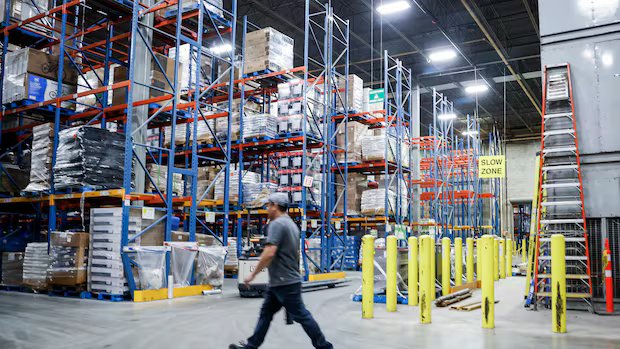

Listen to this article
Estimated 4 minutes
The audio version of this article is generated by AI-based technology. Mispronunciations can occur. We are working with our partners to continually review and improve the results.
Canada’s economy contracted in the fourth quarter, coming in below expectations, as manufacturers heavily dipped into their inventories to meet demand instead of producing fresh goods, Statistics Canada data showed on Friday.
Gross domestic product contracted at an annualized pace of 0.6 per cent in the October-December quarter, the data agency said, compared with a revised 2.4 per cent increase in the prior quarter.
This brings the country’s overall growth in 2025 to 1.7 per cent, the slowest pace of annual growth since the decline in the COVID-affected year of 2020, Statistics Canada said.
“Lower exports, particularly to the United States, were the main contributor to the slower rise in GDP in 2025,” Statistics Canada said in its report.
Analysts had forecast the GDP to be flat in Q4.
Even though exports, household spending and government investment aided growth in the quarter, it was not enough to offset the big dent caused by the impact of inventory drawdown — in other words, selling off goods or materials that weren’t reproduced in the quarter.
Businesses withdrew $23.46 billion from their inventories at an annualized pace, almost matching the 2024 Q4 number, when companies raced to beat incoming U.S. tariffs by supplying products from inventories.
The companies had been actively adding to their inventories in the previous two quarters before the fourth quarter, Statistics Canada said.
The Bank of Canada had projected economic growth of about 1.7 per cent for the year and expected fourth-quarter growth to be flat.
The economy swung back and forth between gains and losses every quarter last year, as sharp changes in exports tied to U.S. tariffs drove volatility in GDP data.
Statistics Canada revised the annualized third quarter growth downward to 2.4 per cent, from 2.6 per cent previously, and upwardly revised second quarter contraction to 0.9 per cent, from 1.8 per cent, on an annualized basis.
Besides inventory impact, investments into building of apartments, condos and houses were the only other major factor that pulled the GDP down in the fourth quarter, with residential structure investment falling by an annualized 4.4 per cent in the fourth quarter.
While Canada’s exports to its biggest trading partner, the U.S., have been declining, in the fourth quarter exports rose 1.5 per cent after increasing 0.9 per cent in the third quarter, on higher unwrought gold exports.
Household spending rose 0.4 per cent in the fourth quarter, after declining 0.2 per cent in the third quarter, and total capital investment grew 0.8 per cent, driven by increased government investment in weapons systems, the statistics agency said.
On a month-on-month basis, the GDP grew by 0.2 per cent, up from no change in the previous month. The monthly GDP figures are calculated by industrial output while quarterly figures are calculated by spending and expenditure.
BMO chief economist Douglas Porter said while the setback in the last quarter due to inventories is an isolated situation that “doesn’t reflect underlying momentum,” the economy still isn’t thriving as tariffs and trade still weigh heavily.
“Until that uncertainty clears, the economy will likely continue to struggle,” Porter wrote in a note to investors. He said the mild growth could pave way for the Bank of Canada to possibly cut interest rates, “but we’re not there quite yet.”
An advance estimate showed GDP is likely to stall in January. Initial readings suggest the momentum in manufacturing was short-lived and the industry contracted to start the year. Statistics Canada cautioned the estimate could be revised.