dailynewsnblog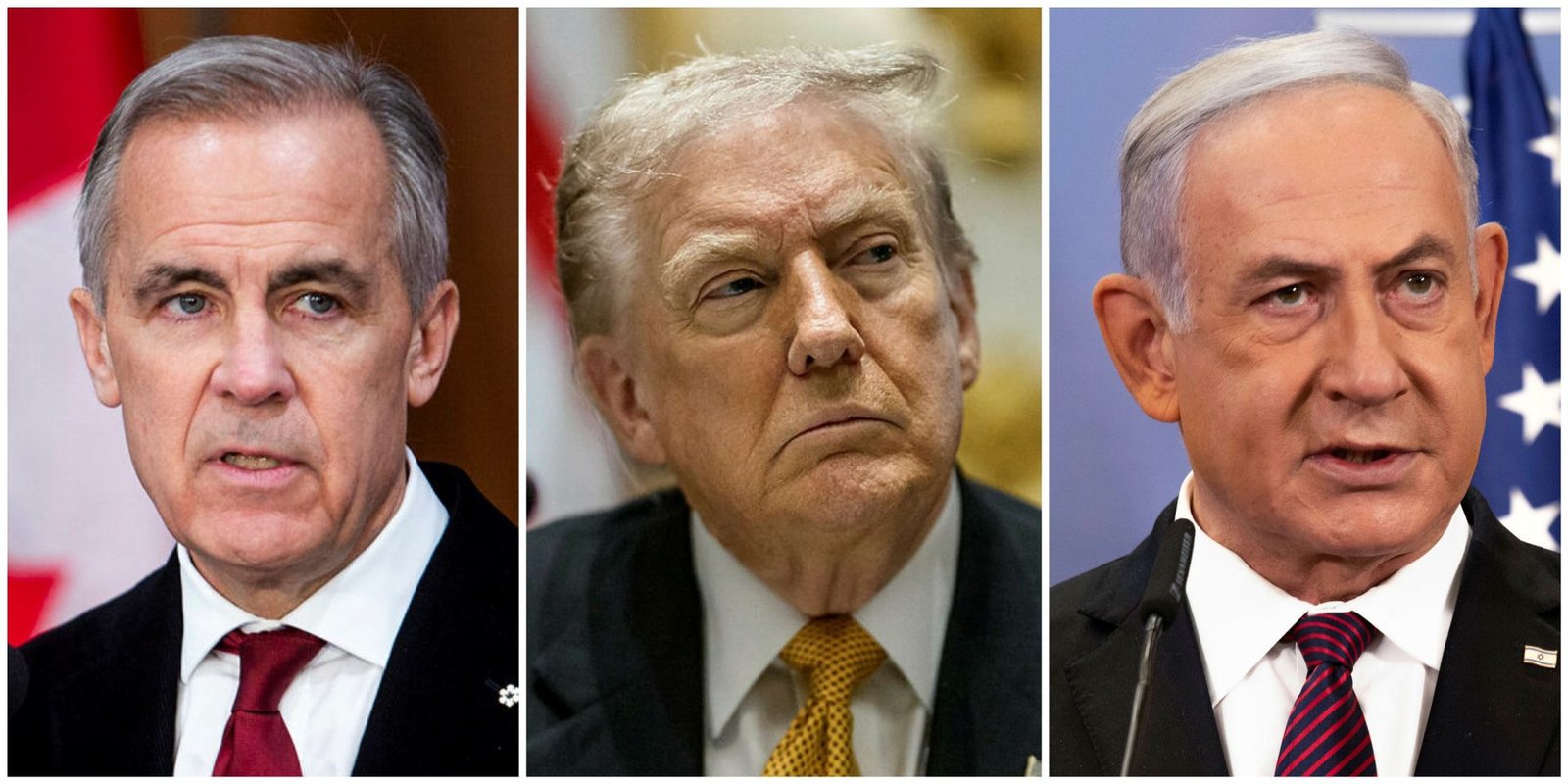
Waking up to the recent news that the United States air force had suffered the downing of three F-15 fighter jets did not suggest that America’s much vaunted technological superiority would make quick work of bringing about regime change in Iran. Learning subsequently, however, that the jets had been shot down with American technology—albeit deployed by Kuwait, an ally—really muddied the picture. The more recent news that an errant American strike was likely responsible for the killing of some 160 school girls and many of their teachers destroys any humour in the irony of America’s technological superiority.
While early in what may prove to be a prolonged conflict, suffering losses from an ally implies that Canada’s support for America’s elimination of Iran’s theocratic and security leadership—as part of a “coalition of the wary” rather than the willing—is probably a wise move. Prime Minister Mark Carney’s support—extended “with regret”—for preventing Iran from securing a nuclear weapon and delivery mechanism, whilst understandable from a purely military point of view, failed to adequately reflect the broader security and economic implications we are now experiencing with each passing day. His more recent acknowledgement that the American-Israeli attack was made without any evidence from the Pentagon or the CIA of an imminent threat to the U.S. or Israel, and without consulting allies or the United Nations, is an implicit recognition that this was—like Russian President Vladimir Putin’s invasion of Ukraine—a violation of the UN Charter and, as our prime minister put it in Davos, an extreme example of “the rupture of the world order.” It might also reflect a recognition that U.S. President Donald Trump’s approach to foreign policy is framed by the limits of his experience, his unlimited ego, and his desperation to avoid any criminal liability emerging from the Epstein files.
When one considers that less than a week before the strike against Iran, negotiations mediated by a senior Omani official were “making significant progress,” according to the U.S. negotiators Jared Kushner and Steve Witkoff, and that since the attack, at least four strategic objectives have been provided by at least four of the administration’s most senior officials, one must ask oneself what is the real reason for taking action diametrically opposed to the president’s election campaign promises? And who initiated the attack? Israel or the U.S.?

While Carney’s qualified support for achieving at least one of the objectives is understandable (assuming that the Iranians were indeed negotiating in bad faith), in light of the upcoming Canada-U.S.-Mexico negotiations, even mitigated support for Operation Epic Fury may well produce a softening of the Trump administration’s trade position vis-à-vis Canada. Yet even if this proves to be the case, is it justified if none of the Americans’ four strategic objectives are what really led the U.S. and Israel to initiate the war?
With the November mid-term elections in the U.S. fast approaching, and Trump’s poll numbers plummeting as a result of what were louder drips emerging from the Epstein files, the war—a long-held dream of Israeli Prime Minister Benjamin Netanyahu and his ultra-conservative allies—has effectively shifted media and public attention away from the sordid details of the exploitation of young girls by a corrupt system of money, privilege, and power of which Trump was an integral part, to what he hopes will prove a resounding success in a historic transition of the power balance in the Middle East. A transformation for which Trump can take credit on a global stage, despite loss of support from a few MAGA hardliners.
Get Weekend Point of View Newsletter
Top Canadian political and policy opinion and analysis. Saturdays and Sundays. Weekends.
By entering your email address you consent to receive email from The Hill Times containing news, analysis, updates and offers. You may unsubscribe at any time. See our privacy policy
Likewise, for Netanyahu, with legislative elections now rumoured to be moved up from November to June of this year (as a result of more than 90 per cent support for the war from the Israeli public), the prime minister “is in his best position since he was first elected PM in 1996,” said former adviser Aviv Bushinsky. Should Netanyahu’s party win, not only would the allegations of incompetence arising from the Oct. 7, 2023, massacre of innocent Israelis be set aside, but there would also be increased support for Trump’s appeal to Israeli President Isaac Herzog to pardon Netanyahu from the corruption charges and the prison term he would likely face if he were taken to trial. In addition, the war is providing him and his extremist allies in government with a pretext and cover for accelerating the annexation of both the West Bank and Gaza, effectively shutting the door to a two-state solution for the Palestinians, while opening it wide for Trump’s pay-to-play Board of Peace, and his fanciful “Middle East Riviera” on Gaza’s ocean front.
With Carney’s announcement that he is not ruling out Canadian military involvement (presumably only if Canadian assets are attacked), the prime minister is putting the country on an even more slippery slope. With aspirations to lead a global alliance of middle powers dedicated to retaining the rule of law while strengthening multilateral solutions to 21st century global challenges, Canada can ill afford to be perceived as serving as an instrument effectively protecting the legacies of two heads of government indicted on charges of corruption from judicial prosecution. That’s not a good look for Carney, and enlightened Canadian global leadership.
Joseph Ingram is the former special representative of The World Bank to the United Nations and the World Trade Organization, a former president of the North-South Institute, and a fellow of the Canadian Global Affairs Institute.
The Hill Times