dailynewsnblog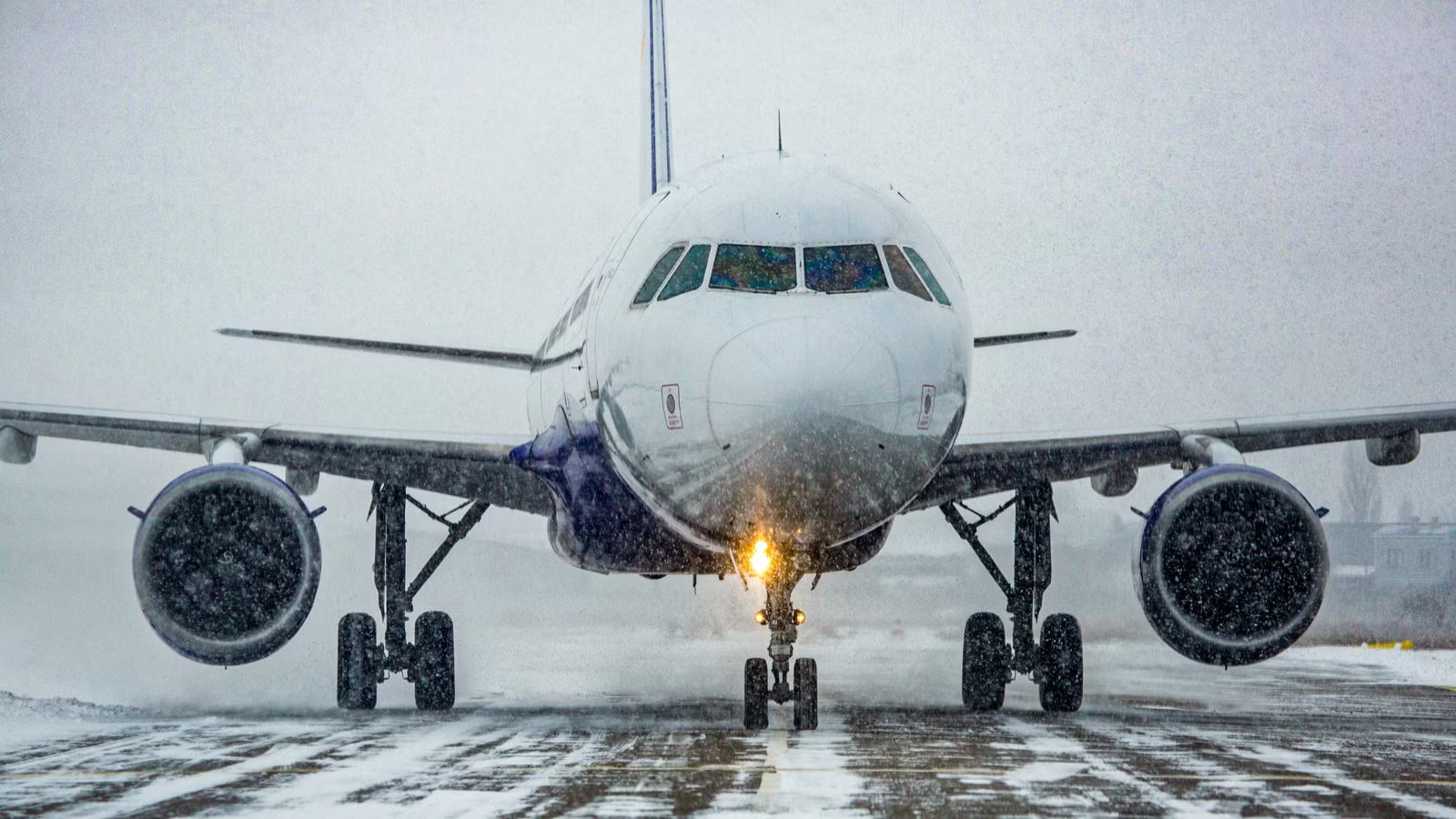
When a winter storm sweeps across the US Midwest, or a heavy Siberian front dumps feet of powder onto Hokkaido’s New Chitose Airport, the primary concern for most travelers is the de-icing of wings and the clearing of runways. However, a more technical question often lingers in the minds of those watching the blizzard from the terminal. Can the sheer volume of snow being inhaled by those massive jet engines actually cause damage? Given that a modern turbofan can swallow over 2,000 lbs of air per second, the amount of frozen precipitation entering the core during a winter takeoff is staggering.
This article will explore the complex relationship between frozen water and high-performance turbine engines. We will clarify the misconceptions surrounding snow ingestion, looking specifically at how engines are designed to separate solids from the core, and why, in some rare instances, snow can actually provide a temporary boost in performance. From the historical water injection systems of the 1960s to modern NTSB warnings regarding ice crystal icing at high altitudes, these are the factors that determine if snow is a non-event or a serious operational risk.
Bit Of Cold Won’t Harm

Modern jet engines are specifically designed and certified to ingest massive quantities of snow, slush, and water without sustaining damage or losing power. For the average passenger, the smoke seen coming from an engine during a snowy startup is usually nothing more than snow instantly vaporizing into steam as it hits the hot internal components. In the vast majority of takeoff and landing scenarios, snow is a non-threat to the mechanical integrity of the engine because of a clever piece of centrifugal engineering known as the bypass duct.
When snow enters the front of the engine, it first hits the massive spinning fan blades. Snow and slush are significantly denser than the surrounding air, so the engine’s centrifugal force flings these particles outward, away from the engine’s core. Instead of entering the delicate compressor and combustion chambers, the snow is routed through the outer bypass duct and pushed out the back of the engine with the cold air. This separation is so effective that engines can often take in several tons of water per minute while the core remains relatively dry and unbothered.
Historically, the certification standards for engines have only grown more rigorous. Before an engine like the Rolls-Royce Trent 900 or the LEAP-1A can be bolted onto a wing, it must pass ingestion tests where hundreds of gallons of water and massive amounts of slush are blasted directly into the intake at high velocity. The engine must prove it can maintain a steady flame in the combustor without surging or flaming out. While the sight of a Boeing 747 disappearing into a cloud of snow on a Denver runway looks dramatic, the engineering beneath the cowling is designed to treat that snow as just another day at the office.
Takeoff Boost

A typical jet engine’s mechanical design is truly robust, but the state of the snow, whether it is a dry, crystalline powder or a heavy, saturated slush, changes how the engine processes it. Cold air is naturally denser than warm air, which provides a baseline performance boost for jet engines. Still, the addition of snow introduces a liquid mass element that can either assist or hinder the combustion cycle, depending on the specific flight phase. The most critical factor to consider is the moisture content of the snow. Wet snow, typical of temperatures near 0°C or 32°F, is much more likely to adhere to the engine inlet or the front of the fan blades, potentially causing airflow disruption if anti-ice systems aren’t engaged.
However, once that snow is ingested, a fascinating piece of physics occurs. As noted in recent aviation discussions, snow that enters the hot core melts and vaporizes instantly. According to the Grainger College of Engineering, water expands by approximately 1,600 times its volume when turning into steam, which creates an incidental thrust kick. This is essentially a natural version of the water injection systems used in the early jet age, where the added mass of the vaporized water increases the pressure in the turbine, resulting in a slight, albeit unintentional, boost in power.
An example of this playing out in the real world can be seen in operations at airports like  Denver International or Anchorage. Pilots often notice that in very cold, snowy conditions, the aircraft performs better than on a standard day. Part of this is the dense air, but the subtle addition of moisture can actually lower the exhaust gas temperature. By cooling the internal components slightly as it evaporates, the snow-mist allows the engine to run more efficiently without hitting its thermal limits. However, this is a delicate balance; if the volume of snow becomes too great, it can choke the flame, leading to a flameout rather than a boost, but this is a risk that modern FADEC systems are constantly calculating in real-time.

White Out: How Do Airports Manage Winter Storms?
A hot topic after recent events!
Inspired By Nature?

Looking over to the water wagons of the 1950s and 60s, early models of the Boeing 707 and Douglas DC-8, which utilized distilled water injection systems to gain an extra kick during takeoff, were considered a big performance breakthrough. On hot days or at high-altitude runways, these engines would spray water directly into the intake or the combustion chamber. The resulting flash-evaporation increased the mass flow and pressure, providing a significant thrust boost that was essentially artificial snow ingestion on demand.
Today, however, the view has shifted from seeking moisture to managing its risks. While the thrust boost is a fascinating physical reality, carriers prioritize flameout margin over incidental power gains. Modern turbine experts emphasize that while an engine can eat snow, it must do so in a way that doesn’t destabilize the combustion flame. This is why you will often hear engines spool up slightly on the ground during heavy snowfall. Pilots are instructed to maintain a higher idle thrust to ensure the engine is hot enough and spinning fast enough to centrifuge moisture away from the core.
|
Method |
Application |
Mechanism |
Modern Equivalent |
|
Water Injection |
Early 707 / DC-8 |
Distilled water spray into core |
Not used (engine power is sufficient) |
|
Snow Ingestion |
Winter Operations |
Natural moisture intake |
Incidental thrust kick |
|
Afterburners |
Military Jets |
Raw fuel in exhaust |
N/A for commercial engines |
|
FADEC Logic |
All Modern Jets |
Automated fuel/air trim |
Active flameout protection |
Experts warn that the real danger occurs during low-power phases, such as descending for landing. If the engines are at a low flight idle and ingest a massive slug of snow or ice, there is less heat and centrifugal force to process it, which is why continuous ignition is a standard winter checklist item.
The Best Case Scenario

When discussing engine ingestion, snow is often lumped into the broad category of foreign object debris. Still, from a damage-potential perspective, it is a relatively gentle intruder compared to birds or volcanic ash. Unlike a bird strike, which involves a high-velocity impact with a dense, organic mass that can physically bend or snap titanium fan blades, snow is soft and lacks the structural integrity to cause mechanical deformation. While a bird strike can lead to an immediate uncontained engine failure, snow ingestion is seldom a structural event and is instead an atmospheric one that concerns the engine’s internal breathing rather than its physical skeleton.
This distinction is even more pronounced when compared to volcanic ash. While snow melts into steam and passes harmlessly through the turbine, volcanic ash is made of jagged bits of rock and glass with a melting point higher than the engine’s combustion temperature. When ash enters the core, it melts into a molten glass that coats the turbine blades, eventually choking the airflow and causing a total engine shutdown. In this light, snow is the best-case scenario for ingestion. It acts as a temporary, cooling mass rather than a permanent, abrasive coating.
|
Ingested Item |
Physical State |
Primary Risk |
Melting Point |
Damage Type |
|
Snow / Slush |
Solid (Soft) |
Flameout / Surge |
0°C |
Non-structural |
|
Birds |
Solid (High-mass) |
Fan blade damage |
N/A |
Structural / Mechanical |
|
Volcanic Ash |
Solid (Hard/Glassy) |
Core blockage |
~1,100°C |
Permanent coating |
|
Hail |
Solid (Hard Ice) |
Blade blunting |
0°C |
Potential denting |
Ultimately, the reason snow is manageable while other elements are catastrophic comes down to that 0°C melting point. As per Texas A&M University, the internal temperature of a jet engine core can reach 1,500°C, though this would be considered an excessive temperature. This means snow is the only common foreign object that effectively disappears the moment it enters the work zone.

How Do Airports Rebound After A Major Snowstorm?
Airports must have weather response teams to manage inclement weather operations effectively.
In Flight Changes Everything

While we have established that snow is generally harmless, there is a dangerous exception that has caused several serious incidents in recent years: ice crystal icing. This phenomenon occurs when an aircraft flies through high-altitude clouds composed of tiny, deep-frozen ice crystals. Unlike the wet snow at ground level that is flung into the bypass duct, these tiny crystals can pass through the fan and enter the engine core. Because they are so small and dry, they don’t immediately melt. Instead, they bounce along the compressor stages until they reach a point where the air is warm enough to melt them into a thin film of water.
The risk arises when this film of water meets cooler internal surfaces or is subjected to a sudden drop in pressure, causing it to re-freeze into a solid block of ice inside the engine core. This internal icing can build up on the compressor blades until it eventually breaks off. When these chunks of ice are swallowed by the high-pressure compressor, they can cause compressor stalls or surges, a terrifying event for passengers that sounds like a series of loud bangs and can result in a sudden loss of engine power. This is the primary reason the NTSB issued a specific safety alert (SA-082) warning pilots that even clear air at high altitudes can contain enough moisture to choke an engine.
If an engine is shut down during a heavy snowfall, snow can pack into the bottom of the intake. If this isn’t cleared and the engine is started, that plug of snow can hit the fan blades with enough force to cause an imbalance, leading to high engine vibrations. This is why you will see ground crews at airports manually inspecting and clearing the engines after a heavy accumulation. For the engine, snow is a benefit when it’s moving, but a physical obstruction when it’s sitting still.
A Helping Hand

Ultimately, the question of whether snow can damage an aircraft engine reveals a paradox of modern engineering. In the vast majority of scenarios, snow is a manageable variable rather than a threat. Engines are designed to centrifuge snow away from the core or vaporize it into a performance-enhancing mist. The true resilience of a modern turbofan lies in its ability to maintain an internal fire while inhaling a frozen whirlwind.
However, the shift from ground-level snow to high-altitude ice crystals reminds us that aviation safety requires constant vigilance. The thrust kick of vaporizing snow is a testament to resilient physics, but the hidden risks of internal icing demand precise power management from both pilots and FADEC systems.
As we look toward the future of propulsion, moisture management will remain a foundational challenge. Whether it is the distilled water of the 1950s or the crystalline ice of the 2020s, water continues to be one of the most influential additives in flight. The next time you see a jet disappear into a cloud of white on takeoff, remember that beneath the cowling, a complex dance of thermodynamics is turning that cold snow into the very energy carrying you above the storm.