dailynewsnblog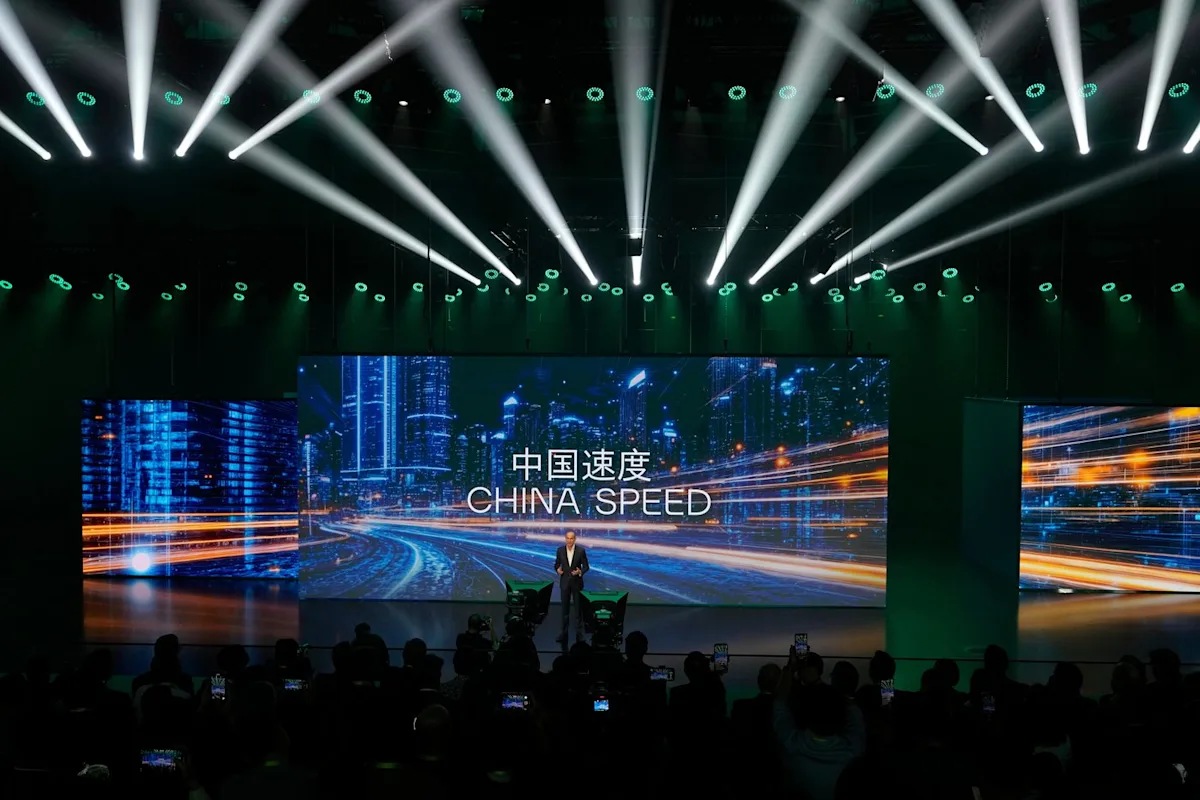
HEFEI, China (AP) — Volkswagen is making a major bet in China, the largest and one of the most cutthroat auto markets in the world. The question is whether it will work.
The German carmaker, which once dominated the market with a more than 50% share, has invested 3 billion euros ($3.5 billion) in a sprawling research and development center — its largest outside its home country — in Hefei, a low-key central China city of 10 million people.
It’s a sea change from how foreign automakers operated in China for decades by making cars they developed overseas, sharing their technology with local partners. That strategy has been shoved aside by fast-rising local competitors who have sharply cut into the sales of foreign brands.
“This business model is now gone,” Thomas Ulbrich, the chief technology officer of the Volkswagen Group in China said.
The Chinese consumer is king
In what Ulbrich calls a paradigm shift, Volkswagen started its latest overhaul of its approach to China in 2022.
It is developing vehicles specifically tailored to Chinese drivers — cars that will likely never be seen on European roads , though they may make their way to markets in the Middle East and Southeast Asia.
As the new models roll out, Volkswagen will find out if the investment will pay off by helping it to catch up with the likes of Chinese makers BYD and Geely and win back market share.
Such a strategy is key to regaining competitiveness within China, said Rella Suskin, an equity analyst at Morningstar covering the European automotive sector.
But, she predicted, “it will enable them to maintain market share levels in line with current levels, rather than allow them to regain the market share that has been lost over the last few years.”
The question is whether it can make money in a hypercompetitive market that has driven prices down to bankrupting levels.
Audi, part of the Volkswagen Group, led the way with this year’s introduction of a new brand dubbed “AUDI” — its name in capital letters. VW is gearing up to launch new 2026 models developed “in China, for China,” as the carmaker likes to say.
“It’s a million-dollar question whether this strategy will pay off,” said Claire Yuan, director of corporate ratings for China autos at S&P Global Ratings. “We have to monitor, but I think they are on the right track of catching up in the race.”
China speed leaves competitors in the dust
Foreign automakers fell behind because of dramatic changes in the Chinese market over the past five years.
Electric vehicles have shot up to about half of new car sales. And buyers expect them to come with the latest digital features, from big iPad-like touch screens to autonomous driving capabilities such as effortless backing into a parking space.