dailynewsnblog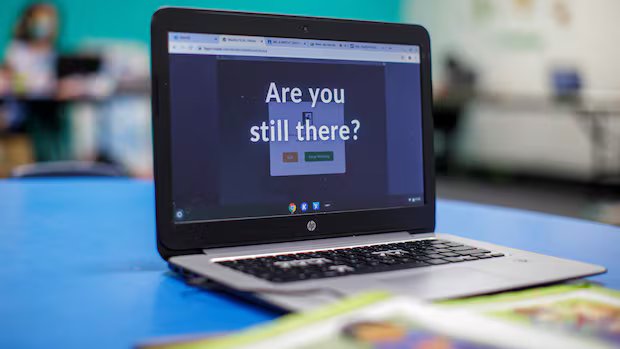
Imagine a school day where students spend just a couple of hours learning math, language or science through AI-driven apps, without support from certified teachers, while spending a larger block of time learning life skills, taking trips and exploring passion projects.
Some Canadian education experts see the unconventional model promoted by American private school network Alpha School as a mix of pre-existing learning approaches and newer AI technology — one that may work for certain students, but also warrants careful consideration of issues, including student privacy, well-being and what children are actually learning.
How does it work?
Alpha School has piqued curiosity and sparked both praise and criticism for its claim that it can revamp conventional schooling. Its website says students “crush academics” by boiling core subjects down to a few hours of intensive daily study and “thrive beyond the classroom” with a larger block of time devoted to hands-on learning, field trips and workshops that build life skills such as public speaking and teamwork.
The company says on-site adults, who it does not call teachers, help by motivating, guiding and coaching.
Generally, it’s a model common in homeschooling and one that would also be familiar to students enrolled in certain alternative schools, says Stephanie Sewell, a Chelsea, Que.-based alternative education consultant.
The academic study block, conducted in this case through online learning platforms, rests on the concept of “mastery,” said Sewell, a former teacher in both public and private schools.
“They’re asking you to do X number of problems in order to demonstrate your mastery of it and, if you haven’t got them all correct … you keep on [drilling],” she said. “That’s a really particular way of learning.”

What’s new?
The novelty lies in using recent AI-driven technologies to shape that academic block, such as adaptive, dynamic learning found on platforms like IXL or Khan Academy, perhaps mixed with some customization to reflect individual student interests.
Tech-personalized learning has been around for some time. For instance, New York launched a schools initiative in this vein more than 15 years ago, said Beyhan Farhadi, an assistant professor of educational policy and equity at the University of Toronto’s Ontario Institute for Studies in Education.

Calling it a “boutique” approach for a very select few, Farhadi said the model has struggled to expand. A former high school teacher, her expertise includes online learning, educational technology and ed tech policy.
“The technology allows for a rebranding, a remarketing, of something that is tried and has failed to deliver the promise that it offers public schooling in particular — or any kind of at-scale instruction,” Farhadi said.
A method for all kids?
Sewell thinks a time-consolidated, “uber-efficient,” tech-reliant approach to learning can work for some high school students — for example, someone motivated to quickly bone up on a prerequisite course before university. Others, meanwhile, need a slower pace to better absorb the material and avoid feeling stressed, she said.
Sewell also questions whether elementary-aged children, especially kindergarteners, should be learning through screens for extended periods.
“Children that age are still very much learning how to be with other people in this world,” she said. “Taking something as key as early math, early writing, early reading into that online, AI context does cause me some concern.”

Chris Kennedy, superintendent of the West Vancouver School District and an early champion of Canadian schools incorporating AI literacy and tools, thinks “self-starters” could handle this, but they represent only part of the student population.
“Some students can flourish with very little teacher contact…. Other students need far more intensive ongoing support and, while [AI] technology can quickly adapt to the child, it can’t encourage, it can’t support, it can’t do those things in the same way that humans can,” he said.
Are there risks?
Because Alpha School’s model incorporates online monitoring and data collection, as other tech platforms do, Farhadi said she is highly concerned about student privacy and surveillance — including webcams recording students and apps tracking scrolling, eye and mouse movements to prove they’re paying attention.
When considering AI in schools, Kennedy also said student safety, security and privacy are top of mind.
Another of his key concerns is the knowledge base underlying any platform. If an app or tool is used, for instance, would students lose Canadian or local Indigenous context and references in their learning?

Toronto teacher-librarian Diana Maliszewski outlines how she tackled artificial intelligence in a social studies lesson for sixth graders, who picked apart AI-generated photos of ‘a typical Canadian.’
Kennedy welcomes AI as a way to expand and enhance learning, but not simply to speed it up.
“Computer-mitigated learning is part of school today, but it’s not all of school,” he said.
“Moving through questions quickly, are you actually learning? Is checking those boxes the point of going to school?”
Is AI-driven education a given for Canada?
Alpha School has locations in more than 20 U.S. cities, but did not respond to a CBC News request about bringing its model to Canada.
Kennedy said he supports giving students access to different ways of learning and technological innovation. While children are already using AI, he said the most impactful uses in Canadian schools right now are teacher-led.
He pointed to West Vancouver educators using AI to support lesson planning, for example by quickly adapting or translating a written passage for a class of students with a wide range of reading levels.

If you ask children about artificial intelligence, they’ve probably heard of it, used it and might already have opinions about it. But how is it being used in the classroom? CBC visited one Winnipeg school to find out.
Fresh from a recent conference in Quebec, Kennedy said approaches to AI still vary widely across Canada. What is needed, he said, is a co-ordinated national policy that shares principles, guidelines and a vision for AI use in K-12 — one that ensures students are not simply consumers today, but are building the knowledge to help drive AI forward in the future.
“We haven’t quite settled on what it means to effectively use AI in education,” Farhadi said. While some schools are indeed innovating — she knows one where students train their own chatbot — she said successes in the public system do not always draw attention.

Joel Heng Hartse, who oversees a Simon Fraser University program teaching academic literacy to new students, talks about why he’s not looking for perfect papers.
Sewell said she thinks AI-driven education will inevitably expand in Canada, but wants to see it accompanied by mindful integration, extensive study and the retention of some “old-fashioned” learning processes.
“Kids who are being taught to write by AI might never have started with a blank screen and an idea, [or] have writer’s block. Do we value that inherently human experience enough to make sure that our young humans still get to experience that?” Sewell asked.
“If we only ever use the machine, then what happens if somehow at some point machines don’t work anymore? We need to remember how to do this.”