dailynewsnblog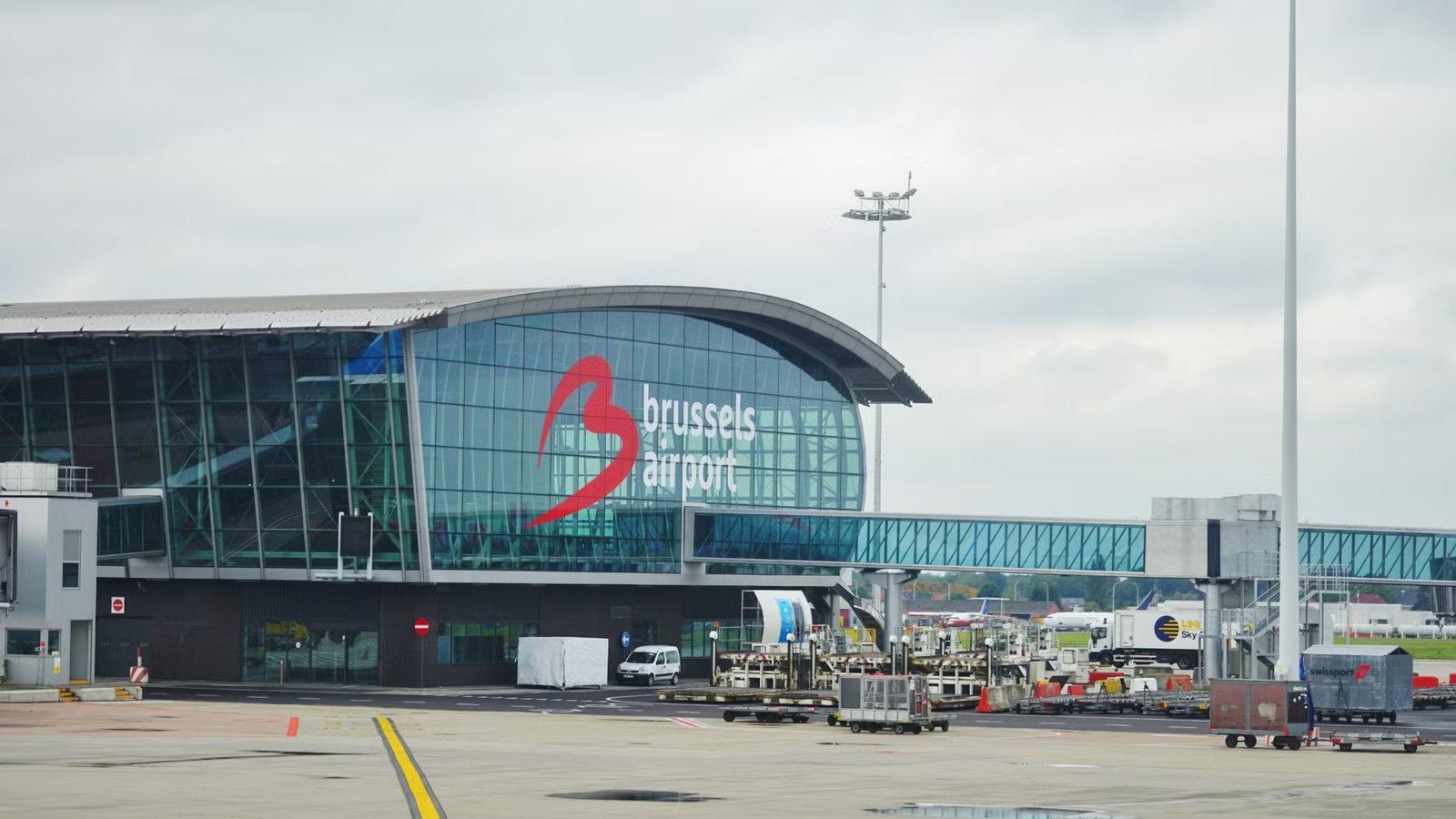
Brussels Airport will see zero flights departing on the upcoming Thursday because of a national strike, in which a significant portion of airport security and other staff members are expected to participate. Subsequently, this would also mean that flights that were scheduled to return to Brussels will also be cancelled, due to the affected outbound leg.
This is expected to result in significant loss of revenue to the nation’s carrier, Brussels Airlines, due to hundreds of flights being cancelled and any potential passenger compensation that might have to be paid out. Simple Flying has reached out to Brussels Airlines to know more about how the airline is preparing for such an event.
On Thursday – No Flights Out Of Brussels

As per the latest developments, a national strike scheduled to take place on the following Thursday, March 12, will reportedly see participation from a considerable number of Brussels Airport (BRU) security and handling staff. According to Reuters, the impact of this has subsequently resulted in all flights out of the airport being cancelled on Thursday. This would also mean that several inbound services would also be cancelled. This would also mean a significant disruption to the nation’s carrier, Brussels Airlines.
Considering the carrier accounts for nearly half the airport’s traffic, according to figures published by VisaHQ, Brussels Airlines is expected to cancel a majority of its schedule that day, which includes over 200 operations. Furthermore, it is forecasted that the single-day disruption could cost the carrier millions in lost revenue and any potential passenger compensation.
The airport has urged all passengers expecting to travel to and from the airport to look out for airline communications in the coming days regarding their flight status and information on alternatives being offered by their respective carriers. The following is an extract of the manifest from the national manifest made available on the airport’s website:
“To ensure the safety of passengers and staff, we have decided, in consultation with the airlines, not to operate any departing flights on 12 March.”
Strike Number Eight, Since 2025!

According to reports by Belga News Agency, this is the eighth time since 2025 that such a strike has impacted the nation’s aviation sector, with seven strikes recorded last year, and the upcoming strike on Thursday is expected to be the first of this year. The figures published also indicate how damaging it has been to the airport and airlines throughout 2025.
Published data show that last year, around 2,400 flights were cancelled at Brussels airport, which translated to around 275,000 fewer passengers handled. This in itself accounts for a considerable loss in revenue in terms of aircraft handling and parking charges, along with passenger charges. Reportedly, the nation’s carrier, Brussels Airlines, accounted for 100,000 of the 275,000 impacted passengers, which has estimated the carrier to have lost over €15 million in revenue across those seven days.
Because of the interconnected nature of the aviation industry, such disruptions rarely tend to be localized, and often, the impacts can be felt around the world. Considering that BRU is the hub for Brussels Airlines, which is also a member of  Star Alliance and the Lufthansa Group, such disruptions have the potential to impact passengers who might be travelling with a connecting itinerary or an itinerary with multiple different airlines. At the same time, however, this is also a good example of the advantages of connectivity and options made available to passengers due to airline partnerships and alliances.

The 3 Major Airline Alliances: Star Alliance, oneworld and SkyTeam – Why Are They Good?
The three alliances are heavily influential across the commercial aviation spectrum.
Does EU-261 Come Into Play In This Scenario?

The short answer is “NO”! But to understand more about this, it is important to first answer, what is EU-261? Essentially, it is a regulation put in place by the European Commission on all flights departing or arriving at an EU member state, AND flights operated to, from, or within a non-member state, but were booked via a European-register carrier under a single itinerary. The regulation states passenger rights in the event of a flight delay, cancellation or denied-boarding, and provides exact ruling on how they are to be compensated.
However, the regulation does state that the airlines are exempt from offering compensation under extraordinary circumstances, which includes scenarios such as weather events, acts of terrorism, ATC delays, and YES, workers going on strike, IF they are unrelated to the airlines. Therefore, in this instance, considering it is the airport’s staff who are going on strike, subsequently resulting in cancelled flights, this falls beyond the scope of the EU-261 regulation, as it is not the airlines’ fault.
However, most carriers do tend to offer alternatives when possible, including the ability to change the itinerary free of charge or even free cancellations, as a show of good faith, especially airlines with significant passenger loyalty bases. Has your travel been affected by such strikes before? Let us know your experience in the comments below.