dailynewsnblog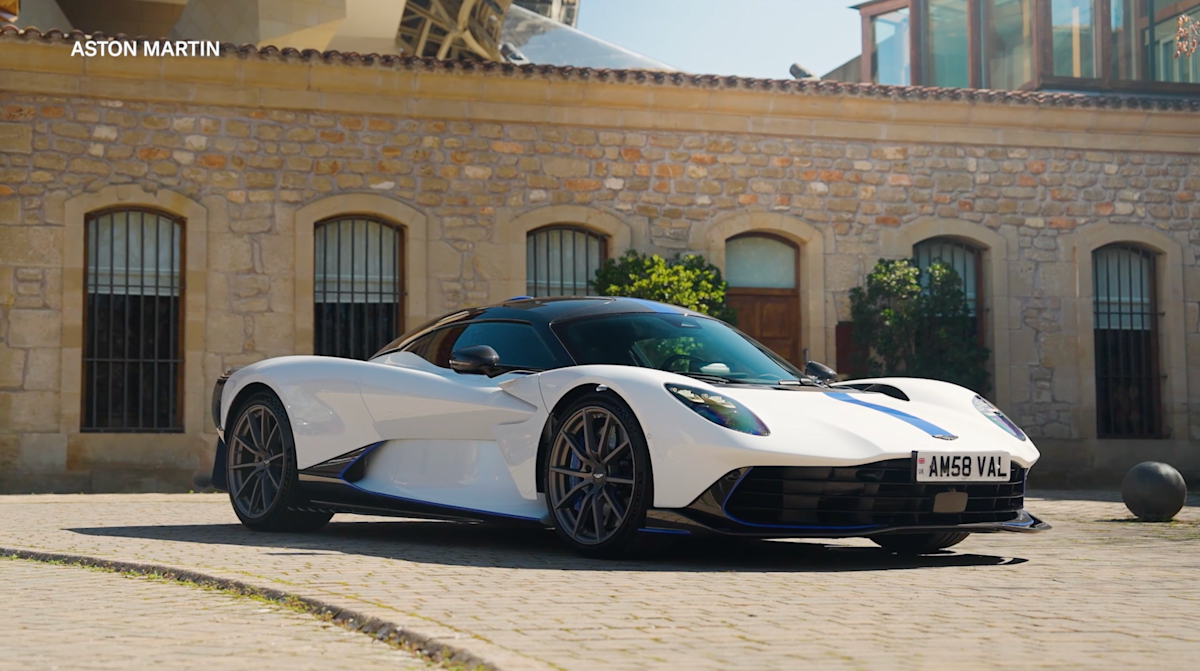
Aston Martin (ARGGY) is now delivering to customers one of the most consequential cars in its century-long history.
The Valhalla is not simply a hypercar. It’s a mission statement, a financial lifeline, and, as it turns out, a genuinely incredible machine to drive. Starting at just over $1 million, it sits at a crossroads — extreme enough to trade punches with the Ferrari (RACE) F80, yet composed enough that you could, theoretically, drive it to pick up your dry cleaning.
Whether anyone actually will is beside the point. The real question is whether this phenomenal beast can get Aston Martin buyers to pony up the cash.

Pull up in a Valhalla, and people stop. Not in the polite, appreciative way they might glance at a typical luxury car. They stop.
The car looks like someone took a Daytona Prototype, shrunk it slightly, and made it street legal. Deep lower air intakes dominate the nose. A prominent intake scoop rises from the roofline to feed the rear-mounted engine. And then there’s the wing — a massive rear spoiler that deploys fully in Race mode, adjusting in real time to generate in excess of 600kg — over 1,300 pounds — of downforce.
It’s purposeful rather than for good aesthetics, though the line between those two things blurs quickly at this level of exotic.

Underneath the carbon hood (behind the driver, of course) is Aston Martin’s most sophisticated powertrain to date. A 4.0-liter twin-turbocharged flat-plane crank V8 — and if you’ve heard one of those rev, you already know why this matters — is paired with three electric motors in a plug-in hybrid system that has nothing to do with fuel economy.
Two motors sit on the front axle, one per wheel, enabling genuine torque vectoring. A third integrates directly with the transmission, handling torque dip during gear changes and covering the gap before the turbos spool. The combined system output is 1,064 horsepower, just below the F80’s incredible 1,200hp.
The result on track is startling. The Valhalla is fast, scary fast, but never feels hostile. The front torque vectoring is the key.
Overcook a corner and the system reads the situation, spinning the outside front wheel to rotate the car and pull it back on line. It shrinks around you, feels smaller and more obedient than its performance numbers suggest. Combined with a completely flat cornering attitude and zero perceptible push, it is a serious track weapon.
The suspension architecture helps: Formula One-style pushrod double wishbones up front with inboard-mounted springs and dampers visible through the hood (a nice piece of engineering theater), multi-link in the rear. Active aerodynamics round out the package — a system so effective that it’s actually banned in most forms of motorsport, though Formula One has only just begun exploring it.