dailynewsnblog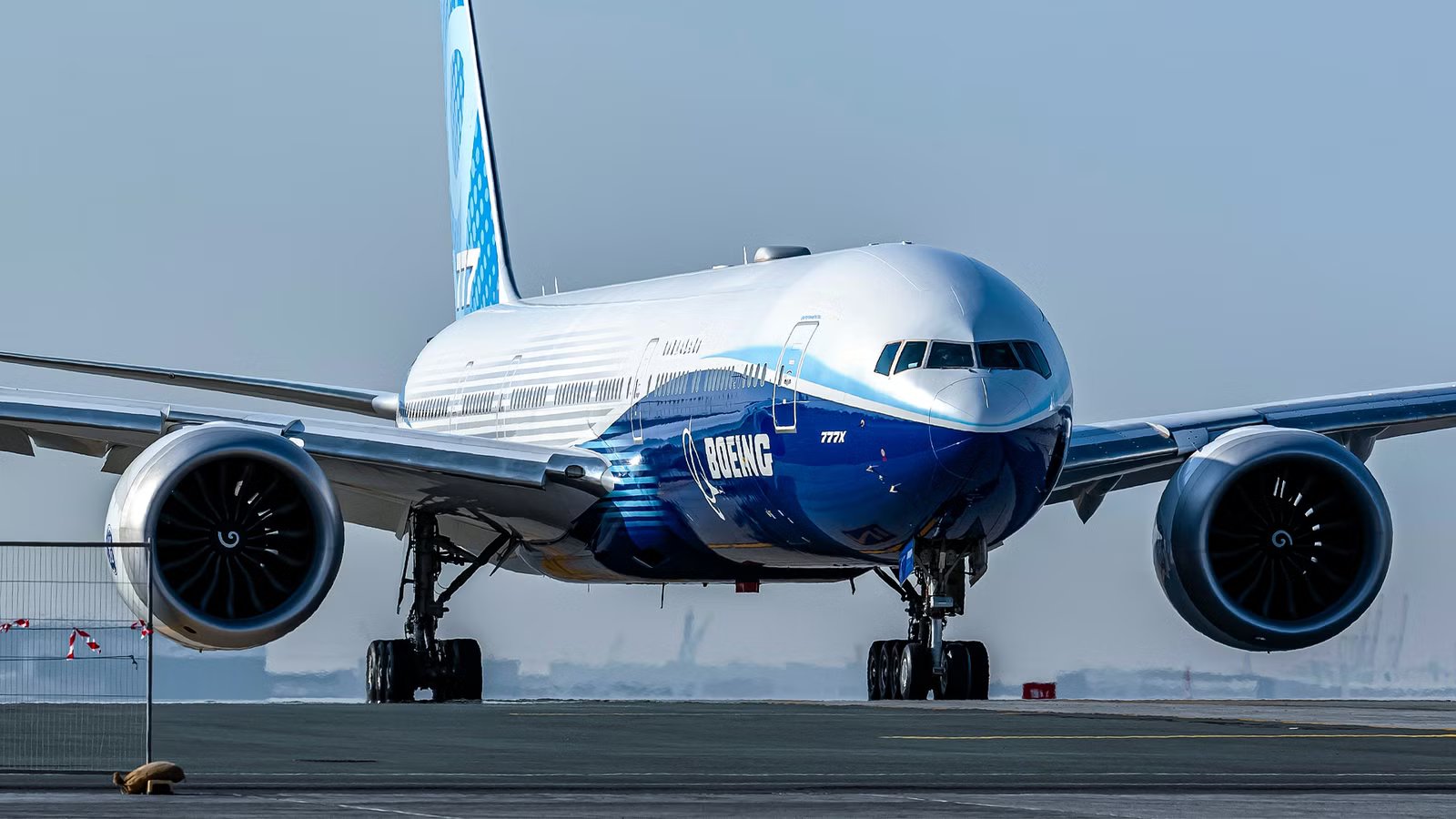
Every major aviation program has a moment that looks deceptively simple from the outside, yet carries enormous weight behind the scenes, and for Boeing’s long-delayed 777X, that moment is now approaching as the first production-standard Boeing 777-9 prepares to take to the skies. While headlines will inevitably frame this as just another first flight, the underlying reality is far more significant, because this specific aircraft represents a fundamental shift in how regulators evaluate readiness for entry into service.
The phrase “production-standard” is often misunderstood outside certification circles, but within the industry, it marks the transition from experimental validation to real-world operability, where an aircraft must prove that what is built on the factory floor can perform reliably in airline service. Without this step, regulators simply will not sign off on a type certificate, no matter how well earlier test aircraft may have performed. Let’s take a closer look…
The Long Road To A Production-Standard Aircraft

For much of its development life, the Boeing 777X program has relied on a small fleet of dedicated test aircraft that are heavily instrumented and structurally modified to capture detailed performance data across thousands of flight hours. These aircraft, while essential for early validation, are not representative of what an airline will ultimately receive, as they include specialized wiring, sensors, and testing systems that would never be present in a commercial delivery.
That distinction is precisely why the US manufacturer’s transition toward a production-standard Boeing 777-9 is such a pivotal moment, as it signals that the design has matured to the point where it can be built in its final configuration without relying on experimental modifications. The aircraft currently undergoing fuel testing at Seattle Paine Field International Airport (PAE) is expected to become the first example of this standard, with its maiden flight targeted for April 2026, a date that reflects both cautious optimism and the weight of years of delays.
Originally slated for entry into service in 2020, the Boeing 777X program has incurred billions of dollars in development costs, a figure that underscores the complexity of bringing a next-generation Widebody to market in an era of heightened regulatory scrutiny. Each delay has pushed  Boeing further into a certification environment that demands not only performance but also demonstrable reliability under real operating conditions.

How Will Airlines Train Their Pilots For The Boeing 777X?
The 777X promises to revolutionize long-haul travel, but one key piece is missing…
What “Production-Standard” Actually Means

At its core, a production-standard aircraft is one that mirrors exactly what will be delivered to customers, down to the systems’ architecture, cabin configuration, and software baselines. This means that the aircraft must operate without the extensive telemetry equipment found on earlier test aircraft, relying instead on standard onboard systems and maintenance procedures.
This shift forces manufacturers to prove that the aircraft can perform consistently without the safety net of experimental instrumentation, effectively demonstrating that the design is robust enough for everyday airline use. It is no longer about pushing the envelope of performance but about confirming stability, predictability, and repeatability across normal operations.
Regulators such as the US Federal Aviation Administration (FAA) place particular emphasis on this phase because it exposes issues that may not appear during heavily monitored test flights, where engineers can quickly identify and respond to anomalies. In a production-standard configuration, the aircraft must behave as it would in the hands of airline crews, with no additional support beyond standard operational frameworks.
For the Boeing 777-9, this means validating everything from fuel efficiency and flight management systems to environmental controls and dispatch reliability, all within the constraints of a configuration that mirrors a customer delivery. Only when these criteria are met can the aircraft move closer to certification approval.
The Importance Of Phase 4 Certification Testing

The Federal Aviation Administration’s approval for the Boeing 777-9 to advance into Phase 4A of certification testing represents a critical step in this process, as this phase is specifically designed to validate system performance and operational reliability under realistic conditions. Unlike earlier phases, which focused on design compliance and performance envelopes, Phase 4 shifts the emphasis toward how the aircraft behaves over time.
This stage involves extended flight operations that simulate airline usage patterns, including repeated cycles of take-offs, landings, and system operations that stress the aircraft in ways that mirror real-world service. It is during this phase that subtle issues often emerge, particularly those related to system integration and long-term durability.
The requirement to use a production-standard aircraft in Phase 4 is not arbitrary but reflects the regulator’s need to see how the final product performs without experimental modifications. This ensures that any findings are directly applicable to the aircraft entering service, eliminating discrepancies between test conditions and operational reality.
For Boeing, successfully navigating Phase 4A will be essential in demonstrating that the 777-9 is not only capable but also reliable, a distinction that has become increasingly important in the wake of stricter certification standards introduced over the past decade.

FAA Plans Overhaul To Speed Up Certification Of New Airplanes: What Does This Mean For Your Flight?
FAA plans to streamline aircraft certification. Here’s how delays with Boeing’s 777X and 737 MAX may shape the planes you’ll fly soon.
Lufthansa’s Role As Launch Customer

As the designated launch customer,  Lufthansa plays a central role in the Boeing 777X program’s trajectory, with its first aircraft expected to be among the earliest production-standard examples completed. The airline’s CEO, Carsten Spohr, has expressed optimism that the first delivery could take place in the first quarter of 2027, a timeline that aligns with Boeing’s current certification targets.
This relationship places additional pressure on Boeing to ensure that the production-standard aircraft meets not only regulatory requirements but also the operational expectations of a major global carrier. Lufthansa’s involvement also provides valuable feedback during the later stages of testing, as the airline brings practical insights into how the aircraft will be used in long-haul operations.
The delivery timeline highlights the gap between the first flight of a production-standard aircraft and entry into service, illustrating how much work remains even after this milestone is achieved. Certification, final validation, and production ramp-up all must align before the aircraft can begin commercial operations.
For the German flag carrier, the Boeing 777-9 represents a key component of its long-haul fleet strategy, making the program’s success critical not just for Boeing but also for the airline’s future capacity planning. However, by far the largest operator of the 777X is set to be  Emirates, which, according to the latest data from ch-aviation, currently has a total of 270 on order. This is made up of 35 of the smaller Boeing 777-8s and 235 777-9s. The largest orders are outlined in the table below:
|
Ranking |
Airline |
Boeing 777-8 |
Boeing 777-9 |
Boeing 777-8F |
Total |
|---|---|---|---|---|---|
|
1 |
Emirates |
35 |
235 |
– |
270 |
|
2 |
Qatar Airways |
– |
90 |
34 |
124 |
|
3 |
Cathay Pacific |
– |
35 |
– |
35 |
|
4 |
Singapore Airlines |
– |
31 |
– |
31 |
|
5 |
Lufthansa |
– |
20 |
7 |
27 |
|
6 |
British Airways |
– |
24 |
– |
24 |
|
7 |
China Airlines |
– |
15 |
8 |
23 |
|
8 |
All Nippon Airways |
– |
18 |
2 |
20 |
|
9 |
Korean Air |
– |
20 |
– |
20 |
|
10 |
Etihad Airways |
– |
10 |
– |
10 |
Engine Durability Concerns And Their Impact

Shutterstock | Simple Flying
While progress toward a production-standard aircraft marks a significant step forward, challenges remain, particularly with the General Electric GE9X engines that power the 777-9. GE Aerospace is currently analyzing a durability issue involving a seal in the engine, a problem that could require redesign or retrofits during maintenance cycles. Although such issues are not uncommon in advanced engine development, their timing is critical, as they must be resolved before certification can be completed. Engine reliability is a cornerstone of regulatory approval, and any unresolved concerns could delay the program further, and the Boeing 777X’s engines are the largest and most powerful commercial aircraft engines ever built.
The presence of a production-standard aircraft in testing will be especially important for evaluating how these engines perform under typical operating conditions, as opposed to the controlled environment of earlier test phases. This will provide regulators with a clearer picture of long-term durability and maintenance requirements. Addressing these concerns will likely involve a combination of engineering fixes and operational procedures, ensuring that the engines meet both performance and reliability standards required for commercial service.

Inside The Boeing 777X’s Folding Wing Mechanism
Here’s how Boeing’s engineers have ensured the 777X’s iconic folding wingtips can operate safely and reliably.
Why The FAA Will Not Compromise On This Step

Shutterstock | Simple Flying
In the current regulatory climate, shaped by past certification controversies and an increased focus on safety oversight, particularly in light of the Boeing 737 MAX crisis, the FAA has made it clear that there will be no shortcuts in the approval process for new aircraft. The requirement for a production-standard aircraft to complete advanced testing phases is a direct reflection of this approach.
This insistence ensures that the aircraft entering service is not just theoretically compliant but practically proven, having demonstrated its ability to operate reliably in conditions that mirror real-world usage. It also provides regulators with confidence that any issues identified during testing have been addressed in the final configuration.
For Boeing, this means that the success of the production-standard 777-9’s first flight is only the beginning of a rigorous validation process that will ultimately determine the aircraft’s readiness for certification. Every system, every component, and every operational scenario must be scrutinized in a configuration that matches what airlines will receive.
The broader implication is that milestones like a first flight, while important, are no longer sufficient indicators of progress on their own. Instead, the focus has shifted toward demonstrating consistency and reliability at every stage, with the production-standard aircraft serving as the definitive benchmark for approval.