dailynewsnblog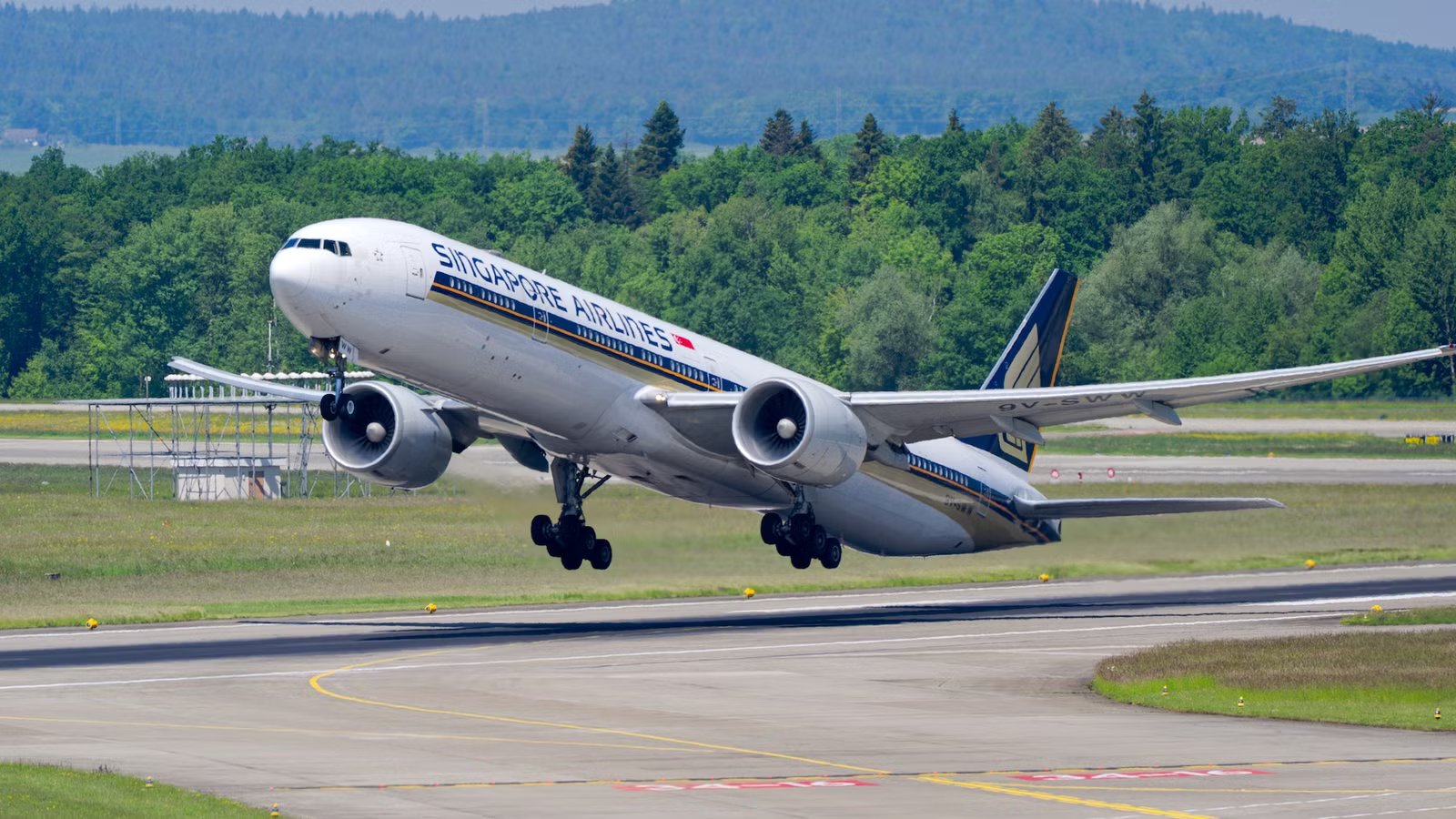
US-based aerospace leader Boeing says that it has now signed the largest Landing Gear Exchange (LGE) agreement in its history with the Singapore Airlines (SIA) Group, which was unveiled at the Singapore Airshow on February 4, 2026. The contract covers landing gear exchanges for more than 75 jets across the group’s  Boeing 737 MAX and 787 Dreamliner fleets, as well as doubling down on maintenance for other of the manufacturer’s other models in operation with Singapore Airlines.
Instead of tying up cash in multiple spare gear sets, this LGE model relies on exchange units and coordinated overhaul planning. Boeing aims to optimize gear life, cut maintenance-related aircraft downtime, and help the airline keep its schedules intact. This is an aftermarket-services record, not a new aircraft order. This is a key piece of Boeing’s growth strategy, and its aftermarket services business is where the company has seen the most growth in recent years.
A Unique Opportunity For A Rapidly-Growing Company

This agreement also leads to the continued growth of Boeing Global Services, the company’s aftermarket services division. Specifically, this deal adds new fuel to the continued growth of Boeing’s Parts & Distribution and supply-chain management team. Under Boeing’s LGE program, airlines receive timely access to serviceable landing gear assemblies through a managed inventory and partner overhaul network. Boeing says that this reduces the need to hold large on-site spares, shortens maintenance-driven aircraft-on-ground time, and supports dispatch reliability across many busy schedules.
For the  Singapore Airlines Group, this contract spans more than 75 aircraft from multiple aircraft families, standardizing support across both narrowbody and widebody operations. Boeing frames this deal as complementary to a wider aftermarket toolkit that also includes parts distribution, repair management, and logistics services. In a statement regarding this matter, Boeing Global Services Vice President William Ampofo had the following words to share:
“By combining our global inventory and rapid distribution capabilities with the carrier’s maintenance planning, this agreement helps deliver parts faster and closer to operations—reducing downtime and supporting consistent, reliable service.”
An Increasingly Valuable Market

For the manufacturer Boeing, the headline is not actually a new jet order. Rather, it is a service record that reinforces how strategic the aftermarket has become. A multi-fleet agreement with a high-profile customer like Singapore Airlines can undoubtedly generate recurring revenue that is typically steadier than airframe deliveries, all while deepening Boeing Global Services’ role as a profit driver.
From an operational perspective, it showcases the company’s ability to execute a logistics-heavy promise of keeping exchangeable gear in global inventory before moving it rapidly to where aircraft are parked. This allows the airline to coordinate full-scale overhauls with its partners so that carriers do not have to wait for long shop cycles.
From a commercial perspective, this is a unique proposition that helps lock in long-term customers while creating a platform that sells adjacent offerings, including parts distribution, repair management, and analytics across the same fleets. Announcing this record at the Singapore Airshow also signals Boeing’s intent to grow services visibly in the Asia-Pacific region. When fleets run hard, every hour on the ground is unfortunately rather costly.

Boeing Expecting A Positive Cash Flow In 2026 Thanks To Increased Deliveries
The American aerospace giant is back in the black.
An Advantage For Singapore Airlines

For the Singapore Airlines Group, this deal is a hedge against aircraft downtime and surprise maintenance bottlenecks that could bring operations grinding to a halt. By leaning on Boeing’s exchange pool rather than owning every single piece of spare gear, the group can reduce its overall warehousing burden, free up capital, and smooth out all kinds of aircraft maintenance planning. This is especially true when removals happen off-cycle.
The operational upside is schedule integrity, with faster swaps, fewer prolonged aircraft-on-ground events, and more predictable dispatch reliability across both short-haul Boeing 737 MAX flying and long-haul Boeing 787 rotations. This is because the contract covers more than 75 aircraft; the benefits can scale across multiple bases and subsidiaries, not just a few select airframes.
There is also a customer-experience angle to discuss here. Fewer overall disruption cascades means that there are fewer missed connections and easier recovery when irregular operations happen to hit. The tradeoff is thus increased reliance on Boeing’s inventory depth and turnaround performance, meaning that service-level execution will matter just as much as the contract itself. It aligns the airline’s maintenance scheduling with Boeing’s global inventory and distribution network.