dailynewsnblog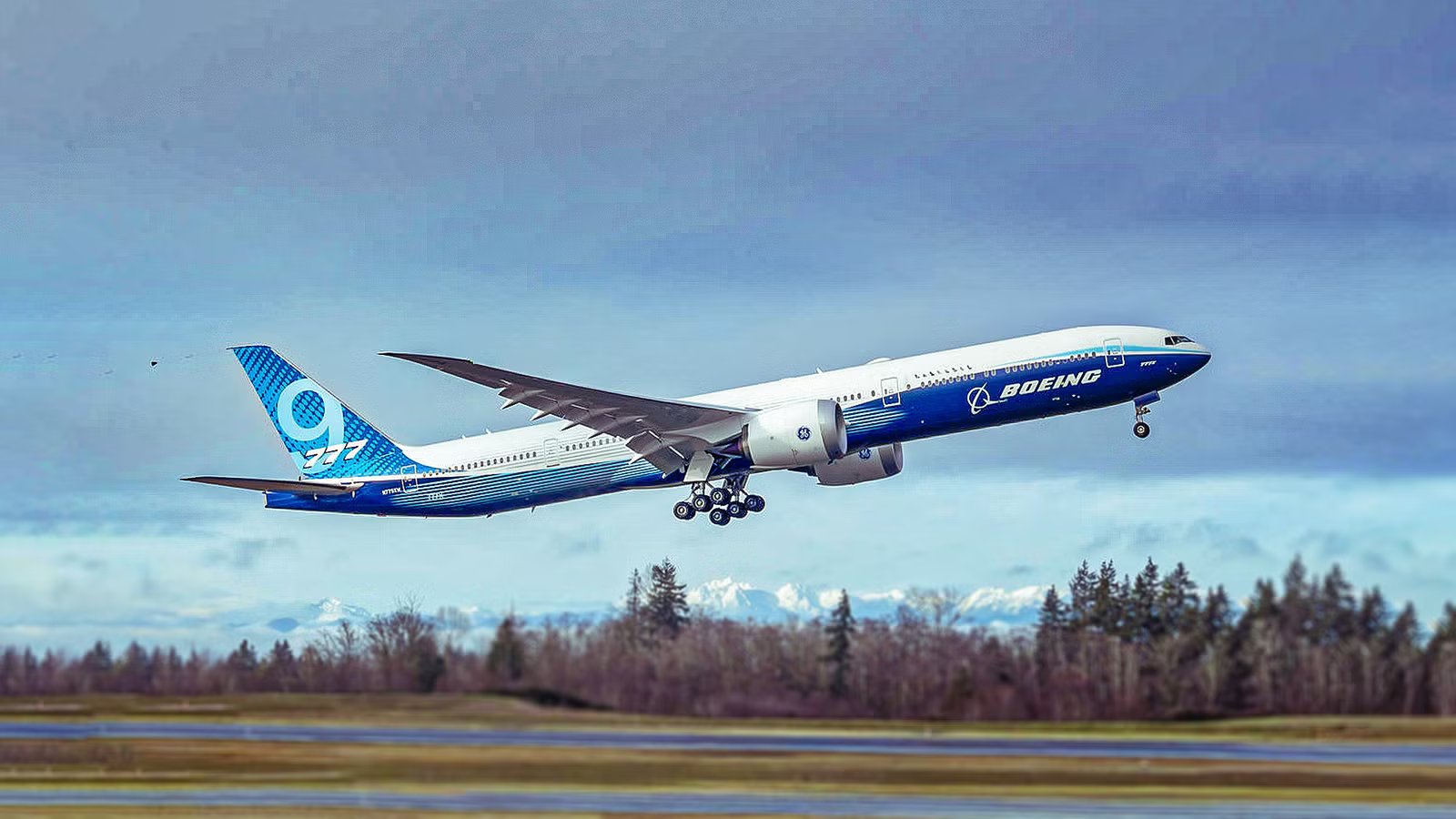
The Boeing 777X represents a massive leap forward in commercial aviation engineering, primarily due to its unique folding wingtip design. This feature allows the aircraft to maintain an immense wingspan for efficiency in flight while remaining compatible with existing airport gates that cannot cope with such a large wingspan. This guide details the sophisticated automated safety systems that govern these wingtips, ensuring that pilots are protected from configuration errors during the most critical phases of flight.
Safety in aviation often relies on reducing pilot workload and providing clear, actionable alerts during high-pressure moments. The 777X’s automated wing-fold system helps to do just that, providing a complex safety net designed to prevent a takeoff with an improper wing configuration. How these systems actually integrate with flight deck alerts provides a fascinating look into the future of fail-safe aeronautical design and its impact on global operations.
A Crazily Wide Paradox

The primary challenge facing the 777X was a simple matter of physics versus infrastructure. A longer wing is more efficient, but a longer wing cannot fit into standard airport gates, and no one wants a repeat of the Airbus A380‘s initial struggles. To solve this,  Boeing engineers developed a carbon-fiber wing with a record-breaking 235.5-foot (71.8 meters) span that provides a 10% improvement in fuel burn over the competition. By folding the outer 3.5 meters of each wing upward while on the ground, the aircraft shrinks to fit into Code E gates alongside older Boeing 777-300ERs.
This design choice allows airlines to operate the world’s largest twin-engine jet at nearly any major hub without requiring billions of dollars in terminal reconstruction. The wingtips themselves are massive structures, standing over 11 feet (3.36 meters) tall when in the vertical position. This height created a new set of ground-safety considerations, as the vertical tips act like giant sails that must withstand significant environmental forces.
Interestingly, these folding sections are designed to handle horizontal ground gusts of up to 65 knots, and even higher in certain configurations, ensuring the aircraft remains stable at the gate during severe weather. This durability is achieved through a specialized hinge that is among the most heavily reinforced parts of the entire airframe. By prioritizing structural integrity, Boeing has ensured that the 777X delivers maximum aerodynamic gain without compromising on-ground reliability.
Making A New Concept Feel Natural

The mechanical heart of the wing-fold system is a marvel of precision engineering developed by Liebherr-Aerospace. Unlike traditional flight control surfaces that rely solely on simple linear hydraulic rams, the 777X utilizes a sophisticated Power Drive Unit and a series of rotating actuators integrated into the incredibly narrow profile of the outer wing. This compact setup allows the massive 11-foot wingtips to transition from their vertical taxi position to a horizontal flight-ready state in roughly 20 seconds.
This transition is a synchronized sequence involving high-torque motors and an angle gearbox. The PDU acts as the brain of the operation, ensuring that both wingtips move at a consistent rate to maintain the aircraft’s center of gravity and aerodynamic balance while taxiing toward the runway. For the pilots, this 20-second window is a brief but critical phase of the pre-flight flow, usually initiated as the aircraft begins its final approach to the hold short line.
Aviation enthusiasts often point to the sheer power required to move such a large structural component against the wind. The Liebherr system is designed to overcome significant resistance, yet it operates with a smoothness that belies its strength. This reliability is paramount because any delay in the wingtip extension could result in a missed takeoff slot at a busy international hub. By mastering this complex actuation, Boeing and Liebherr have created a system that feels like a natural extension of the aircraft’s existing hydraulic and electrical architecture, even if it may be a truly alien concept to the world of aircraft design.

The Boeing 777X’s Folding Wings: How It Works
The Boeing 777X’s innovative design feature has captured global attention. But how do these folding wings actually work?
Ensuring Takeoffs Are Safe

A primary concern for any crew operating the 777X is ensuring the wingtips are fully extended and locked before the takeoff roll begins. To mitigate the risk of human error, Boeing integrated a multi-layered alerting system that monitors the status of the wingtips in real time. Unlike traditional configuration systems that merely provide a warning horn if flaps are misplaced, the 777X features an active takeoff inhibition system. If the aircraft logic detects that the tips are not properly secured as it approaches the runway, it provides escalating alerts that can culminate in an automated takeoff configuration warning.
The Engine-Indicating and Crew-Alerting System (EICAS) provides the first line of defense with clear, color-coded iconography. During taxi, the display illustrates the wingtips in their current state, whether they are folded, in transit, or fully locked. If a pilot attempts to advance the thrust levers for takeoff while the wingtips are still vertical, the aircraft triggers a master warning. Updated certification documents revealed that the system is designed to be so proactive that it actually inhibits the takeoff progression, shifting the safety barrier much earlier in the departure sequence than previous generations of aircraft.
These automated protections significantly reduce the cognitive load on the flight crew during the high-stress environment of a busy airport. By relying on sensors that cross-check the wingtip position against throttle settings and aircraft ground speed, the 777X creates a digital barrier against configuration disasters. This level of automation ensures that the wingspan is always optimized for the specific phase of operation, protecting the aircraft even if a checklist item is inadvertently missed.
Folding While In The Air?

One of the most frequent questions of aviation enthusiasts is whether the wingtips could accidentally fold while the aircraft is airborne. Boeing addressed this through a rigorous dark cockpit philosophy, ensuring that once the aircraft is in its flight configuration, the wing-fold system is both electronically and mechanically isolated. In fact, all sources of power that could initiate an unlocking sequence are automatically cut off before the aircraft leaves the ground, making it physically impossible to restore power to the actuators during flight.
The primary line of defense is a massive mechanical locking bolt that physically pins the 11-foot tip to the main wing structure. This bolt is designed to withstand extreme aerodynamic loads and is backed by a secondary latching system that operates independently. According to FAA special conditions, the system must be so robust that no single structural failure can allow the wingtips to unlock. This ensures that the wing behaves as a single, rigid lifting surface from takeoff until the landing rollout is complete.
In the rare event of a total system alert, the pilots are guided by the dark cockpit principle that underpins all modern aircraft operations. If there is no amber or red light on the overhead panel, the system is secure. The locking mechanism is also designed to be over-center, meaning the very force of the lift generated during flight actually helps keep the latches firmly in place. This marriage of digital isolation and old-school mechanical reliability gives crews total peace of mind while crossing the world’s oceans.

How Much Longer Are The 777X’s Wings Than The 777’s?
The new 777X will have a broader wingspan than the 777, but folding wingtips when on the ground.
On The Descent

As the 777X touches down and begins its high-speed deceleration, automation takes over once again to prepare the aircraft for the constraints of the taxiway. The wingtips are programmed to automatically fold upward into their vertical position once the ground speed drops below 50 knots. This specific speed trigger was chosen because it represents the transition from a high-speed landing roll to a manageable taxi speed where the aircraft’s wide wingspan could become a hazard to nearby obstacles or other aircraft.
This automatic feature is a vital component of the aircraft’s operational efficiency, as it removes a high-workload task from the pilot during the critical post-landing phase. In the busy environment of a major international airport, being able to clear the runway and immediately enter a standard Code E taxiway without stopping to manually fold the wings is a major advantage. It allows the 777X to behave exactly like its smaller predecessors the moment it exits the high-speed turnoff.
The logic behind the 50-knot trigger is rooted in aerodynamic safety, because by waiting until the aircraft is at a safe taxi speed, the system ensures that the lift-generating capabilities of the full wing remain available throughout the most energetic portion of the landing. If the system fails to auto-fold, the pilots receive an immediate alert and can utilize a manual override switch on the overhead panel. This seamless transition is a hallmark of how Boeing has integrated hardware and software to ensure that the world’s largest twin-engine jet remains as nimble as a much smaller aircraft.
Breaking The Limits

The successful integration of the 777X’s wing-fold system has brought with it a new look at regulatory standards. Historically, the International Civil Aviation Organization (ICAO) maintained strict separation distances based on static wingspans, which would have severely limited where this aircraft could taxi. To accommodate this new technology, regulators had to create a new sub-category of rules, acknowledging that an aircraft can change its physical footprint between the runway and the gate.
By proving that a primary structural component can safely fold and lock thousands of times without failure, Boeing has opened the door for future designs that could change shape mid-flight to optimize for different altitudes or speeds. The 777X is the first commercial pioneer of this concept, demonstrating that automation can handle complex geometry changes while maintaining a safety record that matches or exceeds traditional fixed-wing aircraft.
The 777X is an aircraft that understands its environment, automatically shrinking to fit into tight taxiways and expanding to conquer long-haul routes with unprecedented efficiency. As we look toward the next decade of aviation, the lessons learned from these 11-foot folding tips will likely influence every major widebody project, ensuring that the limits of airport infrastructure no longer dictate the limits of aeronautical ambition.