dailynewsnblog
Entropy, a scientific concept defined by randomness and disorder, is a fitting name for a roguelike.
Since BlazBlue began as a fighting game series it’s seen a multitude of spin-offs, now finding itself in the realm of 2D platform action and roguelike principles. Its whopping assembly of eighteen-playable-characters helm from various BlazBlue entries, including Calamity Trigger, Continuum Shift, Chrono Phantasma and Central Fiction. And, impressively, each has a completely independent and idiosyncratic combat style, even if the actual inputs you utilise are fairly samey across the board.
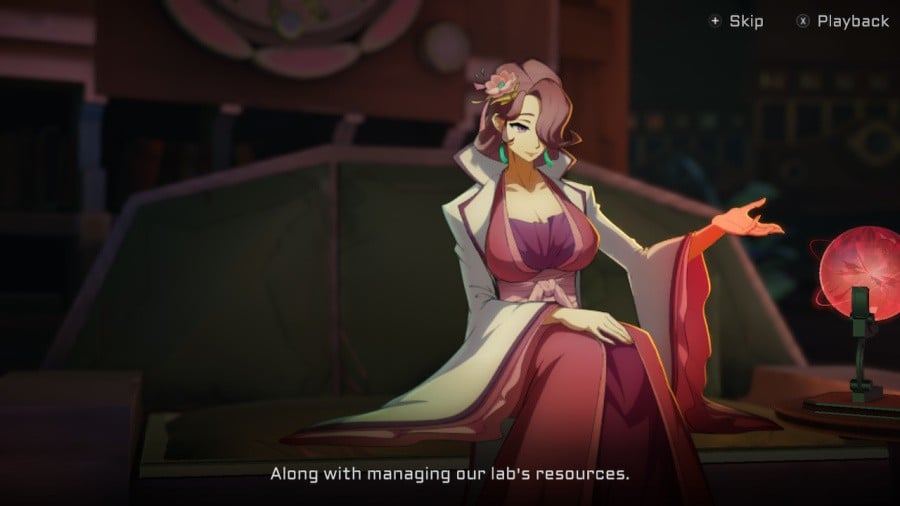
BlazBlue Entropy Effect was released back in 2024 on Steam. Entropy Effect X isn’t exactly the same game, but rather a definitive reworking. It cuts a lot of fat from the original, replacing the robot hub world with a lab of anime colleagues. It also streamlines events into an all-new, series-canon storyline that promises to be more coherent. Its success on this front is up for debate, however. Entropy Effect X also boasts new bosses, new Mind Crystal challenges, and new variable difficulty modes – but sadly loses crossplay functionality in the process. It also drops the original’s English dub for subtitled Japanese language only.

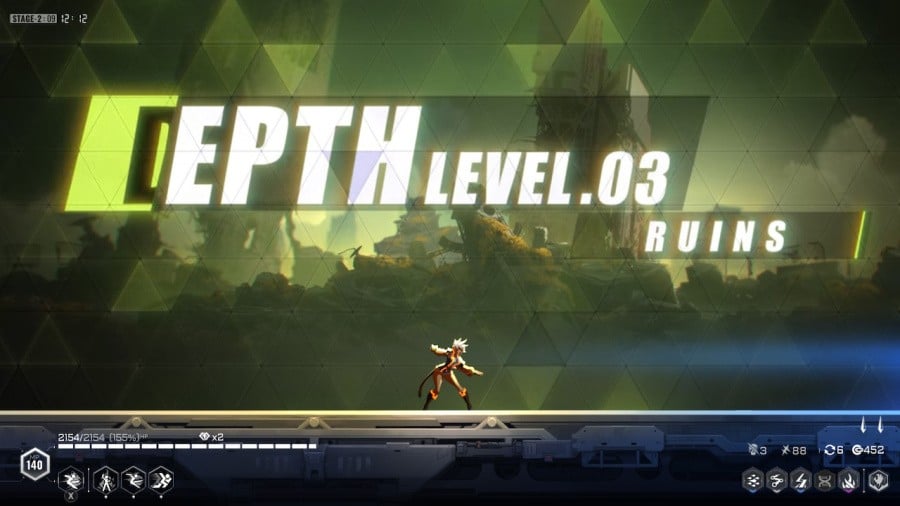
Entropy Effect’s X’s premise feels somehow reminiscent of Tron. Beginning as an amnesiac, a team of scientists send you into a mainframe subspace that blends reality with unreality; a kind of dystopian, futuristic nightmare world in decay. Your goal is to retrieve ‘Shards of Possibility’ in each run, and regardless of whether you fail or succeed you’re beamed back to HQ for a bit of story evolution, character unlocking, and an opportunity for some general retooling.
The plot, honestly, is total technobabble nonsense, and the kind of thing that oft rears its head in Japanese games. In its attempt to be profoundly deep it ends up being verbose, confusing, tedious, and skippable. There are, however, fully animated flashbacks that pop up whenever a Shard of Possibility is obtained, filling in the backstory of humanity’s collapse. They’re short, beautifully done, and worth sticking around for.
The eighteen-strong battle roster are all legacy BlazBlue cast members, unlocked in an order of your choosing. Each can be broadly increased in power and even have their attributes fused. The levelling process is handled by running through stages, obtaining MP, HP and DP level-ups, secondary skills, expanding movesets, and increasing critical stats. You can focus on building up one or several avatars, but getting all eighteen to full capacity will take months of commitment.
Each character is surprisingly diverse, borrowing unique elements from their fighting game profiles. Bullet is grapple strong, able to grab enemies and send them piling into others behind, while Noel is ranged, wielding dual handguns that can fire from distance. Hibiki has shadow skills that have secondary attack properties, and Takaoka can create clones, and the list goes on.
Once deployed into the subspace in search of a Shard, Entropy Effect X is graphically slick through and through, and, while character and enemy sprites are on the small side (which doesn’t work so well in handheld) it still shines in terms of animation and panache. Night City, your first port of call, is very much a 2D Cyberpunk bedfellow, only with more deterioration. Mechanically, it’s snappy, and if you played last year’s Shinobi: Art of Vengeance or Ninja Gaiden: Ragebound you’ll feel very much at home with its dashes, aerial attacks, and smorgasbord of evolving secondary attack properties.
While it’s strictly 2D side-on, its scaling system feels similar to Hades, and with additional skill elements like Electricity, Fire and Ice – and the ability to focus on one suit for power increases – it has a lot in common with Absolum. One oversight, though, is no combo counter. In a game that rewards perfect screen clears, especially on higher difficulties, a combo counter would be a good visual aid. This is especially true since the sprites are on the small side, and focusing on your blows amidst a flurry of enemies can be tricky. You’ll often find you lose energy without knowing what hit you as a result.
Entropy Effect X’s action happens on a screen-by-screen basis. You enter an area, randomly generated in its platforms and pitfalls, and clear all enemies before moving on. Exiting each screen offers a choice of several randomised options: grab new secondary skills or exchange existing ones; enter a shop to spend points on MP, HP or skill boosts; or even try your luck on a Gacha roulette that can net you lucky enhancements. At critical points during your run you can unlock permanent combat expansions for things like air-juggle techniques or combo extenders.
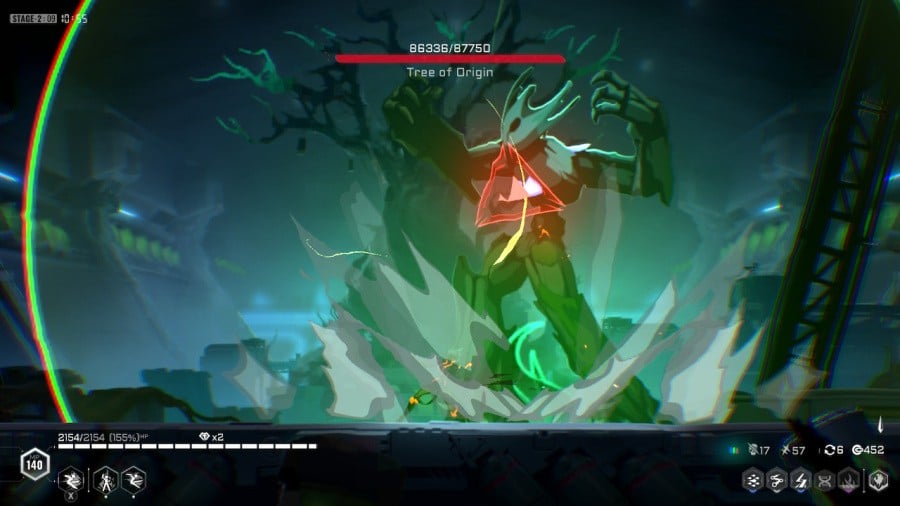
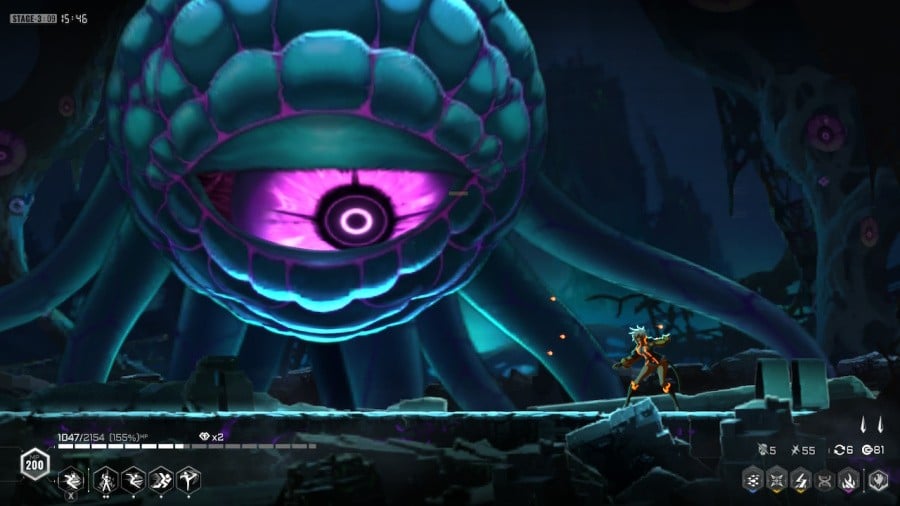
Initially, though, things feel a little dull and hollow, with a visual style that’s cold and impersonal. Continue playing, learning, and expanding however, and things start to simmer, putting pressure on you to pay attention to your upgrading process before you dive again. Its mammoth bosses are impressive, too, with patterns that demand reflex if you’re going to earn your next Shard.
Like all roguelikes, the longer you play the more Entropy Effect X starts to flourish. You can get neck deep in the game’s countless upgrades, and using the ‘Entropy’ system to increase a run’s difficulty makes it more formidable, but rewards with more powerful buffs. While higher difficulties are altogether more involving, they also require unlocking by finishing Normal Mode first.
Initially, grinding is the only way to go. Health increasing elixirs are in short supply and, owing to the random nature of things, you never know when you’ll be granted a “rest space” or other gratuities that can regenerate health. To this end, you’ll find yourself replaying early stages several times. This is fine on paper, but it does lack the initial reward momentum of something like Absolum, and if you’re committed to building a strong Avatar you’ll need to overcome the repetition.
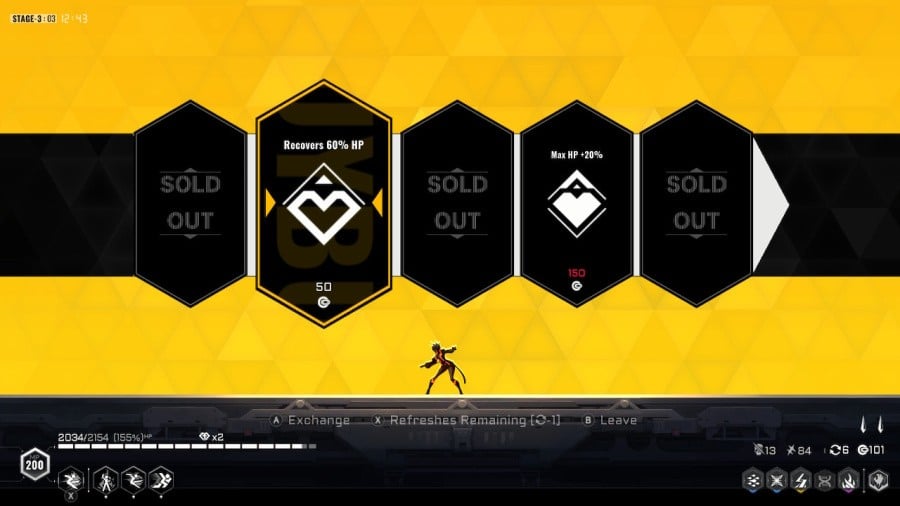
The game’s conundrum though, is how one responds to its dizzying complexity. While on the face of it, Entropy Effect X is a blistering action combat game, its structuring is daunting. Generally, it feels overwrought from the get-go.
Like its sprawling, confusing narrative, the game itself is incredibly dense on the front end. The options and choices provided when exiting a screen are labeled in ways that make little sense, and you’ll need to repeat them countless times to remember what they all lead to. The language used in its tutorials is science textbook wordy, often using a home-grown vernacular that you haven’t a hope of understanding until you’ve given it hours of attention.
While the system has arguably too many configurable options, its convolution may still appeal to a certain strain of player. The problem is more in how things are explained — or not, as the case may be. You can comb through help screens to try to figure out how everything works, or plough through blindly with a nagging feeling that you’re overlooking key features.
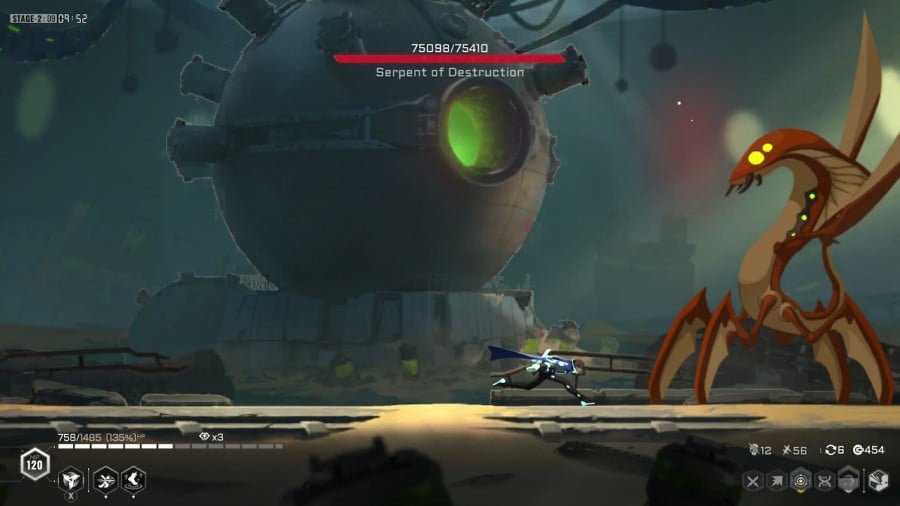
Additionally, the way the action is broken up is somewhat intrusive. Having tooling options when exiting a screen is fine, but when you’re clearing them in thirty-seconds it becomes a little tiresome to keep entering between-screen spaces for upgrades or gacha rolls. Many of the exit options, like health increases or skill switches, could easily happen on the spot rather than having you move to interim areas.
BlazBlue Entropy Effect X is remarkable in its scope, dizzying in its depths, and impressive in its ambition. Its cast of characters is enormous, its combat taut, and its boss encounters impressive. Like any roguelike, it’s all about repetitive grind, but this isn’t a game that’s initially player-friendly. There are so many options, many of which are ambiguous, that it takes time to get a handle on all the possibilities and to tease out a strategy. To this end, it may turn some off before it has the chance to turn them on.