

 dailynewsnblog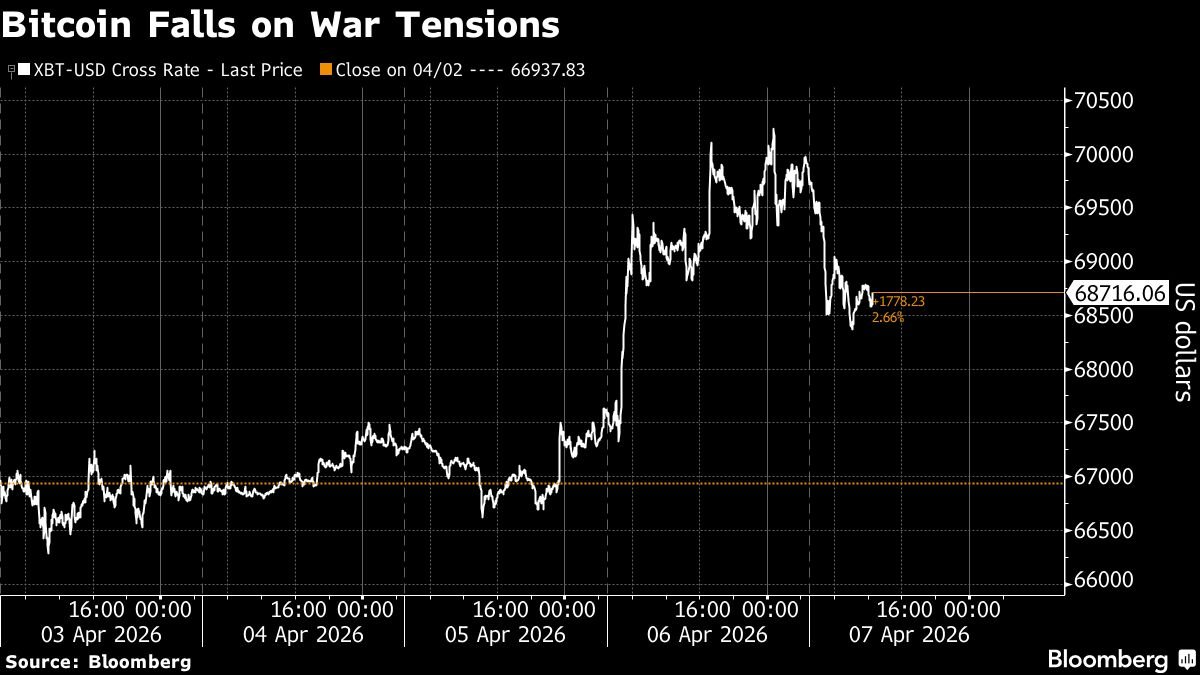
(Bloomberg) — Bitcoin slipped in Asia Tuesday, as cryptocurrencies were caught up in the broader market volatility ahead of President Donald Trump’s deadline for Iran.
The largest cryptocurrency fell as much as 2.2% and was trading around $68,800 at 1:15 p.m. in Singapore. The decline erased gains from the previous day, when it briefly topped $70,000 for the first time since March. Other digital assets also fell. Ether, the second-largest token, was down as much as 2.8%.
Global equities fluctuated ahead of a Tuesday deadline set by Trump, who threatened to bomb civilian infrastructure in Iran unless the Strait of Hormuz was opened. S&P 500 futures were down 0.4%.
Bitcoin sentiment “remains bearish on the short-to-medium time frame,” said Rachael Lucas, an analyst at BTC Markets. The market is in wait-and-see mode, she added, with “bulls lacking sufficient conviction to sustain breakouts and bears unable to force a decisive breakdown.”
Escalation risks in the war with Iran have largely kept investors on the sidelines after it was reported that Iran had rejected a ceasefire proposal. Trump said that opening the strait, a critical trade waterway, would be part of any deal to end the war.
Since the war started, oil prices have surged. Brent crude rose Tuesday, adding to gains of roughly 50% from the start of the conflict at the end of February. Gold was roughly flat for the day and is down more than 10% since the start of the war.
Bitcoin has been comparatively resilient, with signs that institutional selling pressure is easing. US-listed spot Bitcoin exchange-traded funds saw $471.3 million in net inflows on Monday, adding to the $22.3 million in inflows last week.
Bitcoin has largely been stuck between $65,000 and $75,000 since the beginning of March. Since a sharp selloff in October, crypto trading has been weak. Now traders have eyes on an end to the war and new crypto legislation in the US as potentially pushing digital assets higher.
“The bull scenario hinges on two catalysts: A confirmed and sustained US-Iran ceasefire that brings oil below $100, and passage of the US Clarity Act, expected in late April, which institutional market participants are closely watching as a regulatory unlock,” Lucas said.
More stories like this are available on bloomberg.com
©2026 Bloomberg L.P.


